 how-to
Why Commercial Landscaping Matters for Hotels
Table of Contents
- First Impressions Shape Guest Perception
- Hotel Entrance Landscaping Ideas That Drive Bookings
- Guest Experience and Outdoor Comfort
- Hotel Landscape Maintenance for Consistent Quality
- Creating a Landscape Maintenance Schedule for Hotels
- Choosing a Commercial Landscaping Contractor for Hotels
- Property Value and Long-Term Business Success
- Frequently Asked Questions
Last Updated: October 20, 2026
First Impressions Shape Guest Perception
Your hotel's entrance is the first thing guests see, and they form an opinion before they step inside, check in, or experience your service.
Commercial landscaping shapes that first impression. Healthy plants, clean pathways, and thoughtful greenery signal professionalism and care, while overgrown beds or dead plantings communicate neglect in seconds.
This is where commercial landscaping is important for hotels: it's not decoration but a business asset that influences guest satisfaction before they interact with your staff.
Curb appeal affects guest perception of property value and quality. Guests arriving to a well-maintained exterior rate their experience more favorably even when interior amenities match competitors, and met expectations build loyalty.
At Gorilla Treescape LLC, we've worked with property managers who invest in professional landscaping maintenance after seeing its impact on guest retention and online reviews.
Hotel Entrance Landscaping Ideas That Drive Bookings
The entrance is where landscaping strategy becomes revenue strategy. The goal is an experience that justifies the room rate and encourages repeat visits, so entrance landscaping must be designed around the guest journey and property type, not a generic template.
Match the entrance to your property type
- Resort and destination properties. Guests arrive in a leisure mindset and often linger. Wide porte-cochere plantings, layered tropical or native specimen trees, and a clear sightline to the lobby set a resort tone. Seasonal color rotations (two to four per year in most climates) keep the arrival fresh for repeat guests.
- Urban and downtown hotels. Space is tight and the entrance competes with sidewalks, transit, and neighboring storefronts. Container plantings, raised beds, and vertical greenery do the work that a lawn would do in the suburbs. Hardy, low-maintenance species tolerate foot traffic, road salt, and reflected heat from pavement.
- Suburban and limited-service hotels. Guests often arrive by car after a long drive. Clear wayfinding, well-lit signage plantings, and a tidy, uncluttered bed line matter more than elaborate design. The goal is reassurance: this property is clean, safe, and well run.
- Boutique and historic properties. The landscape should reinforce the architecture. Mature trees, formal hedges, and period-appropriate plantings signal authenticity that guests paying a premium expect.
Design the arrival sequence, not just the bed
Guests experience the entrance in stages, each with a landscaping job:
- Approach and signage. Plantings frame the sign and driveway without blocking visibility. Low, mounded shrubs and seasonal color keep the sign legible from the road.
- Drive and drop-off. Symmetrical plantings on either side of the entrance create a formal, welcoming frame. Specimen trees provide height and presence without blocking sightlines to the lobby or security cameras.
- Porte-cochere and walkway. This is the highest-traffic zone. Choose plants that tolerate heat, splash from rain, and occasional foot traffic. Keep walkways at least 48 inches clear to meet accessibility expectations under the ADA, and avoid thorny or dropping-fruit species near the drop-off.
- Lobby sightline. The view from the front door outward should feel calm and ordered. Aggressive or chaotic plantings create visual noise; sparse landscaping feels incomplete or neglected. Intentional design with room to breathe is what works.
Extend the entrance into the evening
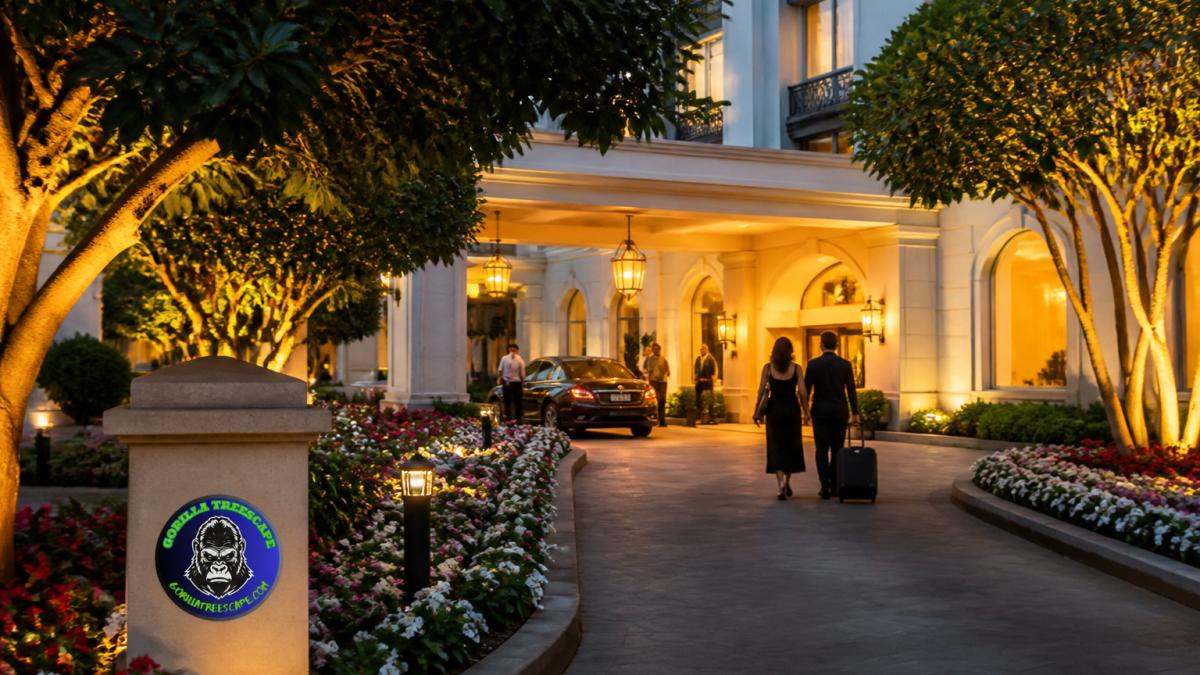
Lighting is part of the landscaping, not an electrical afterthought. Uplighting on specimen trees, path lights, and low-level bed fixtures extend the entrance's appeal into the evening and improve nighttime safety, reducing slip-and-fall risk on wet pavement.
What actually moves bookings
Entrance landscaping influences bookings indirectly, through signals guests read before reaching the front desk. A crisp, maintained entrance supports the asking rate and reduces the risk of a downgraded review over curb appeal. Properties that refresh entrance plantings seasonally commonly report improved review mentions of curb appeal and first impressions, though the effect varies by market.
A practical rule: if the entrance looks the same in month twelve as it did in month one, it is probably under-maintained. If it looks noticeably better than the property across the street, it is doing its job.
Guest Experience and Outdoor Comfort
Beyond the entrance, outdoor spaces shape the entire guest experience. If your property has a courtyard, pool area, or patio, landscaping becomes part of the amenity offering itself.
Guests evaluate outdoor spaces for comfort and usability. Shade is essential, plantings define intimate seating zones, and water features add sensory appeal while masking traffic noise. Natural elements reduce stress and promote relaxation, which is why guests choose hospitality properties over staying home.
Landscaping And Outdoor Living Design that supports well-being creates repeat customers. Properties with thoughtfully designed outdoor spaces see higher satisfaction ratings and increased ancillary spending as guests linger longer, dine on-site more, and book longer stays.
The link between outdoor environment and loyalty is direct: a guest who feels genuinely relaxed is more likely to book again, recommend the property, and leave positive reviews, and landscaping contributes to that feeling in ways interior design alone cannot.
Hotel Landscape Maintenance for Consistent Quality
Landscaping quality is not a one-time investment. It requires consistent, professional maintenance to deliver ongoing results.
Many hotel operators invest in beautiful entrance plantings or amenities, then underfund maintenance. Within months, dead plantings go unreplaced, mulch fades and compacts, weeds appear, and the investment loses its impact.
Consistent maintenance preserves the guest experience and protects your investment: climate-appropriate watering, seasonal pruning, prompt replacement of dead or diseased plantings, and regular hardscape cleaning, catching problems before guests see them. Landscaping & Pool Maintenance ensures these tasks are completed on schedule and to professional standards.
The cost of maintenance is a fraction of the cost of replacing a neglected landscape. It's also far less expensive than managing negative reviews or losing repeat guests due to poor property appearance.
Creating a Landscape Maintenance Schedule for Hotels
A professional maintenance schedule is the foundation of landscape quality. Without one, maintenance is reactive; with one, you prevent problems before they affect guest experience.
An effective schedule accounts for climate and plant needs. Warm climates mean longer growing seasons and more frequent mowing and pruning; cooler regions demand attention to seasonal transitions, from spring cleanup to winter protection.
Weekly tasks typically include mowing, edging, and debris removal. These keep the landscape looking managed and clean. Bi-weekly or monthly tasks include deeper pruning, mulch maintenance, and inspection for pests or disease. Seasonal tasks include planting, major pruning, and soil amendments.
The schedule should also track guest patterns: increase maintenance intensity during peak occupancy so the landscape is at its best when guest volume is highest.
A written schedule creates accountability: the maintenance team knows what happens and when, the property manager can verify completion, and contractors know your expectations, making the schedule the standard for consistent quality.
Choosing a Commercial Landscaping Contractor for Hotels
Not all contractors understand hotel demands. Hotels require reliability, consistency, and responsiveness beyond residential or standard commercial work, and the right contractor is the difference between a landscape that supports your rate and one that erodes it.
Scope the work in hotel terms
Before you compare bids, define the scope in terms that match how a hotel actually operates. A hotel landscaping contract should address:
- Guest-facing zones versus back-of-house. Entrance, pool deck, dining patio, and event lawn are guest-facing and need higher frequency and tighter appearance standards. Parking islands, service drives, and employee areas can be maintained to a different standard at lower cost.
- Peak-season intensity. Maintenance frequency should increase during high-occupancy periods. A contractor who cannot flex crews during your peak season will leave the property looking tired exactly when it matters most.
- Event and turnover support. Weddings, conferences, and photo shoots often require last-minute bed refreshing, extra cleanup, or temporary planters. Ask whether event support is included or billed separately.
- Emergency response. Storm cleanup, irrigation failures, and downed limbs need a defined response window. A common pattern is a four-hour response for guest-facing emergencies and next-business-day for non-urgent items, but confirm what your contractor actually commits to in writing.
Understand the cost structure
Landscaping costs for hotels typically split into three buckets, and comparing bids without separating them is a common mistake:
- Installation and design. One-time costs for design, soil prep, plant material, hardscape, and irrigation. These vary widely with plant size and site conditions.
- Recurring maintenance. A monthly or annual contract covering mowing, pruning, bed care, irrigation checks, and seasonal color. This is the line item that most affects how the property looks day to day.
- Enhancements and lifecycle replacement. Seasonal color rotations, mulch refresh, plant replacement, and eventual hardscape repair. Budgeting for these separately prevents the surprise costs that lead properties to defer maintenance.
Ask each bidder to break pricing into these three buckets so you can compare like with like. A low recurring bid that excludes seasonal color or irrigation repair is not actually cheaper.
Vet for hotel experience specifically
Look for hospitality-specific experience. A contractor versed in hotel landscapes understands appearance consistency, the impact of maintenance timing on guest experience, and the need for flexibility when issues arise.
Ask about maintenance protocols: how they handle weather damage, response times for storm cleanup, and seasonal transitions. A strong contractor has clear answers and documented processes.
Communication matters. Your contractor should provide regular updates, flag issues before they become visible, and stay accessible when problems occur, since hotel schedules don't pause for landscaping emergencies.
References from other hotel properties are invaluable. Ask how long they've served their hotel clients and whether they've helped improve guest satisfaction or online reviews tied to property appearance.
Plan for the lifecycle, not just the install
A landscape is an asset with a lifecycle. Trees mature, beds need refreshing, and irrigation systems wear out. Ask prospective contractors how they plan for replacement and renewal, and whether they will help you build a multi-year capital plan rather than reacting to failures. Properties that plan lifecycle costs tend to avoid the mid-season emergencies that show up in guest reviews.
Gorilla Treescape LLC brings commercial landscaping expertise to hotel properties. Our team understands that hotel landscaping isn't just about aesthetics, it's about supporting guest experience and protecting property value. We develop customized maintenance schedules, respond quickly to maintenance needs, and coordinate with your property management team to ensure consistency. Our approach focuses on creating outdoor spaces that guests notice for the right reasons: they're clean, well-maintained, and genuinely inviting.
Property Value and Long-Term Business Success
Commercial landscaping is important for hotels because it directly affects property value: well-maintained, professionally designed landscapes command higher valuations and attract more qualified buyers.
Appraisers and investors weigh many factors, and landscape quality is among the most visible.
Long-term, professional landscaping protects your asset.
The link between landscape quality and business success is measurable: well-maintained properties see higher occupancy, better reviews, and stronger market positioning, which compounds into significant revenue impact over a decade.
According to American Society of Landscape Architects research on property value, commercial properties with professional landscaping maintenance see measurable increases in property value and market competitiveness.
Your hotel's landscaping is not a cost center.
The best time to establish professional landscaping maintenance is now.
Gorilla Treescape LLC can help you develop a comprehensive landscaping and maintenance strategy tailored to your hotel's specific needs.
Frequently Asked Questions
Why is landscaping important for hotels?
Commercial landscaping directly influences guest satisfaction, repeat bookings, and perceived value. Well-maintained outdoor spaces create a welcoming environment that starts the guest experience before they enter the building. Hotels with quality landscaping report higher occupancy rates and better online reviews. Landscaping also protects property value and reduces liability risks by preventing hazards like overgrown vegetation or poor drainage.
How often should hotel landscape maintenance occur?
Hotel landscape maintenance schedules typically include weekly grounds cleanup, bi-weekly pruning during growing seasons, monthly deep inspections, and seasonal adjustments. The exact frequency depends on your climate, plant types, and property size. A professional commercial landscaping contractor for hotels can create a customized maintenance schedule that keeps your property guest-ready year-round without over-servicing or allowing neglect.
What should a hotel entrance landscaping design include?
Effective hotel entrance landscaping ideas combine curb appeal with functionality: symmetrical plantings, clear sightlines, proper lighting, durable plants suited to your climate, and accessible pathways. The entrance is where guests form their first impression, so design should reflect your brand and create an inviting atmosphere. Consider water features, seasonal color, and professional maintenance visibility to signal quality to arriving guests.
How does commercial landscaping affect hotel business outcomes?
Quality commercial landscaping improves occupancy rates, guest retention, and online reputation scores. Properties with attractive outdoor spaces command higher nightly rates and see increased direct bookings. Landscaping also reduces operational costs by preventing property damage, improving drainage, and minimizing safety hazards.