 how-to
How to Identify Common Tree Diseases in Your Yard
Table of Contents
- Why Early Diagnosis Matters for Tree Health
- Common Tree Diseases and Symptoms to Watch For
- Step-by-Step: Tree Leaf Disease Identification Process
- Distinguishing Tree Disease or Pest Identification from Environmental Stress
- Examining Branches, Bark, and Trunk for Disease Signs
- When to Call an Arborist for a Sick Tree
- Prevention and Next Steps After Identification
- Frequently Asked Questions
Last Updated: October 16, 2026
Why Early Diagnosis Matters for Tree Health
Identifying tree disease early can save your trees and prevent costly removal later.
The difference between a tree you can save and one you can't often comes down to timing, and early intervention stops spread to other trees.
This guide walks you through how to identify common tree diseases in your yard, showing the symptoms to watch for, how to distinguish disease from pest damage or environmental stress, and when to bring in professional help.
Common Tree Diseases and Symptoms to Watch For
Tree diseases fall into three main categories: fungal infections, bacterial infections, and root diseases. Each causes different symptoms and requires different treatment, so knowing the category helps you act faster.
Fungal Diseases: Anthracnose, Rust, and Leaf Spot
Fungal diseases are the most common tree ailments, thriving in warm, humid conditions and spreading through water splash and wind.
Anthracnose causes brown, irregular spots on leaves and can kill entire branches.
Rust appears as yellow-orange bumps or powder on leaf undersides, like tiny pustules. Leaves may yellow and drop, weakening photosynthesis.
Leaf spot creates circular or irregular dark spots with lighter centers, often with a yellow halo.
Bacterial Infections: Oak Wilt and Leaf Scorch
Bacterial tree diseases are harder to treat than fungal ones because antibiotics rarely work on trees.
Oak wilt kills oaks by blocking water transport through the wood.
Bacterial leaf scorch causes brown leaf edges while the center stays green, so foliage looks scorched.
Both bacterial infections are systemic, living inside the tree's vascular system, and once established they're nearly impossible to eliminate.
Root Rot and Canker Diseases
Root diseases and cankers attack different parts of the tree but both indicate serious decline.
Root rot causes overall decline without obvious leaf symptoms at first.
Canker diseases create visible bark damage: sunken, dead areas on the trunk or branches, with bark that may split or peel back.
Both progress slowly. Early detection gives you options for treatment or removal planning.
Step-by-Step: Tree Leaf Disease Identification Process
A systematic inspection helps you catch disease early. Follow these steps to identify problems before they spread.
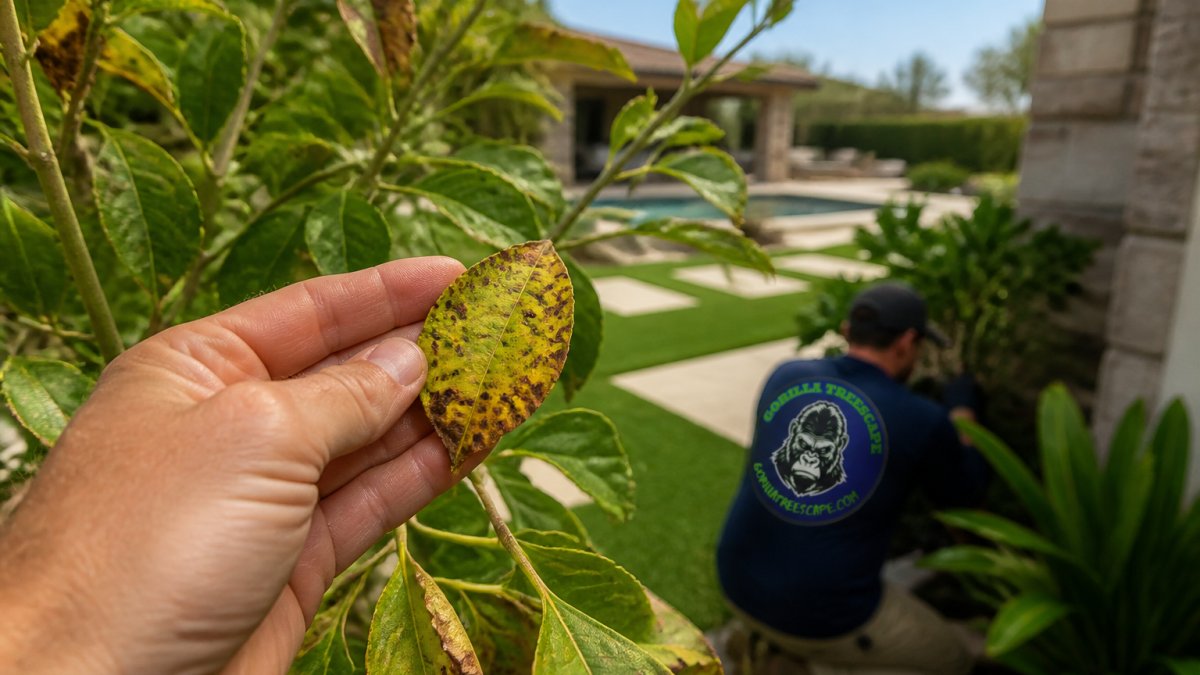
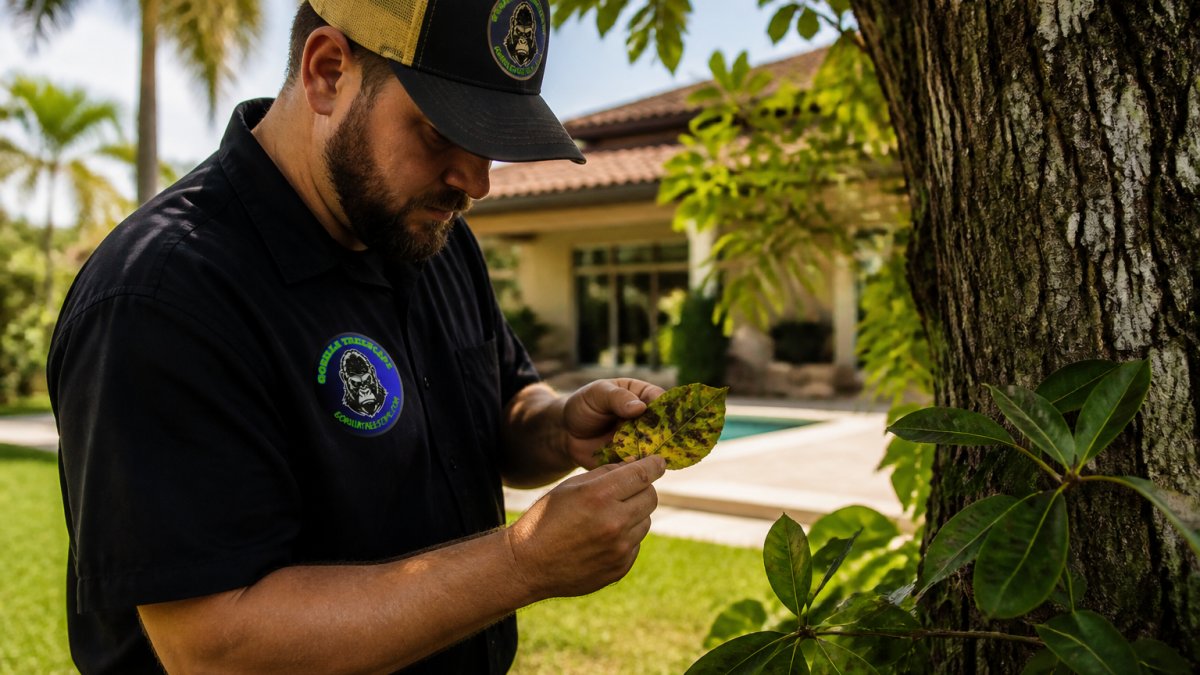
Step 1: Inspect Leaves for Discoloration and Spots
Start by looking closely at the leaves. Pick a branch at eye level and examine the top and underside of several leaves.
What to look for:
- Brown or black spots with distinct edges
- Yellow halos around spots
- Yellowing that starts at leaf edges
- Powdery coating on leaf surfaces
How to check:
- Select 5-10 leaves from different parts of the tree
- Hold each leaf up to light to see spots clearly
- Rub the leaf surface gently to check for powdery growth
- Look at leaf undersides where fungal spores often develop
- Note whether spots appear on new growth or old leaves
Fungal leaf spot usually appears on older leaves first. Bacterial scorch affects newer growth. Rust develops on undersides. The location of discoloration helps narrow down the disease.
Step 2: Check for Premature Leaf Loss and Defoliation
Leaf loss is a major warning sign. Healthy trees hold leaves through fall. Early dropping indicates stress or disease.
What to observe:
- Leaves dropping before autumn
- Bare branches while neighboring trees stay full
- Progressive defoliation from top downward
- Entire branches losing all leaves
How to assess:
- Compare your tree to similar healthy trees nearby
- Note when leaf drop started (spring, summer, or early fall)
- Check whether all leaves drop or just some branches
- Look for a pattern, does it spread from one area outward
Gradual leaf loss across the whole canopy suggests anthracnose or leaf spot. Rapid wilting and browning from the top down indicates oak wilt or bacterial scorch. Selective branch death suggests canker disease.
Step 3: Look for Fungal Growth and Powdery Spores
Visible fungal growth confirms a fungal infection. This is the clearest diagnostic sign.
What to look for:
- White, gray, or black powdery coating on leaves
- Yellow-orange bumps or pustules on leaf undersides
- Fuzzy or cottony growth on branches
- Visible fungal fruiting bodies (small dark structures)
How to examine:
- Use a hand lens or magnifying glass if available
- Inspect leaf undersides where spores concentrate
- Look at branch crotches and shaded areas
- Check fallen leaves on the ground for fungal structures
- Gently rub a leaf to see if powder transfers to your hand
Powdery growth washes off but returns. Rust pustules feel bumpy. Fungal fruiting bodies don't wipe away. The type and location of growth helps identify the specific disease.
Distinguishing Tree Disease or Pest Identification from Environmental Stress
Not every sick-looking tree has disease. Environmental stress and pest damage mimic disease symptoms. Correct diagnosis prevents wasted treatment efforts.
Disease Versus Pest Damage Patterns
Disease spreads gradually through the tree. Pest damage often appears suddenly in specific areas. Understanding the difference saves time and money.
Fungal and bacterial disease patterns:
- Symptoms progress slowly over weeks or months
- Spread follows no obvious pattern, appears throughout canopy
- Affects multiple trees of the same species nearby
- Worsens during specific weather (wet for fungal, hot for bacterial)
Pest damage patterns:
- Damage appears suddenly or in clusters
- Concentrated on specific branches or tree sides
- Affects only one or a few trees
- Visible insect presence (holes, tunnels, webbing, droppings)
Pest damage rarely spreads to other trees. Disease spreads through wind, water, or soil contact. If multiple trees of the same species show identical symptoms, disease is likely. If one tree shows damage and neighbors stay healthy, pests are more probable.
Environmental Stress Symptoms: Drought and Overwatering
Environmental stress creates symptoms that look like disease but respond to different treatment, and misdiagnosing it wastes money on unnecessary fungicide.
Drought stress symptoms:
- Yellowing or browning from leaf edges inward
- Wilting foliage despite recent rain
- Sparse leaf production
- Premature leaf drop
Overwatering or poor drainage symptoms:
- Yellowing leaves that remain on branches
- Soft, rotting roots (dig gently to check)
- Fungal growth increases (wet soil promotes fungal diseases)
- Tree decline happens slowly over seasons
Environmental stress weakens trees and makes them susceptible to disease. A drought-stressed tree becomes vulnerable to pest attack and fungal infection. Improving soil conditions and water management helps the tree recover and resist disease.
Examining Branches, Bark, and Trunk for Disease Signs
Leaves tell part of the story. Branches, bark, and trunk reveal advanced disease and structural problems.
Dead and Dying Branches: Canopy Dieback Indicators
Dead branches signal disease progression. As disease advances, it kills branches from the inside out. Canopy dieback, the progressive death of branches, indicates serious decline.
What to look for:
- Brown or gray branches with no leaves
- Branches that fail to leaf out in spring
- Progressive dieback from branch tips backward toward the trunk
- Entire limbs dead while nearby branches stay healthy
How to identify dead wood:
- Scratch the branch bark with your fingernail
- Live wood shows green or white tissue underneath
- Dead wood shows brown or gray tissue
- Bend a small twig gently, dead wood snaps, live wood bends
What it means: Scattered dead branches suggest environmental stress or minor disease. Extensive canopy dieback with branches dying from the top downward indicates serious illness. Progressive dieback year after year shows the disease is winning the battle.
Bark Splitting, Cankers, and Visible Damage
Bark damage reveals infections and environmental stress. Cankers, sunken, dead areas on bark, are almost always caused by disease.
Canker characteristics:
- Sunken, dead area on trunk or branch
- Bark peeling back from edges
- Often surrounded by callus tissue (healing response)
- May ooze sap or gum
Bark splitting and frost crack:
- Vertical cracks in bark, usually on south-facing side
- Often appears after cold snaps
- Damage happens in winter, becomes visible in spring
- Different from canker disease but weakens the tree
Wounds and injury:
- Torn bark from storm damage or animal damage
- Open wounds where branches broke
- Sunburned bark on previously shaded areas after pruning
- These wounds are entry points for disease
Cankers caused by disease don't heal. The tree walls them off but can't eliminate the disease inside. Multiple cankers or cankers girdling branches mean that branch will die.
When to Call an Arborist for a Sick Tree
Some tree problems you can monitor yourself. Others need professional expertise immediately. Knowing when to call saves your trees and prevents safety hazards.
Safety Concerns and Urgency Triage
Dead branches and weak trees create safety risks. Prioritize removal or treatment based on danger level.
Call immediately for:
- Dead branches hanging over structures or walkways
- Trees leaning abnormally
- Large cracks in the trunk
- Extensive canopy dieback
Call within a week for:
- Suspected oak wilt or bacterial leaf scorch
- Extensive canker disease
- Root rot symptoms
- Disease affecting multiple valuable trees
Monitor and call if worsening:
- Leaf spot or anthracnose (manageable with treatment)
- Early-stage environmental stress
- Minor pest damage
- Single dead branches
A professional arborist assesses whether a tree can be saved or should be removed. Some trees recover with treatment. Others are beyond help, and removal prevents disease spread to healthy trees.
Professional Diagnosis and Treatment Options
Arborists have tools and training to diagnose problems you can't see. They recommend treatment or removal based on tree health, disease severity, and your goals.
What an arborist can do:
- Confirm disease diagnosis through samples and inspection
- Assess tree structural integrity
- Recommend treatment options (fungicide, pruning, removal)
- Remove dead branches safely
Treatment options vary by disease:
- Fungal diseases: fungicide application, pruning infected branches
- Bacterial diseases: removal (no cure exists)
- Root rot: improve drainage, remove tree if severe
- Canker disease: prune affected branches, remove tree if extensive
Early intervention maximizes treatment success. An arborist helps you make the right choice for your landscape.
Prevention and Next Steps After Identification
Once you've identified a problem, prevention stops it from spreading. Next steps depend on what you found.
After identifying disease:
- Stop the spread, remove fallen leaves and dead branches
- Avoid pruning during wet weather (spreads fungal spores)
- Disinfect pruning tools between cuts
- Improve tree health through proper watering and mulching
- Remove severely infected trees to protect healthy ones
Prevention for the future:
- Plant disease-resistant tree varieties
- Space trees for good air circulation
- Water at soil level, not overhead
- Avoid wounding trees during maintenance
Healthy trees thrive in well-designed landscapes with proper spacing and drainage. Landscaping And Outdoor Living Design and Landscaping & Pool Maintenance services help create environments where trees flourish and disease risk decreases.
Identifying tree disease early prevents the heartbreak of losing mature trees to preventable illness. When you spot warning signs, discolored leaves, premature leaf loss, visible fungal growth, or dead branches, act quickly.
Frequently Asked Questions
What are the first signs of a diseased tree?
Early warning signs include yellowing or discolored leaves, unusual spots or patches on foliage, premature leaf loss, dead branches in the canopy, and visible fungal growth or powdery spores. Some trees also show bark splitting, cankers, or oozing sap. Check your trees regularly during growing season, catching disease early makes treatment more effective and prevents spread to other plants in your yard.
How can I tell if my tree has a disease or a pest problem?
Disease typically causes gradual, widespread damage across the tree with discolored foliage, fungal growth, or cankers on bark. Pest damage often appears as holes in leaves, chewed edges, or concentrated damage in specific areas. Some pests leave visible insects or webbing. If you see yellow-orange bumps on leaves or rust-colored patterns, that's usually fungal disease. When in doubt, photograph the damage and consult an arborist for accurate identification.
When should I call an arborist about a sick tree?
Contact an arborist immediately if your tree has large dead branches, significant canopy dieback, bark splitting, or visible root rot, these indicate serious decline. Also call if the tree poses a safety risk, shows rapid leaf loss, or if you suspect oak wilt or bacterial leaf scorch. Early professional diagnosis prevents disease spread and helps save the tree. Many arborists offer emergency consultations during hurricane season or after severe weather damage.
Can overwatering or drought make a tree look diseased?
Yes, both environmental stress and disease can cause yellowing leaves, leaf loss, and branch dieback. Overwatering leads to root rot and fungal issues; drought causes wilting and premature defoliation. The key difference: environmental stress usually affects the whole tree uniformly, while disease often shows specific patterns like leaf spots, fungal growth, or cankers. Check soil moisture and drainage first. If symptoms persist after adjusting watering, disease may be the culprit.