 how-to
How to Choose Drought Tolerant Plants for Florida
Table of Contents
- Start With a Site Assessment Before You Buy Anything
- Match Plants to Your Region, Zone, and Microclimate
- Florida Native Plants for Dry Conditions
- Drought-Tolerant Plants for Full Sun
- Florida Plants for Sandy Soil
- Drought-Tolerant Container Plants for Patios and Lanais
- Establishment Watering and Long-Term Irrigation
- Avoid Invasive Species and Plan Spacing and Maintenance
- Frequently Asked Questions
Last Updated: October 21, 2026
Start With a Site Assessment Before You Buy Anything
Choosing drought tolerant plants for a Florida yard starts long before you reach the nursery, and the right drought tolerant plants begin with knowing your site. It starts with a structured assessment of your property. Most plant failures trace back to a plant placed in the wrong spot, not a plant that was doomed.
A little homework first saves money and heartbreak.
Build a Simple Site Scorecard
Instead of a vague walk-around, score each planting bed on five factors. Write the score down for every bed you plan to plant. This turns a pile of observations into a decision you can actually use at the nursery.
- Sun hours, count direct sun hours in summer (June-August). Full sun is six or more hours; partial shade is three to six; shade is under three.
- Soil drainage, dig a hole about a foot deep and wide, fill it with water, and time how long it takes to empty. Under 3 hours is fast-draining (typical of Florida sand); 3-12 hours is moderate; over 12 hours is poor drainage and a red flag for most drought-tolerant species.
- Soil texture, squeeze a moist handful. If it crumbles and feels gritty, it is sandy. If it holds a ball but breaks easily, it is loamy. If it ribbons and feels slick, it has heavy clay and will need amendment or a raised bed.
- Salt exposure, are you within roughly a mile of the coast, or do you get wind-driven salt spray? Coastal beds need salt-tolerant species; inland beds have more options.
- Heat load, south- and west-facing walls, driveways, and patios radiate heat and dry soil faster. Note these hot pockets.
Translate the Scorecard Into Plant Criteria
Once each bed is scored, match it to a plant profile before you shop:
- Fast-draining sand + full sun + inland, the widest drought-tolerant palette: coontie, muhly grass, blanketflower, lantana, beach sunflower.
- Fast-draining sand + full sun + coastal, add salt tolerance: saw palmetto, beach sunflower, and other coastal-strand natives.
- Poor drainage or heavy clay, drought-tolerant plants will rot here. Either amend and raise the bed or choose species that tolerate periodic wet feet; do not force a dry-lover into a wet spot.
- Hot wall or patio edge, choose heat- and reflected-light-tolerant species such as bougainvillea or ornamental grasses in containers.
The University of Florida IFAS gardening guide offers free regional advice worth reading before you shop, and your local extension office can help you interpret a soil test if drainage or texture is unclear.
Match Plants to Your Region, Zone, and Microclimate
Florida spans several hardiness zones, and your exact spot matters more than the state map suggests. Coastal lots face salt spray. Inland lots bake in dry heat. A townhouse patio traps heat against walls. Recommendations that work in one part of the state can fail in another, so match plants to your region first, then to your microclimate.
According to the USDA Plant Hardiness Zone Map, the state runs roughly from zone 8b in the northern interior to zone 11 in the southern tip and Keys. Use your zone as a starting filter, not a guarantee.
Region-by-Region Starting Points
- North (roughly zones 8b-9a), expect occasional freezes. Favor cold-hardy drought-tolerant natives such as muhly grass, blanketflower, and saw palmetto; protect tender tropicals or grow them in containers you can move.
- Central (roughly zones 9b-10a), a long warm season with mild winters. Coontie, lantana, blue daze, and ornamental grasses perform reliably; cold snaps are short but can still nip tropicals.
- South (roughly zones 10b-11), frost is rare or absent. Bougainvillea and other tropical drought-tolerant plants thrive, but salt exposure and intense reflected heat are the bigger constraints than cold.
Microclimates Decide the Last Mile
Microclimates are the detail most guides skip. A south- or west-facing wall stays warmer and drier and can push a bed a half-zone warmer. A low corner collects water and stays cooler and wetter, a poor spot for a dry-lover. A patio surrounded by concrete traps heat and dries containers fast. Walk your yard and note these pockets before you commit, then adjust your scorecard from the previous section.
Use your region to narrow the list, your zone to rule out cold-tender or heat-tender options, and your microclimate to finalize placement. That three-step filter is what separates a plant list from a planting plan.
Florida Native Plants for Dry Conditions
Native plants are the safest bet for dry, sunny Florida yards. They evolved here, so they handle sandy soil, heat, and seasonal drought without fuss.
Here are our reliable picks for Florida native plants for dry conditions:
- Coontie - a tough, palm-like plant that thrives in sun or shade
- Saw Palmetto - a hardy shrub with fan-shaped fronds
- Muhly Grass - an ornamental grass with pink fall plumes
- Beach Sunflower - a low grower covered in yellow blooms
- Blanketflower - a perennial that blooms through heat
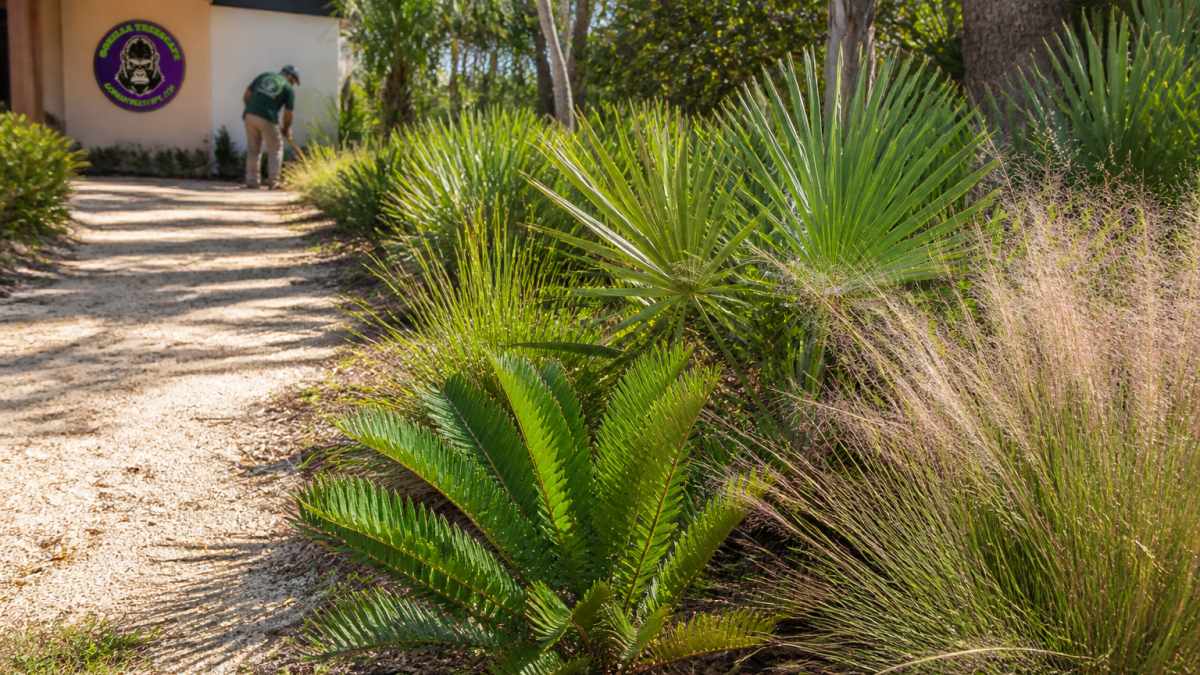
These natives need little water once established. They also support local wildlife, which makes a naturalized bed feel alive. Group them by water need so you can irrigate efficiently.
Drought-Tolerant Plants for Full Sun
Full-sun spots are brutal in July, but plenty of plants love them. The key is picking species built for heat and reflected light.
For drought-tolerant plants for full sun, try these:
- Lantana - a flowering shrub that blooms in bright clusters
- Blue Daze - a low spreader with sky-blue flowers
- Bougainvillea - a bold climber for hot walls and fences
- Ornamental grasses - add movement and texture with little water
Lantana and Blue Daze both handle sandy soil and dry spells well. Bougainvillea needs a warm wall but rewards you with vivid color. Grasses fill gaps and soften hard edges.
Water deeply but less often. Deep watering pushes roots down, which builds stronger, more drought-ready plants.
Florida Plants for Sandy Soil
Sandy soil drains fast and dries out, which is a gift for the right plants and a curse for the wrong ones. The trick is choosing species that don't mind quick drainage.
Good Florida plants for sandy soil include:
- Beach Sunflower - spreads fast and loves dry sand
- Muhly Grass - tolerates poor, sandy ground
- Saw Palmetto - tough in lean, sandy spots
- Coontie - steady in sun or part shade
Mix in organic matter at planting to help new roots settle. After that, most of these plants ask for very little. That is the beauty of matching plants to your soil instead of fighting it.
Drought-Tolerant Container Plants for Patios and Lanais
Containers dry out fast, so drought-tolerant container plants need extra grit. Pick species that shrug off heat and skip the daily watering routine.
Our go-to picks for pots and lanais:
- Bougainvillea - thrives in a sunny pot against a warm wall
- Lantana - compact varieties work well in planters
- Blue Daze - spills nicely over pot edges
- Ornamental grasses - add height and texture
Use a well-drained potting mix and a pot with drainage holes. Group pots together to shade each other and slow moisture loss. Check soil weekly by hand, not on a fixed schedule.
Establishment Watering and Long-Term Irrigation
New plants need help for the first few months. This establishment period is where most drought-tolerant plants either take root or fail.
Water new plants two to three times a week for the first month. Then taper to once a week. After about two to three months, most natives and drought-tolerant species need little beyond rainfall.
- Month one: two to three deep waterings per week
- Month two: once a week
- Month three onward: only during long dry spells
A drip system or soaker hose delivers water at the roots and cuts waste. The EPA WaterSense program explains how efficient irrigation saves water and money.
Once plants are established, run irrigation only when the soil feels dry a few inches down. Overwatering kills more drought-tolerant plants than drought does.
Avoid Invasive Species and Plan Spacing and Maintenance
The last step is the one people rush: checking whether a plant is invasive and giving it room to grow. Both choices decide how much work your yard demands.
Some popular plants spread aggressively and crowd out natives. Check the Florida Invasive Plant list from UF/IFAS before you buy anything that spreads fast.
Read the mature size on every tag, then space plants for that final size, not their nursery size. Crowded plants compete for water and light. They also need constant pruning.
- Check invasive status before buying
- Space for mature width, not nursery width
- Group plants by water need
- Plan for light pruning, not constant battles
If you would rather hand this off, our landscaping and outdoor living design team can map your site, pick the right plants, and build beds that hold up in dry, sunny spots. We handle the whole process from concept to completion, so the yard matches your space and your routine.
Frequently Asked Questions
How do I tell whether a plant is actually drought tolerant?
Check the plant tag for light and water needs, then look at the leaves. Thick, waxy, narrow, or silver-gray leaves usually signal drought tolerance, as do deep taproots and plants labeled for full sun and well-drained soil. Ask whether the plant is native or adapted to dry, sandy sites. Be skeptical of plants that need constant moisture or partial shade. A local nursery or a landscape consultant can confirm how a species performs in your zone before you commit.
How often should drought-tolerant plants be watered after planting?
New plants still need regular water during the establishment period, usually the first few months. Water deeply two to three times a week for the first several weeks, then taper to once a week as roots spread. After establishment, most drought tolerant plants for full sun need water only during long dry spells. Sandy soil drains fast, so water may need to be applied more often but in smaller amounts until roots settle in.
Can native plants reduce watering in a Florida landscape?
Yes. Florida native plants for dry conditions evolved with local rainfall patterns and sandy soil, so they usually need less supplemental irrigation once established. Species like coontie, saw palmetto, and muhly grass handle dry spells well and support local wildlife. Pairing natives with adapted plants in a Florida-friendly landscape can cut water use noticeably, especially when combined with mulch and a smart irrigation schedule.
What are the best drought-tolerant container plants for full sun and heat?
Look for compact, heat-loving plants with silver or succulent foliage, such as lantana, blue daze, and bougainvillea. Use large containers with drainage holes and a gritty, well-drained mix so roots do not sit in water. Containers dry out faster than garden beds, so check soil moisture every few days during summer. Group pots to shade each other's root zones and mulch the surface to slow evaporation.
A dry, sunny Florida yard does not have to be a struggle. It starts with a real site assessment, the right regional picks, and watering that builds deep roots. If you want a plan built for your exact property, Gorilla Treescape LLC can help. Our team offers custom landscape and outdoor living design, expert plant selection, and full project management from concept to completion. Get a quote today and turn your dry spots into a landscape that thrives.