 how-to
What Is Included in a Commercial Landscaping Contract
Table of Contents
- What Is Included in a Commercial Landscaping Contract: Scope of Work
- Building Your Commercial Landscaping Services Checklist
- Setting a Commercial Landscape Maintenance Schedule
- Contract Terms: Length, Renewal, and Termination
- Pricing, Allowances, and Payment Schedule
- Landscape Contractor Insurance and Licensing Requirements
- Using a Commercial Landscaping Contract Template
- Frequently Asked Questions
Last Updated: October 12, 2026
What Is Included in a Commercial Landscaping Contract: Scope of Work
A commercial landscaping contract defines which grounds care services a contractor performs, how often, and what the owner pays.
Services Typically Covered
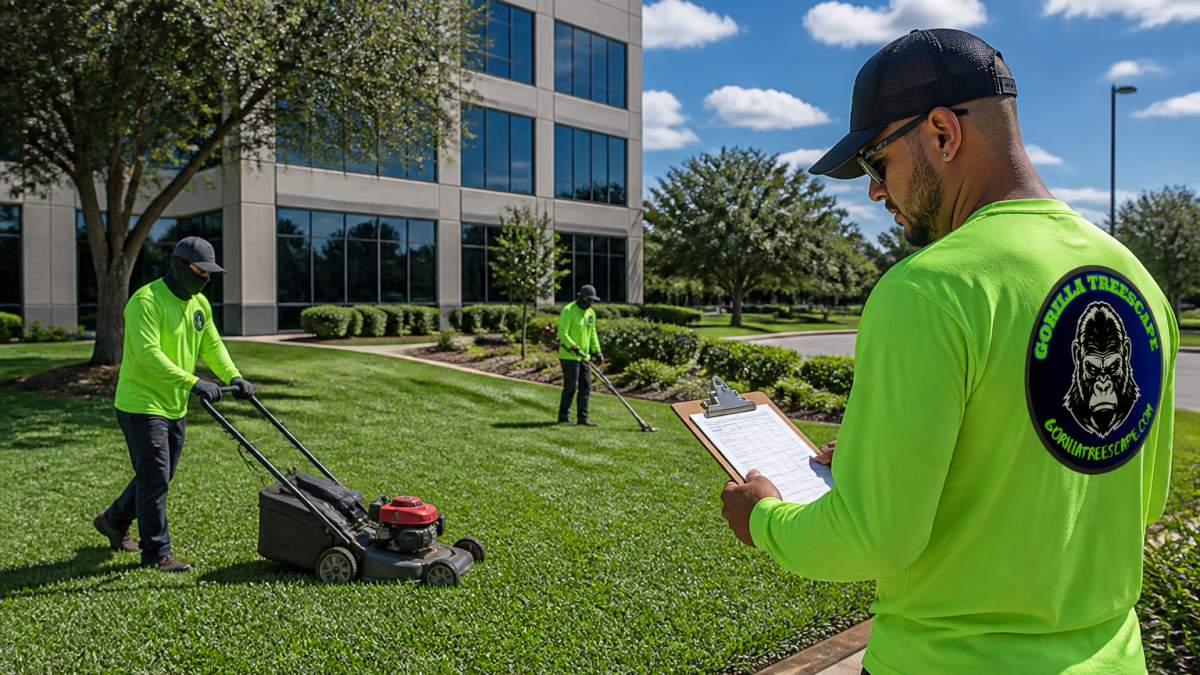
Most commercial landscaping contracts bundle routine tasks: mowing, edging, trimming, blowing hard surfaces, fertilization, weed control, and seasonal cleanup. Irrigation checks, mulch refresh, and shrub pruning usually appear as line items with their own frequency. A well-written scope lists each task, the square footage or plant count it applies to, and its frequency.
What Falls Outside the Scope
Out-of-scope work typically includes tree removal, stump grinding, hardscape repair, drainage correction, and storm damage cleanup, quoted separately because labor and equipment costs vary too widely to bundle. Ask your contractor to list exclusions explicitly; a short list is a red flag, a thorough one protects both sides.
Building Your Commercial Landscaping Services Checklist
A commercial landscaping services checklist turns a vague proposal into something you can score. Before comparing bids, list every task your property needs, then mark whether each bidder includes, excludes, or prices it as an add-on. It is the fastest way to compare proposals that look identical but differ by thousands of dollars in coverage.
Routine Maintenance Tasks
- Mowing at a defined height, with clippings removed or mulched
- Edging along walks, curbs, and bed lines
- String trimming around posts, signs, and building foundations
- Blowing and clearing all hard surfaces after each visit
- Bed weeding and cultivation
- Shrub and hedge pruning on a set rotation
Seasonal Services and Cleanup
Spring and fall cleanups cover leaf removal, bed refresh, cutback of perennials, and mulch installation. In colder markets, snow removal and ice treatment sit in their own agreement with separate trigger depths and response times. Confirm whether seasonal work is included in the base price or billed per occurrence, most disputes trace back to this line.
Setting a Commercial Landscape Maintenance Schedule
A commercial landscape maintenance schedule states how often crews visit and what they do each visit. Frequency is the variable property managers negotiate hardest, because it drives both cost and appearance. A retail center with heavy foot traffic needs a different rhythm than a back-office campus.
Service Frequency and Timing
Weekly service is standard during growing season; some contracts move to biweekly in winter or monthly dormant-season visits. Ask for the schedule in writing with month-by-month visit counts, not a vague "as needed" clause. Specify preferred service windows too, crews arriving mid-morning on a busy retail day create complaints.
| Service Type | Typical Frequency | Best For |
|---|---|---|
| Mowing and edging | Weekly, growing season | Retail, offices, HOAs |
| Fertilization | 4-6 times per year | All turf areas |
| Mulch refresh | Once or twice yearly | Beds and tree rings |
| Irrigation check | Monthly | All irrigated properties |
| Seasonal cleanup | Spring and fall | All properties |
| Snow removal | Per event, on call | Cold-climate sites |
Irrigation Maintenance and Adjustments
Irrigation maintenance covers head inspection, valve checks, controller programming, and seasonal adjustments. A broken head can waste water for weeks before anyone notices, so monthly walkthroughs pay for themselves. Confirm whether the contract includes repairs or only inspections, since parts and labor are often billed separately.
Contract Terms: Length, Renewal, and Termination
Contract terms determine how long you are committed, how the agreement renews, and how you exit if service slips. The industry standard runs twelve months, but multi-year agreements with fixed pricing are common for larger portfolios. Read the renewal language carefully, because auto-renewal clauses are where property managers get trapped.
Contract Length and Renewal Period
Most commercial landscape maintenance agreements run one year with automatic renewal unless either party gives notice, often 30 to 60 days before the term ends. Longer terms lock in pricing and protect against mid-season rate hikes, but if service quality drops you are stuck until the term expires. Match term length to your confidence in the contractor.
Termination Clause and Exit Terms
A termination clause should spell out notice periods, cause for termination, and what happens to prepaid amounts. Look for a termination-for-convenience option with reasonable notice, not just termination-for-cause. Confirm who owns materials already installed, and whether any early exit fee applies. According to the U.S. Small Business Administration's guide to writing business contracts, clear termination terms protect both parties and reduce the odds of a dispute landing in court.
Pricing, Allowances, and Payment Schedule
Pricing in a commercial landscaping contract reflects labor, equipment, materials, and frequency. Because every property differs, most contractors quote after a site walk rather than from a flat rate sheet. Your proposal should break the total into service categories so you can see what drives the number.
Cost Drivers and Pricing Structure
The biggest cost drivers are property size, visit frequency, plant density, and equipment access. A property with narrow gates and no truck access takes longer per visit than an open lot of the same acreage. Contracts typically price as a flat monthly fee, a per-visit rate, or a hybrid with seasonal adjustments. Ask which structure applies and how it changes if you add or remove services mid-term.
Allowances vs. Extra Work
An allowance is a capped amount set aside for a defined category of work, such as seasonal color or mulch, that the contractor draws against as needed. Extra work is anything outside the scope, quoted and approved separately before crews perform it. Allowances are already in your budget; extra work is not. Require written approval before any out-of-scope work begins.
Landscape Contractor Insurance and Licensing Requirements
Landscape contractor insurance and licensing requirements vary by state, but commercial property owners should treat this section as a risk-transfer checklist, not boilerplate. If a crew member is injured on your property, or a mower throws a rock through a tenant's window, you want the contractor's policy, not yours, to respond first.
Risk, Safety, and Compliance Provisions
Your contract should require the contractor to maintain, at minimum, general liability and workers' compensation coverage for every crew member on the property.
Workers' compensation deserves its own line.
Licensing varies by state and by the type of work.
Property damage responsibility should be spelled out in the contract.
Safety procedures belong in the contract too.
How to Verify Before You Sign
- Request certificates of insurance directly from the insurer or broker.
- Confirm general liability and workers' compensation policy numbers with the carriers.
- Ask for the pesticide applicator license number and expiration date.
- Confirm the state contractor license number if your state requires one for landscape work.
- Check that the certificate names your property entity as an additional insured if required.
- Calendar the policy expiration dates so you can request renewals before coverage lapses.
Gorilla Treescape LLC handles commercial property maintenance across South Florida, from routine grounds care to landscaping and outdoor living design. For commercial clients who also need tree work or hardscape repair, our team can fold those services into a single agreement.
Using a Commercial Landscaping Contract Template
A commercial landscaping contract template gives you a starting structure, but it is only as good as the clauses you fill in. Most templates ship with placeholder language like "contractor will maintain grounds in a professional manner", unenforceable because it defines no observable standard. Use a template as a clause-by-clause checklist, then rewrite every vague phrase into something you could point at during a site walk.
Sample Contract Checklist With Annotation Notes
Each line below pairs the clause you need with the detail that makes it enforceable. Bring this to your bid review and mark every item as included, excluded, or priced as an add-on.
- Scope of work with named tasks and frequencies. Each task needs a unit (square footage, plant count, linear feet of bed line) and a visit count. "Mow turf" is not a scope; "mow 4.2 acres of turf weekly, March through November, at 3 inches" is.
- Explicit exclusions and out-of-scope list. Tree removal, stump grinding, hardscape repair, drainage correction, and storm cleanup should appear here by name. A short exclusions list is a red flag.
- Service schedule with month-by-month visit counts. Reject "as needed" and "periodically." Ask for a table showing how many visits occur in each month of the term.
- Measurable performance standards. This is the clause most templates omit. Define acceptable site condition in observable terms: turf height range, edge crispness after each visit, hard-surface cleanliness within a set window after service, and maximum response time for a call-back. A common pattern is a 24- to 48-hour response window for reported issues during growing season.
- Missed-visit remedy. State what happens if a scheduled visit is skipped, credit, make-up visit, or both. Without this clause, a missed mow is a verbal promise, not an obligation.
- Inspection cadence. Name who inspects, how often, and what the inspection covers. Monthly walkthroughs with a written report are common for irrigated or high-visibility sites.
Responsibilities of the Property Owner and Contractor
The property owner typically provides site access, water, a point of contact for approvals, and timely notice of events that affect service (construction, tenant changes, irrigation shutdowns). The contractor provides labor, equipment, materials, supervision, insurance, and reporting. Clear responsibility lines prevent the classic standoff where each side assumes the other handles irrigation repairs or storm cleanup.
Frequently Asked Questions
What services are typically covered by a commercial landscape maintenance agreement?
Most commercial landscaping contracts cover routine maintenance such as lawn mowing, edging, trimming, fertilization, aeration, and seasonal cleanup. Irrigation adjustments, power washing, and snow removal may be included depending on your region and the contract terms. The scope of work section should list every service, the frequency, and the specific areas covered. Anything not listed, such as out-of-scope work or additional services, should be clearly defined so both parties know what triggers extra charges.
How should a landscaping contract define extra work and additional charges?
A commercial landscaping contract should separate included services, allowances, and out-of-scope work. Allowances cover items like mulch or seasonal color with a set budget, while extra work is anything beyond the agreed scope, such as storm cleanup or installing new plantings. The contract must state how extra work is requested, approved, and billed. Require written approval before work begins, and specify whether labor costs and equipment costs are billed at hourly rates or a flat fee.
How long should a commercial landscaping contract last?
Most commercial landscaping contracts run for 12 months, aligning with a full seasonal cycle. Some agreements use a 24- or 36-month term to lock in pricing and secure long-term savings. The contract length and renewal period should be stated clearly, along with the notice required to cancel or renegotiate. A termination clause protects both parties if service levels are not met. Avoid auto-renewals that lock you in without a performance review.
What insurance and licensing should a commercial landscaping contractor have?
A commercial landscaping contractor should carry general liability insurance, workers' compensation, and commercial auto coverage. Licensing requirements vary by state and municipality, so ask for a copy of the contractor's license and verify it with the issuing authority. The contract should list insurance limits, require proof of coverage, and include indemnification language. This protects the property owner from liability if a worker is injured or property is damaged during landscape services.