 ultimate-guide
Landscaping Services for HOA Communities: 2026 Guide
Table of Contents
- What HOA Landscaping Services Actually Cover
- Who Pays for What: HOA vs. Homeowner Responsibilities
- Your HOA Landscape Maintenance Checklist for Every Season
- Sustainable Alternatives to Chemical Fertilizers for Businesses
- What Belongs in an HOA Landscape Maintenance Contract Template
- How to Vet and Select an HOA Landscaping Vendor
- Technology and Long-Term Planning in HOA Landscaping
- Frequently Asked Questions
Last Updated: September 21, 2026
What HOA Landscaping Services Actually Cover
Landscaping services for HOA communities are the contracted maintenance programs that keep shared green spaces, entryways, and common areas healthy, safe, and consistent with community standards.
A typical program includes common area maintenance, turf health, shrubbery maintenance, edging and trimming, weed control, fertilization programs, tree pruning, and storm debris removal. Many contracts also fold in seasonal color installation, irrigation management, and drainage solutions.
The scope you write into the agreement decides everything downstream. Boards that skip this step end up paying for gaps later.
Who Pays for What: HOA vs. Homeowner Responsibilities
The HOA pays for common area maintenance; homeowners pay for everything inside their lot lines. That split sounds obvious until a dead tree straddles the boundary.
Generally, the association covers shared lawns, entry landscaping, community trees, and irrigation serving common ground. Homeowners handle their own yards, patios, and private plantings. HOA bylaws and community standards define the exact line, and they vary from one community to the next.
Get that boundary in writing before any work starts. It prevents the disputes that eat up board meetings.
Your HOA Landscape Maintenance Checklist for Every Season
A seasonal schedule keeps a community ahead of problems instead of reacting to them. The growing season runs longer in warm, humid climates than in most of the country, so the calendar shifts accordingly, but the underlying logic is the same everywhere: do the work that protects next season's budget while the current season is still calm.
A practical way to structure this is a four-quarter cycle with a defined inspection cadence. Most well-run boards pair a monthly walk-through with a quarterly formal review, and they tie each visit to a short written report the manager can circulate before the board meeting.

Spring and Summer: Turf, Irrigation, and Storm Prep
Spring and summer demand the most attention. Turf health peaks, irrigation systems run constantly, and storm season arrives.
- Inspect and adjust irrigation zones for even coverage, and check backflow devices and rain sensors at the start of the season
- Raise mowing frequency as growth accelerates, and confirm the crew is not scalping turf during the fastest growth weeks
- Scout for pests and disease before they spread, and log findings with photos so the board can see trends across visits
- Clear drains, swales, and catch basins ahead of heavy rain, and photograph them before and after clearing
- Prune fast-growing trees away from structures, and flag any limb that overhangs a sidewalk, roof, or parking space
- Walk the property after each major storm and document debris volume, since that record supports future contract negotiations
Fall and Winter: Pruning, Drainage, and Preventative Work
Fall and winter are for preventative maintenance, not rest. This is when structural pruning, drainage fixes, and soil health work pay off before the next growing push.
- Schedule structural tree pruning while crews are less pressed by mowing demands
- Aerate compacted turf areas, especially along walkways and at the edges of play areas where foot traffic concentrates
- Refresh mulch and bed edges, keeping mulch pulled back from trunks and building foundations
- Test drainage and correct low spots before the next rainy season, not during it
- Plan seasonal color installation and confirm the plant palette with the board before ordering
- Review the year's inspection reports as a set and identify the two or three recurring issues worth fixing permanently
What the Board Should Review Each Quarter
A checklist is only useful if someone acts on it. A common pattern is for the manager to bring four items to each quarterly meeting: the completed inspection reports, a photo log of unresolved issues, a list of work completed versus work deferred, and a short recommendation on what to fund next. Boards that review these four items tend to catch small problems, a failing valve, a thinning turf strip, a leaning tree, before they become line items in a special assessment.
Sustainable Alternatives to Chemical Fertilizers for Businesses
Sustainable alternatives to chemical fertilizers for businesses include compost, slow-release organics, and soil amendments that feed turf gradually instead of in bursts. They reduce runoff risk and support long-term soil health.
Many property managers find that a mixed approach works best: compost topdressing, organic granular products, and targeted applications only where testing shows a real need.
What Belongs in an HOA Landscape Maintenance Contract Template
An HOA landscape maintenance contract template should spell out scope, schedule, deliverables, and accountability in plain language. Vague contracts are where disputes begin.
A workable template covers these items:
- Detailed scope of services by area, with each zone of the property named separately
- Service frequency and visit schedule, including what happens when a visit is missed
- Equipment, materials, and disposal responsibilities
- Reporting and site inspection cadence
- Payment terms and renewal conditions
- Termination and transition clauses
How to Structure the RFP Before You Negotiate
Most boards skip straight to comparing bids and never issue a formal request for proposal. That is the single biggest reason contracts end up vague. A short RFP, even two or three pages, forces the board to define the property, the scope, and the standards before vendors respond.
A practical RFP includes:
- A property map or zone list, so every bidder prices the same areas
- The current maintenance standard, described in observable terms (for example, "turf maintained at a uniform height with no visible seed heads")
- The inspection and reporting cadence the board expects
- Insurance and licensing requirements the vendor must meet
- A request for three references from communities of similar size and age
- A clear statement of what the board will and will not consider in evaluating bids
Insurance, Liability, and Compliance Clauses
Insurance and liability clauses protect the association when something goes wrong on common ground. This is the section boards most often get wrong.
Two clauses worth adding that most templates omit:
- A certificate-of-insurance renewal requirement, so coverage does not lapse quietly mid-term
- A notice-and-cure period that gives the vendor a defined window to fix a documented failure before the board can terminate
Negotiation Points Boards Should Expect
A few terms come up in nearly every negotiation, and knowing them in advance keeps the board from conceding more than it needs to.
- Scope creep. Vendors often price a base scope and treat extra work as add-ons. Ask for a written add-on rate schedule up front so mid-season requests do not become open-ended invoices.
- Escalation terms. Multi-year contracts usually include an annual adjustment. Ask what index or cost basis the adjustment follows, and whether it is capped.
- Transition and records. If the contract ends, the board should receive the property's maintenance history, irrigation maps, and plant lists. Put that in writing.
- Performance benchmarks. Tie renewal to the inspection reports, not to the calendar. A contract that renews automatically regardless of performance gives the board little leverage.
A Simple Evaluation Scorecard
When bids arrive, score them against the same criteria rather than arguing about them in the meeting. A common approach is to weight scope completeness and references most heavily, insurance and compliance next, and price last, because price is only meaningful once the scope is comparable. Boards that score this way usually find the middle bid wins, and the cheapest bid was cheap for a reason.
How to Vet and Select an HOA Landscaping Vendor
Vetting a vendor comes down to proof, not promises. Ask for references from communities of similar size, then actually call them.
Technology and Long-Term Planning in HOA Landscaping
Technology is reshaping how communities manage grounds. Irrigation controllers now adjust to weather data, and site inspection apps let crews log issues with photos the board can review.
Frequently Asked Questions
What services are typically included in an HOA landscaping contract?
Most HOA landscaping contracts cover common area maintenance: mowing, edging and trimming, shrubbery maintenance, weed control, fertilization programs, irrigation management, tree pruning, and storm debris removal. A strong contract also spells out seasonal color installation, pest management, drainage solutions, and site inspection frequency. Ask whether hardscape maintenance, such as walkway or retaining wall repair, is included or billed separately, since that line item is a common source of budget surprises for board members.
Who is responsible for landscaping in an HOA, the owner or the association?
It depends on what the HOA bylaws designate as common area versus private lot. The association typically handles common area maintenance, entryways, medians, and shared green spaces, while homeowners maintain their own yards. Some communities split responsibility differently, so review the governing documents before signing any vendor agreement. Clear board member responsibilities and a written scope prevent disputes when a violation notice lands on the wrong doorstep.
How do you choose the best landscaping company for an HOA?
Start with a landscape assessment of your property, then request proposals from at least three providers. Check licensing, insurance certificates, and references from other HOA communities. Ask how they handle emergency storm debris removal and whether they use a service level agreement with response times. A vendor-neutral comparison of scope, communication, and contract compliance matters more than the lowest bid, since cheap contracts often skip preventative maintenance.
What are the benefits of sustainable landscaping for HOA communities?
Sustainable practices such as drought-tolerant landscaping, xeriscaping, and native plantings cut water use and long-term costs. They also improve soil health and reduce runoff. Many boards pair these practices with organic amendments. The result is lower irrigation bills, healthier turf, and fewer complaints near play areas and walking paths.
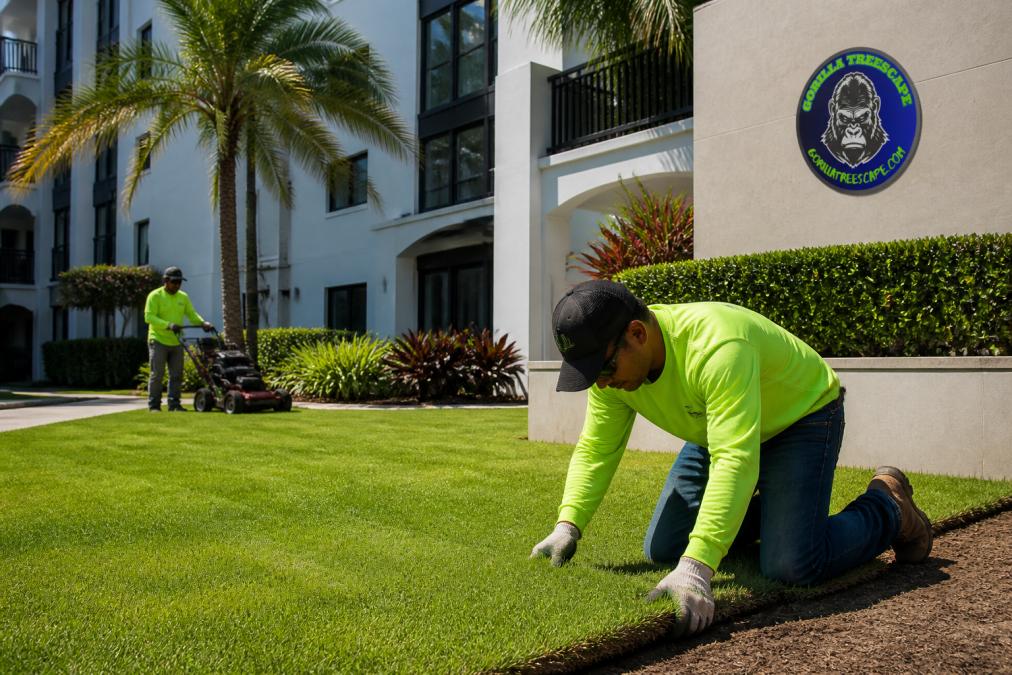
HOA landscaping runs on details: clear scopes, defined responsibilities, and a vendor who actually shows up. Gorilla Treescape LLC handles commercial property maintenance and full outdoor design, from landscaping and pool maintenance to driveways and decks, with permit handling and project management from concept to completion. Get a quote from Gorilla Treescape LLC and put your community's grounds on a schedule that holds up.