 ultimate-guide
Commercial Landscaping Maintenance Pricing Guide
Table of Contents
- Understanding Commercial Landscaping Maintenance Pricing
- Key Factors That Influence Commercial Landscaping Costs
- Pricing Models: Per-Acre, Square-Foot, and Per-Visit Approaches
- Breaking Down Labor and Material Costs
- Commercial Lawn Care Service Frequency and Seasonal Requirements
- Calculating Overhead and Profit Margins for Maintenance Contracts
- Building a Commercial Landscaping Contract Template
- Sustainable Alternatives to Chemical Fertilizers for Businesses
- Frequently Asked Questions
Last Updated: August 31, 2026
Understanding Commercial Landscaping Maintenance Pricing
Commercial landscaping maintenance pricing is the foundation of any successful landscape management business. Unlike residential work, commercial properties demand structured, predictable pricing models that account for property size, service complexity, and year-round maintenance demands.
At Gorilla Treescape LLC, we've worked with property managers and business owners across South Florida to develop transparent pricing strategies that reflect actual costs while remaining competitive. The real challenge isn't finding a pricing formula, it's understanding what goes into it. Labor, materials, equipment, overhead, and profit margins all need to work together. A property that looks simple might have drainage issues, difficult terrain, or unusual layout that multiplies labor costs. Another might be straightforward but require specialized care like irrigation management that demands higher skill levels.
This guide walks you through the mechanics of commercial landscaping maintenance pricing, from per-acre models to square-foot calculations, labor breakdowns, and how to build sustainable profit margins into every contract.
Key Factors That Influence Commercial Landscaping Costs
Property size and complexity are primary cost drivers, but understanding all factors helps you bid accurately and identify efficiency gains.
Service scope determines baseline cost. A basic mowing and edging contract costs far less than full-service maintenance including fertilization, weed control, pruning and trimming, and seasonal cleanup. A property requiring irrigation management adds another layer of complexity and cost.
Site assessment reveals hidden expenses. Walk the property and document existing conditions. Steep slopes increase labor time for mowing. Dense tree coverage means more pruning work and seasonal leaf cleanup. Hardscape elements like pavers require different maintenance than turf. Poor drainage might require corrective work before regular maintenance can begin.
Labor costs vary by market and season. In South Florida, year-round growing means consistent demand for maintenance. This affects your hourly labor rates and crew allocation across multiple properties.
Equipment and fuel expenses fluctuate. Larger properties need more fuel consumption. Specialized equipment for specific tasks increases per-property costs. Equipment depreciation is a real expense that needs to be factored into pricing.
Service frequency impacts total annual cost. A property requiring weekly mowing versus bi-weekly service has dramatically different annual labor costs. Seasonal requirements like spring and fall cleanup add discrete costs that need separate line items in your bid.
Pricing Models: Per-Acre, Square-Foot, and Per-Visit Approaches
Three primary pricing models dominate commercial landscaping contracts. Each has strengths depending on property type and service scope.
Per-acre pricing works well for larger properties with consistent terrain. You calculate a monthly or annual cost per acre, then multiply by total acreage. This model is simple to communicate. The downside: per-acre pricing can undervalue complex properties or overvalue simple ones.
Square-foot pricing offers more precision for mixed-use properties. You price based on total maintained square footage, accounting for different rates for turf, hardscape, and planting beds. This requires more detailed site documentation.
Per-visit pricing works for properties with variable service needs or seasonal work. You charge a set fee per visit for mowing and edging, then add separate line items for additional services like fertilization or weed control. This gives clients flexibility and makes pricing transparent. Per-visit pricing requires consistent scheduling and clear documentation of what each visit includes.
Many successful contractors blend these models, using per-acre or square-foot for base maintenance, then adding per-visit charges for seasonal work or specialized services.
Breaking Down Labor and Material Costs
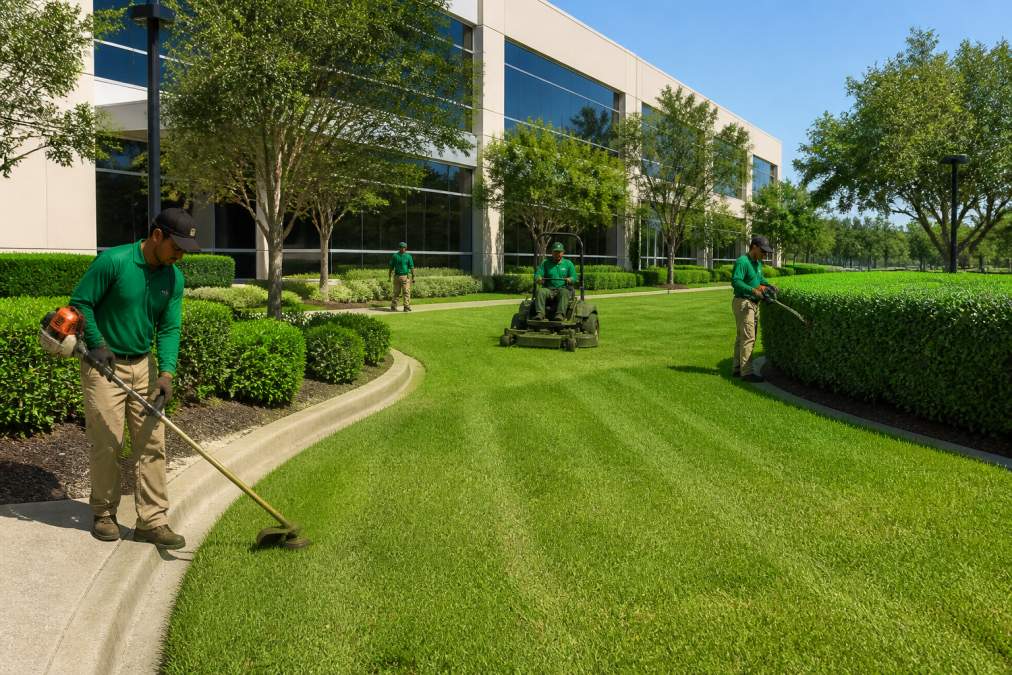
Labor is typically 50-70% of total maintenance costs (peer-reviewed research). Understanding where those hours go helps you price accurately and identify efficiency opportunities.
Direct labor includes crew time for mowing and edging, fertilization application, weed control, pruning and trimming, and seasonal cleanup. Material costs for seasonal cleanup can be substantial, spring and fall cleanup on a mature property might require labor hours plus disposal fees.
Material costs vary by service type. Fertilization and weed control require purchased products. Mulch for planting beds, compost for soil amendment, and seed for turf repair all add to material expenses.
Indirect labor covers time spent on site assessment, bid preparation, customer communication, invoicing, and route planning. This overhead doesn't show up on individual properties but needs to be recovered across your entire contract portfolio.
Commercial Lawn Care Service Frequency and Seasonal Requirements
Service frequency is the single biggest variable in commercial landscaping maintenance pricing. A property on weekly service costs dramatically more than one on bi-weekly service.
Weekly maintenance is standard for properties requiring consistent appearance, including retail locations, office parks, and hospitality properties. The cost premium reflects both labor and the efficiency of regular visits.
Bi-weekly service suits properties with slower growth or less demanding appearance standards. Industrial parks, warehouses, and some multi-family properties often operate on bi-weekly schedules.
Seasonal requirements add significant costs. Spring cleanup after winter dormancy requires extra labor for debris removal, pruning and trimming, and bed preparation (extension.oregonstate.edu). Fall cleanup involves leaf collection, plant cutback, and winterization. These seasonal services might add to annual maintenance costs.
Irrigation management requires separate pricing. If you're maintaining the system, adjusting schedules seasonally, and monitoring for leaks, that's specialized labor requiring separate billing.
The key to accurate pricing is documenting what service frequency actually means for each property. Weekly service on a 5-acre property with mature trees is fundamentally different from weekly service on a 2-acre open lawn.
Calculating Overhead and Profit Margins for Maintenance Contracts
This is where many landscapers stumble. They price labor and materials correctly but forget about overhead.
Overhead expenses include office rent, insurance, equipment maintenance and depreciation, fuel for vehicles, licensing and permits, and software for scheduling and invoicing. Calculate your total annual overhead and divide by the number of billable hours your crews work.
Profit margins on maintenance contracts typically run 15-25%. This buffer allows you to handle unexpected costs, weather delays, employee turnover, and seasonal downtime.
Calculate pricing by adding direct labor + materials + (overhead allocation) + profit target.
Many contractors work backwards from competitor pricing instead of forwards from actual costs. Know your numbers first, then adjust your service scope to hit target pricing if needed.
Building a Commercial Landscaping Contract Template
A solid contract protects both you and the client. It specifies what's included, what's not, pricing, payment terms, and responsibilities during weather events.
Essential contract elements:
-
Service scope: List exactly what's included, mowing and edging frequency, fertilization schedule, weed control method, seasonal cleanup, irrigation management if applicable. Be specific about what's NOT included.
-
Pricing and billing: State the monthly or annual cost, billing cycle, and payment terms. Specify whether pricing is fixed or subject to adjustment for scope changes.
-
Service frequency and schedule: Define the exact schedule for routine visits. Account for seasonal variations.
-
Weather and access: Clarify what happens if weather prevents service. Define property access requirements and parking/equipment storage if needed.
-
Liability and insurance: State your liability coverage limits. Require the client to maintain property insurance. Define responsibility for damage to existing landscape elements.
-
Termination and renewal: Specify contract length (typically 12 months), renewal terms, and notice required for cancellation. Include a 30-day termination clause.
-
Change orders: Establish a process for scope additions or modifications. Any work outside the contract scope requires a signed change order and separate billing.
A clear contract prevents disputes about what's included and why pricing is what it is.
Sustainable Alternatives to Chemical Fertilizers for Businesses
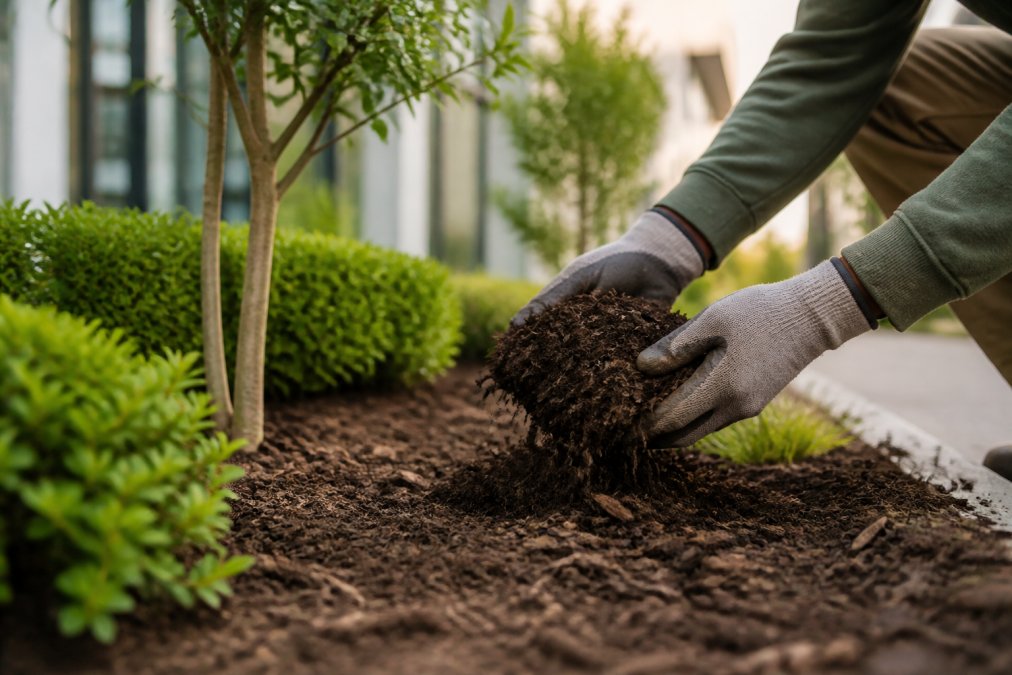
Commercial properties increasingly want sustainable alternatives to chemical fertilizers. This appeals to tenants and customers who value sustainability while often being more cost-effective long-term.
Organic fertilizers and compost build soil health over time, reducing long-term fertilizer needs. Compost application improves soil structure, water retention, and microbial activity. Initial costs are higher than synthetic fertilizers, but reduced application frequency saves money annually.
Mulch management is underrated as a fertilizer alternative. Quality mulch breaks down over time, adding organic matter and nutrients to soil. It also reduces water loss, moderates soil temperature, and suppresses weeds. A mulch refresh program (2-3 inches annually) on planting beds costs less than frequent chemical fertilizer applications while improving long-term soil quality (extension.umn.edu).
Integrated pest management reduces reliance on chemical weed control. Proper mulching, hand removal, and cultural practices control many common weeds without herbicides.
Native plant selection reduces fertilizer and water needs dramatically. Native plants adapted to local climate and soil conditions thrive with minimal inputs. Replacing high-maintenance exotic plants with appropriate natives cuts long-term maintenance costs.
The pricing conversation around sustainable alternatives is simple: higher upfront costs, lower long-term costs. A property owner willing to invest in soil health saves money on fertilizer and achieves better landscape results.
Building accurate commercial landscaping maintenance pricing requires understanding your actual costs, labor, materials, overhead, and the profit margin you need to sustain your business. The models and frameworks in this guide give you a foundation. The real work is documenting your specific costs, testing pricing on actual properties, and refining based on real performance data.
Gorilla Treescape LLC has helped property managers and business owners in South Florida develop transparent, sustainable pricing for their landscape maintenance. Whether you're managing a single commercial property or coordinating multiple sites, understanding the cost structure behind maintenance contracts ensures you're getting fair pricing and quality service. Get a quote to discuss your specific commercial landscaping needs and how to structure a maintenance contract that works for your property.
| Pricing Model | Best For | Key Advantage | Main Limitation |
|---|---|---|---|
| Per-Acre | Large uniform properties | Simple to calculate and communicate | Doesn't account for terrain or complexity |
| Square-Foot | Mixed-use properties with varied zones | Precise pricing for different maintenance areas | Requires detailed site documentation |
| Per-Visit | Variable or seasonal service needs | Transparent, flexible scheduling | Requires consistent scheduling discipline |
| Cost Category | Typical Range | Notes |
|---|---|---|
| Direct Labor | 50-70% of total | Varies by crew rate and service frequency |
| Materials | 10-20% of total | Depends on fertilization, mulch, and specialized products |
| Overhead Allocation | 10-20% of total | Calculate from total annual overhead divided by billable hours |
| Profit Margin | 15-25% of total | Essential buffer for unexpected costs and seasonal downtime |
Frequently Asked Questions
How do you calculate the cost of commercial landscaping maintenance pricing?
Commercial landscaping maintenance pricing starts with a site assessment to determine property size, service scope, and complexity. Calculate direct costs (labor, materials, equipment) plus indirect costs (overhead, insurance, equipment depreciation). Add your desired profit margin. Most providers use per-acre, square-foot, or per-visit models depending on property size and service type. Request a detailed quote from a service provider to understand the specific breakdown for your property.
What factors most influence the cost of a commercial landscaping contract?
Key factors include property size, service scope (mowing, fertilization, weed control, irrigation), site complexity, seasonal requirements, equipment needed, and local labor rates. Accessibility affects costs, properties with obstacles require more time. Service frequency impacts pricing; weekly maintenance costs more than bi-weekly. Hardscape maintenance, turf management, and specialized services like pruning command higher rates. Site conditions and drainage issues may require additional work. Liability insurance and fuel surcharges also factor into final pricing.
How often should commercial properties receive landscape maintenance?
Commercial lawn care service frequency depends on property type, climate, and aesthetic standards. Most commercial properties require weekly or bi-weekly mowing during growing season. Fertilization typically occurs 4-6 times annually. Seasonal cleanup is essential in spring and fall. High-traffic commercial spaces may need more frequent edging and trimming. Irrigation management requires regular checks. Property managers should establish a service level agreement specifying frequency for each service. Discuss your property's specific needs with a landscaping professional to determine the optimal maintenance schedule.
What should be included in a commercial landscaping contract template?
A comprehensive commercial landscaping contract template should specify scope of work (mowing, edging, fertilization, weed control), service frequency and billing cycles, pricing and payment terms, equipment and materials provided, seasonal requirements, liability and insurance coverage, termination clauses, and communication protocols. Include site-specific details like property dimensions, service level agreement standards, and any hardscape maintenance requirements. Define response times for emergency services. Clarify responsibility for irrigation management and design changes. Have both parties sign and date the agreement to avoid disputes about service expectations and costs.
This article was written using GrandRanker