 how-to
Landscaping Lighting Installation Miami: 2026 How-To Guide
Table of Contents
- What You'll Need Before You Start
- Step 1: Map Your Yard and Pick Lighting Zones
- Step 2: Low Voltage Landscape Lighting Installation
- Landscape Lighting Design Ideas for South Florida Yards
- Outdoor Lighting Maintenance Tips for Year-Round Performance
- Common Mistakes to Avoid
- When to Call a Professional
- Frequently Asked Questions
Last Updated: September 30, 2026
What You'll Need Before You Start
Landscaping lighting installation in Miami starts long before the first fixture goes in the ground. The region's humidity, salt air, and sandy soil shape every decision, from the fixtures you pick to how deep you bury the cable. This guide from Gorilla Treescape LLC walks through the full process, and we'll flag the mistakes that cause most DIY jobs to fail within a year.
Before you dig, gather these essentials:
- Low voltage transformer sized to your total wattage
- 12-gauge direct burial cable for runs over 100 feet
- LED fixtures rated for wet and humid conditions
- Silicone-filled wire connectors
- Cable stakes, a trencher or edging tool, and a waterproof junction box
One thing most guides skip: check your HOA rules and local electrical codes first. Many South Florida communities restrict fixture height and light spill toward neighboring properties, and reversing an installation after a violation notice costs far more than planning ahead.
Step 1: Map Your Yard and Pick Lighting Zones
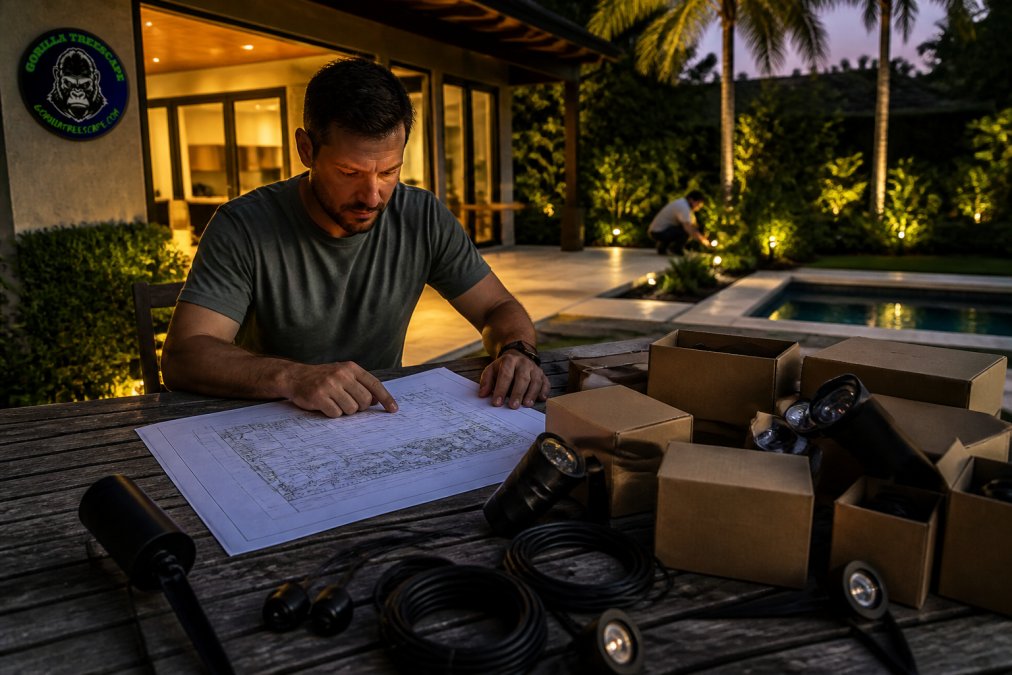
Mapping your yard is the step that separates a lighting plan from a random scatter of fixtures. Walk the property at night with a flashlight and note where you actually need light: paths, steps, driveways, specimen trees, and architectural features.
Group your yard into three zones:
- Safety zones: walkways, stairs, and driveway edges
- Feature zones: trees, garden beds, and water features you want to highlight
- Ambient zones: walls, fences, and patios that benefit from soft wash lighting
Sketch the layout on paper before buying anything. Mark each fixture location, then measure the distance back to your transformer. That measurement determines your cable runs and transformer size, and getting it wrong means redoing the trench.
Step 2: Low Voltage Landscape Lighting Installation
Low voltage landscape lighting installation runs on 12 to 15 volts, which makes it safe for homeowners to install without a licensed electrician in most cases. The trade-off is voltage drop: the further a fixture sits from the transformer, the dimmer it burns. Plan your longest runs first and size the transformer with headroom to spare.
The installation sequence stays consistent across most yards:
- Mount the transformer near an outdoor GFCI outlet
- Run the main cable along your planned route
- Stake fixtures in position and connect them with silicone-filled connectors
- Connect the cable to the transformer and test before backfilling
- Bury the cable and adjust aim after dark
Choosing Fixtures for Miami Humidity
Fixture selection matters more here than in drier climates. Salt air corrodes cheap aluminum housings within a season or two, and standing humidity works its way into poorly sealed lenses. Look for brass or copper housings with IP65 or higher ratings, and confirm the fixture uses a sealed LED module rather than a replaceable bulb behind a loose gasket.
A common mistake is buying on price alone. The fixtures that fail fastest are the ones with plastic housings and unsealed connections, and replacing them every year costs more than buying brass once.
Wiring, Transformer Sizing, and Burial Depth
Transformer sizing follows a simple rule: add up your total fixture wattage, then choose a transformer rated at least 20 to 30 percent higher. That headroom absorbs voltage drop and gives you room to add a fixture later without replacing the unit.
Bury cable 6 to 8 inches deep in most residential yards, deeper where foot traffic or digging is likely. Use 12-gauge wire for runs beyond 100 feet; thinner wire loses voltage faster and leaves distant fixtures visibly dim.
Landscape Lighting Design Ideas for South Florida Yards
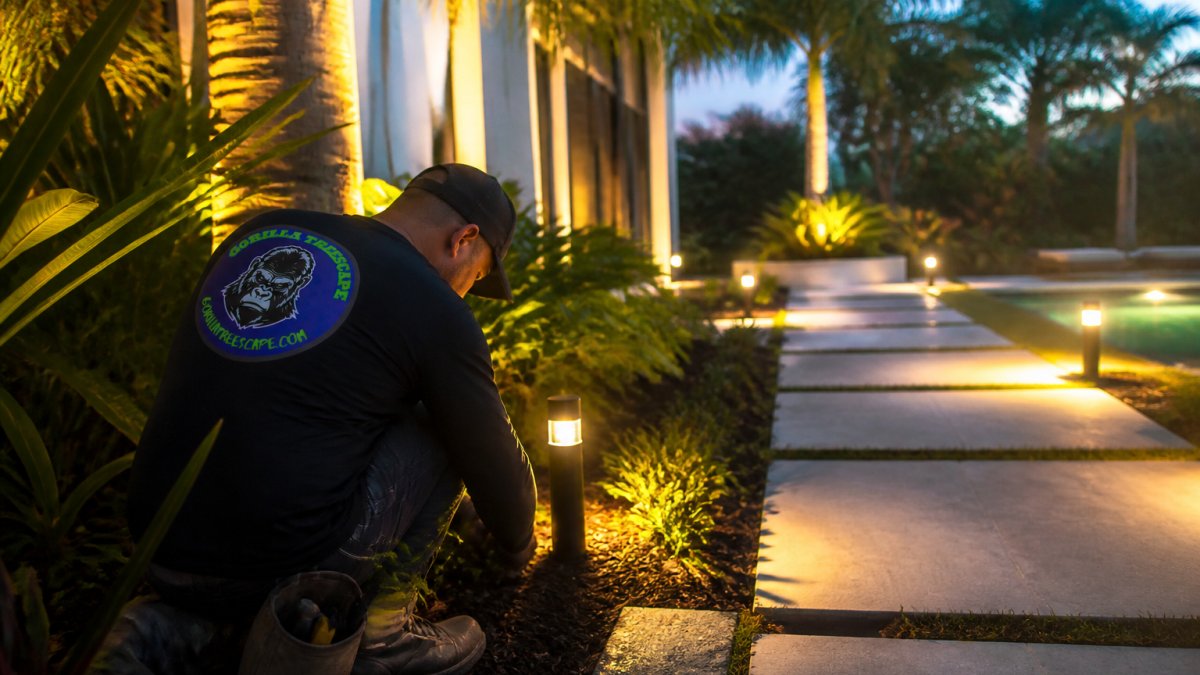
Landscape lighting design ideas for this region lean on the plants that thrive here. Uplighting a royal palm or a cluster of areca palms creates dramatic shadows against the house, while moonlighting from a canopy tree casts soft dappled light across a patio.
Three approaches work well in local yards:
- Palm uplighting: narrow-beam fixtures at the base, aimed up the trunk
- Garden bed wash: wide-beam fixtures tucked into dense plantings
- Path and step lighting: low-glare fixtures spaced 6 to 8 feet apart
Keep fixture counts modest. Too many lights flatten the design and wash out the shadows that make a yard feel intentional. If your yard includes a pool or patio, coordinate the lighting plan with those features so the whole space reads as one design rather than separate projects.
Outdoor Lighting Maintenance Tips for Year-Round Performance
Outdoor lighting maintenance tips matter more in a humid climate than most homeowners expect. Salt, rain, and rapid plant growth all work against a clean installation, and small issues compound if you ignore them.
A simple maintenance routine keeps a system running:
- Wipe lenses and fixture faces monthly during rainy season
- Trim plants away from fixtures before growth blocks the beam
- Check connections after heavy storms for corrosion or water intrusion
- Re-aim fixtures seasonally as trees and shrubs grow
Common Mistakes to Avoid
The biggest mistake in landscaping lighting installation Miami homeowners make is undersizing the transformer. A unit running at full capacity from day one has no room for voltage drop or future fixtures, and it will run hot and fail early.
Other frequent errors:
- Using standard wire nuts instead of silicone-filled connectors
- Burying cable too shallow, where lawn equipment damages it
- Placing fixtures without a night test, leaving glare and dark spots
- Ignoring HOA rules until a violation notice arrives
Each of these costs more to fix than to prevent. A night test before backfilling catches most of them in a single evening.
When to Call a Professional
Some projects genuinely need a professional. If your yard requires line voltage work, complex drainage coordination, or integration with an existing pool and patio design, a licensed contractor saves time and prevents code issues.
At Gorilla Treescape LLC, we handle full outdoor living projects, including landscaping and outdoor living design and ongoing maintenance. Our team manages permits and project timelines so a lighting plan fits into a larger backyard design rather than standing alone. Homeowners who want lighting tied into a new patio, deck, or garden layout get a single point of contact from concept to completion, backed by a 5.0 rating across 34 reviews.
Frequently Asked Questions
How much does professional landscaping lighting installation in Miami cost?
Pricing depends on the number of fixtures, run lengths, transformer size, and whether trenching or existing conduit is used. A small path-light package costs far less than a full architectural system with uplights on palms and specimen trees. Because every yard is different, most installers quote after a walkthrough. Gorilla Treescape LLC provides a free quote on its website so you get a number tied to your actual layout rather than a generic estimate.
What types of fixtures hold up best in Miami's humidity and salt air?
Look for fixtures rated for wet locations with copper or brass bodies, stainless steel hardware, and sealed gaskets. Powder-coated aluminum can work inland, but near the coast, salt spray corrodes cheaper finishes within a season or two. Choose LED fixtures rated for damp and wet locations, and confirm the driver is potted or sealed. Fixtures with replaceable LED modules save money long term because you swap the module instead of the whole unit.
Do I need a permit for outdoor lighting installation?
Low voltage landscape lighting that plugs into an existing exterior GFCI outlet and stays under the voltage limits in the National Electrical Code typically does not require a permit. Line voltage work, new dedicated circuits, and anything tied into your main panel usually do. Miami-Dade and Broward counties also enforce rules in some flood zones and HOA communities. Confirm with your local building department and HOA before trenching.
How do I choose the right color temperature for my garden lights?
Most South Florida landscapes look best between 2700K and 3000K. That range keeps palm fronds, stone, and stucco looking natural instead of blue or harsh. Use 2700K around seating areas and outdoor kitchens for a warmer feel, and 3000K where you want foliage to read greener. Avoid mixing temperatures on the same transformer run, because the difference is obvious at night and makes the whole system look uneven.
A lighting system that looks right on installation day but fails within a year usually traces back to undersized equipment or rushed connections. Gorilla Treescape LLC designs and installs outdoor lighting as part of complete backyard projects, with permit handling, Miami-inspired garden design, and maintenance plans that keep everything working through storm season. Get a quote from Gorilla Treescape LLC and build a yard that looks as good at night as it does at noon.