 ultimate-guide
Hurricane Tree Trimming in South Florida: 2026 Guide
Table of Contents
- Why Hurricane Tree Trimming in South Florida Is Different
- Your Hurricane Tree Preparation Checklist
- Tree Canopy Thinning Techniques That Reduce Wind Damage
- Hiring Professional Arborists for Storm Prep
- Species-Specific Hurricane Resistance: Which Trees Hold Up
- DIY Safety Limits: What Homeowners Should Never Attempt
- Post-Hurricane Tree Recovery and Debris Removal Rules
- Conclusion: Make Storm-Ready Tree Care a Year-Round Habit
- Frequently Asked Questions
Last Updated: September 27, 2026
Why Hurricane Tree Trimming in South Florida Is Different
Hurricane tree trimming in South Florida is not the same job as pruning a tree in a calmer climate. Sandy soils, shallow roots, and a year-round growing season create fast-growing canopies that hold dense foliage right into storm season, foliage that becomes a sail in sustained winds.
Your Hurricane Tree Preparation Checklist
A hurricane tree preparation checklist works best when you start months before storm season, not days. Trees respond to pruning over time, and a rushed trim before landfall leaves open wounds that invite disease and pests. The biggest differentiator between a tree that survives and one that fails isn't luck, it's structural work done months before the storm is named.
- Inspect every tree for deadwood, cracks, and leaning trunks, deadwood is the first thing to fail in wind
- Remove dead, diseased, or crossing branches, crossing limbs rub and create weak attachment points
- Thin the canopy to let wind pass through, target roughly 15-20% of interior foliage, never more
- Check for root damage or soil heaving near the trunk, a leaning trunk with lifted soil is a failing root plate
- Confirm no branches touch power lines or your roof, clearance matters more than aesthetics
- Schedule professional pruning outside peak storm weeks, crews book out weeks ahead once a storm is named
- Document tree health with dated photos before the season, this becomes your insurance and liability record
Timing Your Trim Around Hurricane Season
The best time to prune for storm season is during the dormant season or well before the typical June-to-November storm window. Light structural work during active growth is fine, but heavy canopy thinning should happen early enough for the tree to seal its cuts.
What to Inspect on Every Tree Before a Storm
Walk your property and look for the warning signs that precede tree failure. The earlier you catch them, the more options you have.
Key things to check:
- Cracks or splits in the trunk, especially vertical cracks that run with the grain
- Mushrooms or fungal growth at the base, conks at the root flare often mean internal decay
- Hollow or soft wood when tapped, a dull thud instead of a sharp report is a warning
- Sudden lean that wasn't there before, compare against older photos if you have them
- Multiple trunks with a weak V-shaped union, included bark in the crotch is a common failure point
- Dead branches still attached overhead, these are the "widow makers" that drop without warning
- Codominant leaders, two trunks of similar size competing for dominance often split in high wind
Tree Canopy Thinning Techniques That Reduce Wind Damage
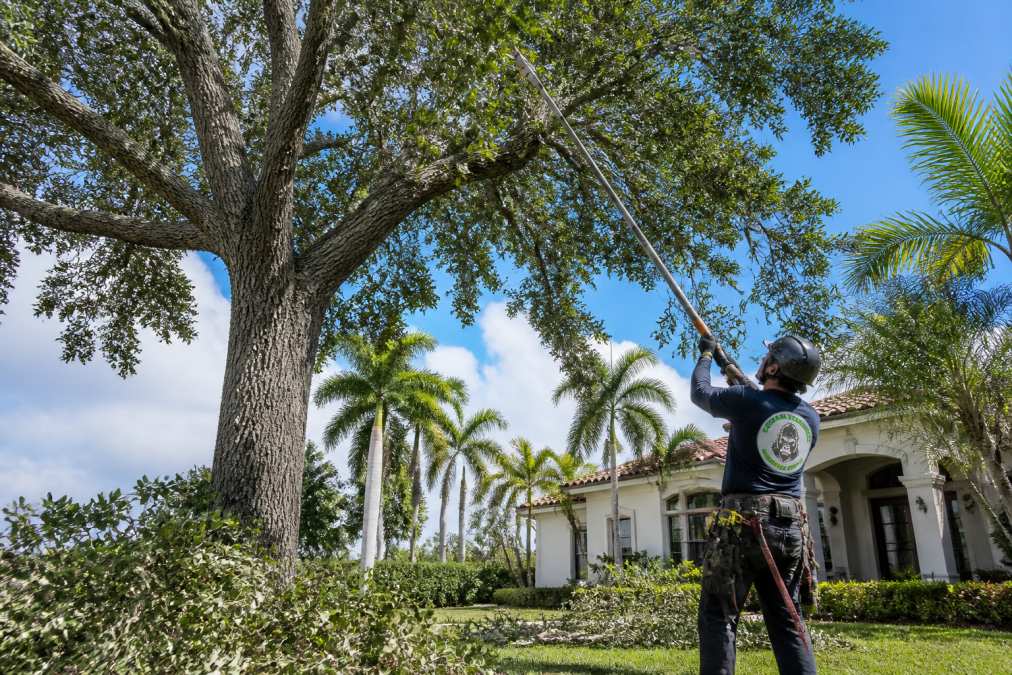
Canopy thinning reduces wind damage by letting air move through the tree instead of pushing against it. Less branch density means less surface area catching wind, reducing the load on the trunk and roots.
Structural Pruning vs. Topping: Why Topping Backfires
Topping, cutting large branches back to stubs, is popular because it's fast and cheap. It's also wrong.
Hiring Professional Arborists for Storm Prep
Hiring professional arborists for storm prep is worth it because tree work near structures and power lines is dangerous, and mistakes are expensive. An ISA Certified Arborist can assess species, root health, and structural integrity in ways most homeowners can't.
When you're evaluating tree trimming contractors, ask:
- Are you an ISA Certified Arborist?
- Do you carry liability insurance and workers' comp?
- Can you provide a written scope of work?
- Will you document the tree's condition before and after?
Species-Specific Hurricane Resistance: Which Trees Hold Up
Tree species determines how well a tree handles hurricane-force wind. Some have deep, spreading root systems and flexible wood that bends without breaking; others grow fast with brittle limbs that shatter under load.
Trees that generally perform better in high winds:
- Live oak, with dense, strong wood and a broad root spread
- Sabal palm, which sheds fronds and flexes rather than snapping
- Bald cypress, which is wind-firm and tolerant of wet soils
Trees that tend to fail more often:
- Ficus, with shallow roots and heavy canopies
- Australian pine, which is fast-growing and brittle
- Laurel oak, which grows quickly but has weaker wood than live oak
DIY Safety Limits: What Homeowners Should Never Attempt
DIY tree work has hard limits, and crossing them is how people get hurt. These tasks should always go to a professional.
Never attempt:
- Climbing a tree with a chainsaw
- Cutting branches within 10 feet of power lines
- Removing a large limb overhanging a roof or structure
- Working on a leaning or partially uprooted tree
- Operating a chainsaw above shoulder height on a ladder
Post-Hurricane Tree Recovery and Debris Removal Rules
Post-hurricane tree recovery starts with safety, then assessment, then cleanup, in that order. Don't rush into a damaged landscape, downed lines, hanging limbs, and unstable trunks cause injuries after the storm, not during it.
The First 24 Hours: Safety Before Salvage
Before you touch a single branch, do a visual sweep from a safe distance:
- Stay clear of any tree touching or near a power line, and call the utility. Assume every downed line is live.
- Look up before you walk under anything. Hanging limbs can drop hours or days after the storm passes.
- Treat any tree with a lifted root plate, soil mounded on one side of the trunk, as unstable. Do not stand near it, and do not try to pull it upright.
- Keep children and pets away from the debris field until it's been cleared.
Assessment: Which Trees Can Be Saved
Not every damaged tree needs to come down. A certified arborist usually classifies storm-damaged trees into three buckets:
- Recoverable, lost limbs but the trunk and root plate are intact. A recovery prune can rebalance the canopy.
- Borderline, major limb loss or a significant lean. May survive with corrective pruning, but the risk of future failure needs to be weighed against the value of the tree.
- Remove, split trunk, lifted root plate, or more than about half the canopy gone. These are the trees most likely to fail in the next storm.
Debris Removal and Disposal Rules
Debris disposal is regulated locally, and rules vary by county and municipality. Many areas require vegetative debris separated from construction material and placed at the curb in specific ways. Check local guidelines before you haul anything, improper disposal can lead to fines.
A few practical rules that apply almost everywhere:
- Separate vegetative debris (branches, leaves, palm fronds) from construction and household debris.
- Cut limbs into manageable lengths, many pickup programs specify a maximum length and diameter.
- Don't bag vegetative debris unless your municipality specifically asks for it; most curbside programs want it loose at the curb.
- Keep debris clear of fire hydrants, storm drains, and utility boxes.
- Never burn debris without checking local burn bans, which are common after storms.
Insurance and Liability Documentation
This is the step most homeowners skip, and it's the one that costs them. Before you move anything, photograph and video the damage from multiple angles, wide shots showing the tree in context with your home, plus close-ups of the failure point.
Keep a simple file with:
- Dated photos and video of all damage
- Any pre-storm photos showing the tree's prior condition
- Records of professional pruning or assessments done before the storm
- Receipts and written scopes of work from any contractor you hire
When to Call a Professional After the Storm
Call a certified arborist if any of the following apply:
- A tree is leaning more than it was before the storm
- A limb is hanging and you can't tell if it's still attached
- The trunk has a new crack or split
- The tree is within falling distance of a structure, vehicle, or power line
- You're not sure whether the tree is safe, uncertainty is itself a reason to call
Conclusion: Make Storm-Ready Tree Care a Year-Round Habit
The homeowners who come through hurricane season with their trees intact aren't lucky. They prepare early, prune correctly, and know their limits. Storm-ready tree care is a year-round habit, not a scramble before landfall.
Frequently Asked Questions
Who is responsible for trimming trees near power lines in Florida?
In Florida, utility companies are responsible for maintaining clearances around power lines, but the property owner typically owns the tree and any limbs on their side of the meter. Never trim within 10 feet of a power line yourself. Instead, call your utility provider or a licensed tree service that follows OSHA and ANSI A300 standards. A certified arborist can coordinate with the utility to keep the work legal and safe.
Does homeowners insurance cover tree removal after storm damage?
Most homeowners insurance policies cover tree removal only if the tree hits a covered structure, like your house, fence, or shed. Removal of a tree that simply falls in the yard is often capped at a few hundred dollars or not covered at all. Document the damage with photos before cleanup, keep all receipts, and file promptly. Regular hurricane tree trimming and written inspection records can also help show you maintained the property and reduce liability disputes.
How far in advance should I trim trees before a storm?
Schedule hurricane tree trimming at least four to six weeks before a named storm threatens your area. This gives the tree time to seal pruning cuts and reduces the chance of weak regrowth being torn off in high winds. Avoid heavy pruning once a storm watch is issued. If you are already in the cone of uncertainty, focus on removing deadwood and loose debris only, and let a professional handle any work near structures or power lines.
What is the difference between thinning and topping trees for wind resistance?
Thinning removes selected interior branches to let wind pass through the canopy, which reduces the sail effect and keeps the tree's natural shape. Topping cuts the main leader and large limbs back to stubs, triggering fast, weak regrowth that is more likely to break in a storm. That is why ISA Certified Arborists never recommend topping for hurricane prep. Proper tree canopy thinning techniques, including structural pruning and deadwood removal, are the safe, effective alternative.