 listicle
Benefits of Professional Tree Trimming in Miami
Table of Contents
- Why Professional Tree Trimming Matters for Miami Properties
- The Best Time of Year to Trim Trees in Florida
- Signs a Tree Needs Professional Pruning
- How to Maintain Healthy Residential Trees
- DIY vs. Professional Risk Assessment: What Homeowners Need to Know
- Enhancing Curb Appeal and Property Value Through Expert Tree Care
- Frequently Asked Questions
Last Updated: September 16, 2026
Why Professional Tree Trimming Matters for Miami Properties
Professional tree trimming is the practice of selectively removing branches from a tree to improve its structure, health, and safety while protecting the surrounding property. In South Florida's climate, where storms roll in fast and vegetation grows year-round, that work is less cosmetic than structural. This guide from Gorilla Treescape LLC covers what homeowners across Miami Beach, Miami Shores, El Portal, the Design District, and Downtown Miami need to know before anyone touches a saw.
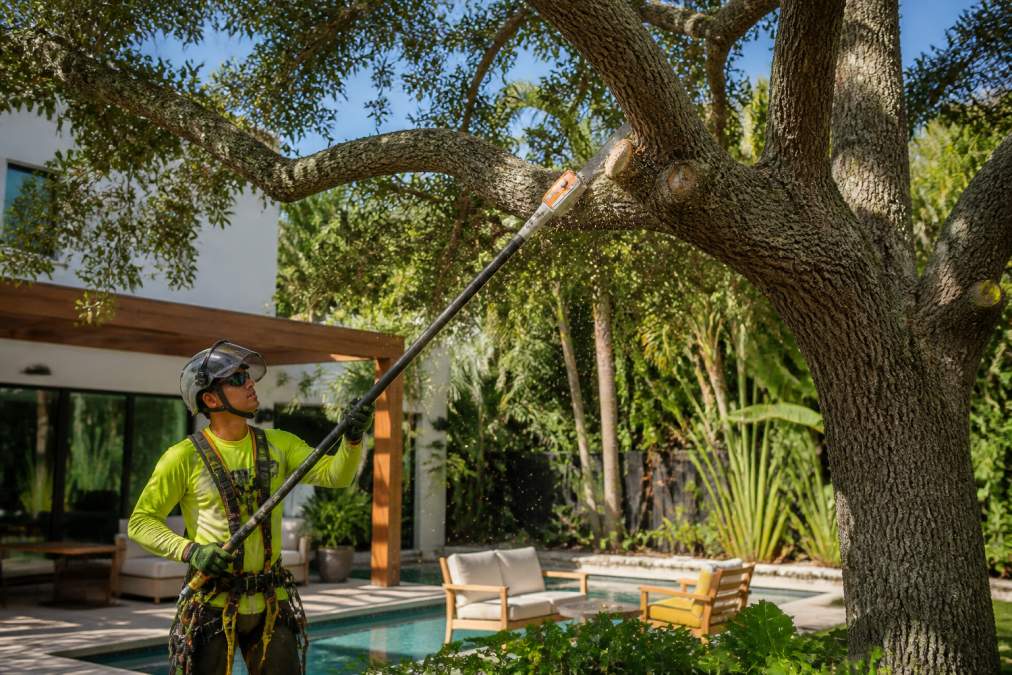
The stakes are higher here than in most of the country. A mature oak or ficus that overhangs a driveway, a pool cage, or a neighbor's roof carries real liability, and the region's storm season turns weak limbs into projectiles. Below, we break down the specific benefits of professional tree trimming, the right time of year to schedule it, and how to tell when a tree needs help.
Storm Damage Prevention and Liability Reduction
The single biggest reason to trim on a schedule is storm damage prevention. A dead or weakly attached limb is the first thing to fail in high wind, and when it lands on a car, a fence, or a person, the cost is measured in claims and repairs, not just cleanup.
Proper pruning removes the weak points before a storm finds them. Arborists thin the canopy so wind passes through rather than catching it, and they cut back limbs that hang over structures. That work also reduces liability.
Improving Sunlight Penetration and Air Circulation
Thinning a canopy does more than protect the house. It changes how light and air move through the whole yard.
The Best Time of Year to Trim Trees in Florida
The best time of year to trim trees in Florida is late winter, during the dormant season, before spring growth begins. For most species, that window runs from roughly December through February, when the tree is resting and can recover quickly once growth resumes. But "most species" is doing a lot of work in that sentence, the right month depends on what's growing in your yard, and getting it wrong can cost you a season of blooms or open a wound right before storm season.
A Species-by-Species Trimming Calendar
Most guides stop at "prune in dormancy." That advice breaks down the moment you're standing under a mango or a crepe myrtle. Here's how the common trees in this region actually behave:
| Tree Type | Best Pruning Window | Why It Matters |
|---|---|---|
| Live oak, laurel oak | December-February | True dormancy; structure is visible and wounds seal before spring push |
| Ficus (including hedge ficus) | Late winter, after the last cold snap | Fast growers bleed sap and regrow aggressively; pruning too early invites cold damage |
| Mango and other tropical fruit | After harvest, before new bloom | Pruning during bloom or fruit set removes the crop; timing protects next year's yield |
| Citrus | Late winter, after fruit harvest | Avoids flower buds and reduces the window for citrus canker spread |
| Crepe myrtle | Late winter, before bud break | Pruning in active growth removes flower buds and encourages the wrong kind of regrowth |
| Palms | Spring, after the last cold front | Only remove dead or dying fronds; over-pruning palms starves the crown |
| Podocarpus, ligustrum, and formal hedges | Light shaping any time; heavy cutback in late winter | Constant shearing in summer stresses the plant and thins the interior |
Dormant Season vs. Active Growth Periods
Signs a Tree Needs Professional Pruning
Knowing the signs a tree needs professional pruning helps you catch problems while they're still cheap to fix. Watch for dead or hanging branches, cracks in the trunk, mushrooms at the base, and dense, rubbing limbs in the interior canopy.
Detecting Diseases and Pest Infestations Early
Trees rarely fail without warning. They signal distress for weeks or months first, and those signals are easy to miss from the ground.
How to Maintain Healthy Residential Trees
Ongoing care keeps trees vigorous between prunings. The basics are consistent watering during dry spells, mulch that stays clear of the trunk, and a maintenance schedule that matches the species rather than the calendar.
Structural Pruning and Branch Development
Structural pruning shapes a young tree so it grows into a strong, safe adult. The goal is a single dominant trunk with well-spaced branches attached at wide angles.
| Sign or Task | What It Means | Action |
|---|---|---|
| Dead or hanging limb | Immediate hazard | Remove now |
| Cracked trunk or split | Structural failure risk | Call an arborist |
| Dense interior canopy | Poor airflow, weak limbs | Thin in dormant season |
| Mushrooms at base | Possible root decay | Assess before cutting |
| Out-of-season leaf drop | Pest or disease signal | Diagnose early |
DIY vs. Professional Risk Assessment: What Homeowners Need to Know
Most tree work looks simple from the ground. It isn't. The question isn't whether you can reach a branch, it's whether you can do it without injury, property damage, or long-term harm to the tree. This section gives you a concrete way to decide, not a vague "when in doubt, call a pro."
The Four-Factor Go/No-Go Checklist
Before you pick up a saw, run through these four questions. If you answer "no" to any of them, the job belongs to a professional.
- Height. Can you keep both feet on the ground or on a stable step stool? Anything that requires a ladder plus a saw is a no-go. Falls from ladders are the single most common tree-work injury for homeowners.
- Proximity to hazards. Is the branch clear of power lines, the house, the pool cage, the fence, and the driveway? Anything within a branch-length of a conductor is a hard stop, never trim near energized lines.
- Branch size and weight. Is the limb small enough that you can control its fall with one hand while cutting with the other? A good rule of thumb: if you can't hold the cut end with one hand, you can't safely manage the drop.
- Tree health and structure. Is the tree sound, or are there cracks, cavities, mushrooms at the base, or a lean? A compromised tree can fail while you're in it, even on a small cut.
What's Actually Safe for a Homeowner
- Safe for most homeowners: small limbs under a few inches in diameter, at ground level or reachable from a step stool, with both feet planted, well clear of structures and wiring, on a healthy tree.
- Call a professional: anything overhead, anything near wiring, anything requiring a ladder and a chainsaw together, anything over a roof, pool, driveway, or fence, and any cut on a tree showing signs of decay or disease.
- Always professional: large removals, storm-damaged or hanging trees, root work, and any job over a structure or pool.
The Hidden Costs of Getting It Wrong
A bad DIY cut doesn't just look bad. A flush cut or a stub cut removes the branch collar the tree needs to seal the wound, opening the door to decay that can take years to show. Topping, cutting a tree back to stubs, triggers rapid, weakly attached regrowth that fails more easily in wind than the original branches did.
Enhancing Curb Appeal and Property Value Through Expert Tree Care
For homeowners who want the whole outdoor space to work together, tree care pairs naturally with the rest of the property. Gorilla Treescape LLC designs and builds custom pools, patios, wood pergolas, turf installations, and modern garden features, and maintains commercial grounds on a schedule, all under one team. You can see the range of work and request a quote at Gorilla Treescape LLC.
Frequently Asked Questions
What are the best months for tree trimming in South Florida?
The best time to trim most trees in South Florida is during the dormant season, typically late fall to early winter. For many species, this means December through February. However, some trees like oaks and palms have specific needs. Avoid heavy pruning in spring when new growth is emerging, as this can stress the tree. Always check with a certified arborist for your specific tree species.
How does professional trimming improve tree structural integrity?
Professional trimming removes dead, diseased, or weak branches that could fail and cause damage. It also involves structural pruning, which guides the tree's growth to create a stronger framework. By making proper cuts at the branch collar, arborists help the tree seal wounds effectively, reducing the risk of decay and pest infestation. This proactive care is a core benefit of professional tree trimming.
Does regular tree trimming increase property value?
Yes, well-maintained trees significantly enhance curb appeal and can increase property value. Healthy, properly pruned trees frame a home attractively and signal that the property is well-cared for. In Miami's competitive real estate market, mature, healthy trees are a desirable feature. Regular professional trimming keeps them looking their best and prevents hazardous conditions that could deter buyers.
How often should residential trees be professionally trimmed?
Most residential trees benefit from professional trimming every 3 to 5 years. However, fast-growing species or trees with structural issues may need more frequent attention, sometimes annually. In South Florida, where storms are common, an annual inspection is wise. A certified arborist can assess your trees and recommend a schedule based on their species, age, and condition.