 ultimate-guide
Tropical Landscape Design: The Complete Guide
Table of Contents
- What Makes Tropical Landscape Design Work
- Native Plants for Landscaping Your Tropical Garden
- Hardscaping and Water Features in Tropical Design
- Poolside Landscaping Design Essentials
- Tropical Garden Maintenance Tips for Year-Round Health
- Strategic Lighting and Modern Tropical Aesthetics
- Budgeting, ROI, and Professional Installation
- Frequently Asked Questions
Last Updated: September 29, 2026
What Makes Tropical Landscape Design Work
Tropical landscape design creates outdoor spaces that thrive in warm, humid climates while balancing aesthetics with functionality. At Gorilla Treescape LLC, the best tropical landscape design projects succeed when they integrate three core elements: native plant selection, thoughtful hardscaping, and climate-appropriate maintenance strategies.
The foundation of any successful tropical landscape design lies in understanding your local environment. South Florida's sandy soil, salt spray, and hurricane-force winds demand plants and structures built to withstand these conditions. Unlike generic landscape approaches, tropical design requires species that naturally evolved in similar climates, they establish faster, require less intervention, and deliver year-round visual interest.
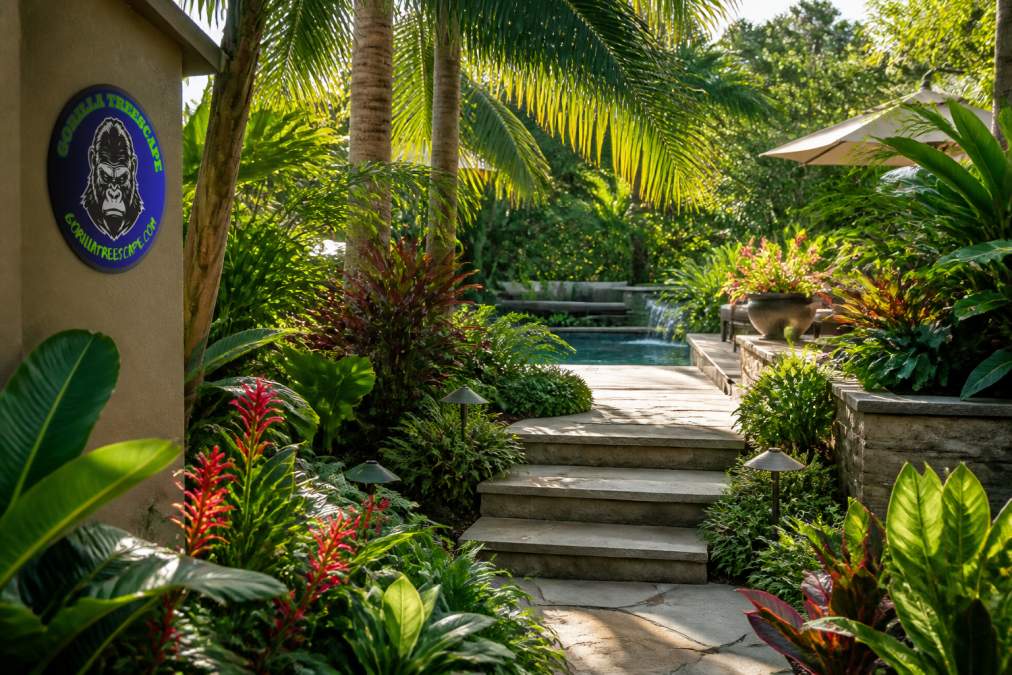
Effective tropical landscape design also balances structure with softness. Hardscapes provide framework and functionality, while layered foliage creates privacy, shade, and the sense of an immersive outdoor living space. The interplay between these elements transforms a basic yard into a cohesive outdoor oasis that feels like a natural extension of your home.
Native Plants for Landscaping Your Tropical Garden
Native plants form the backbone of sustainable tropical landscape design. These species thrive without constant intervention because they're adapted to local soil, humidity, and rainfall patterns. When you select native plants for landscaping, you reduce maintenance demands while supporting local ecosystems.
Salt-Tolerant and Hurricane-Resistant Species
Coastal and near-coastal properties face unique challenges. Salt-tolerant species like sea grape, gumbo limbo, and cocoplum handle spray and wind without declining. These plants don't just survive, they provide structural integrity that protects your property during storms.
Hurricane-resistant horticulture prioritizes low-profile shrubs and flexible-limbed trees that bend rather than break. Avoid brittle species with heavy canopies that catch wind. Instead, choose palms with fronds that shed easily and understory plants that offer visual density without creating wind resistance. This approach to tropical landscape design reduces storm damage and recovery costs.
Layering Foliage for Depth and Privacy
Layered foliage techniques create visual depth while screening unsightly views and neighbors. Start with tall canopy trees (palms, gumbo limbo), move to mid-story shrubs (ixora, sea grape), then add low-growing groundcovers. This tropical arboriculture approach creates distinct zones within your landscape.
Proper plant zoning also improves air circulation and reduces pest pressure. Dense, single-layer plantings trap humidity and encourage fungal issues. Layered designs allow air movement while maintaining the lush appearance that defines tropical garden aesthetics.
Hardscaping and Water Features in Tropical Design
Hardscapes provide the structural framework that makes tropical landscape design functional, but material selection and installation must account for South Florida's unique soil and environmental conditions. Oolitic limestone, natural stone, and permeable pavers work well in the region, but success depends on understanding the substrate beneath them.
Soil Challenges and Hardscape Integration
Most tropical landscape design guides overlook a critical reality: South Florida's native oolitic limestone soil is alkaline (pH 7.5-8.5), nutrient-poor, and often compacted. This soil drains too quickly in some areas and pools water in others depending on grading and subsurface rock formations. When hardscapes are installed without accounting for these conditions, they create problems: water runoff damages plant roots, settling occurs as the limestone substrate shifts, and plants struggle to establish.
Proper hardscape installation begins with soil assessment. Before laying pavers or pouring concrete, professionals evaluate drainage patterns, limestone depth, and existing soil composition. Permeable pavers are superior to solid concrete in tropical settings because they allow water infiltration while reducing runoff velocity.
Water Features and Microclimate Management
Water features, koi ponds, fountains, and recirculating streams, add movement and sound to outdoor living spaces while serving a practical function: they influence microclimate. A pond or fountain creates localized cooling effects during hot months and increases humidity around nearby plants, which is valuable during South Florida's dry season (November through April). Strategic water placement also improves air circulation when designed with proper grading and overflow management.
Poolside Landscaping Design Essentials
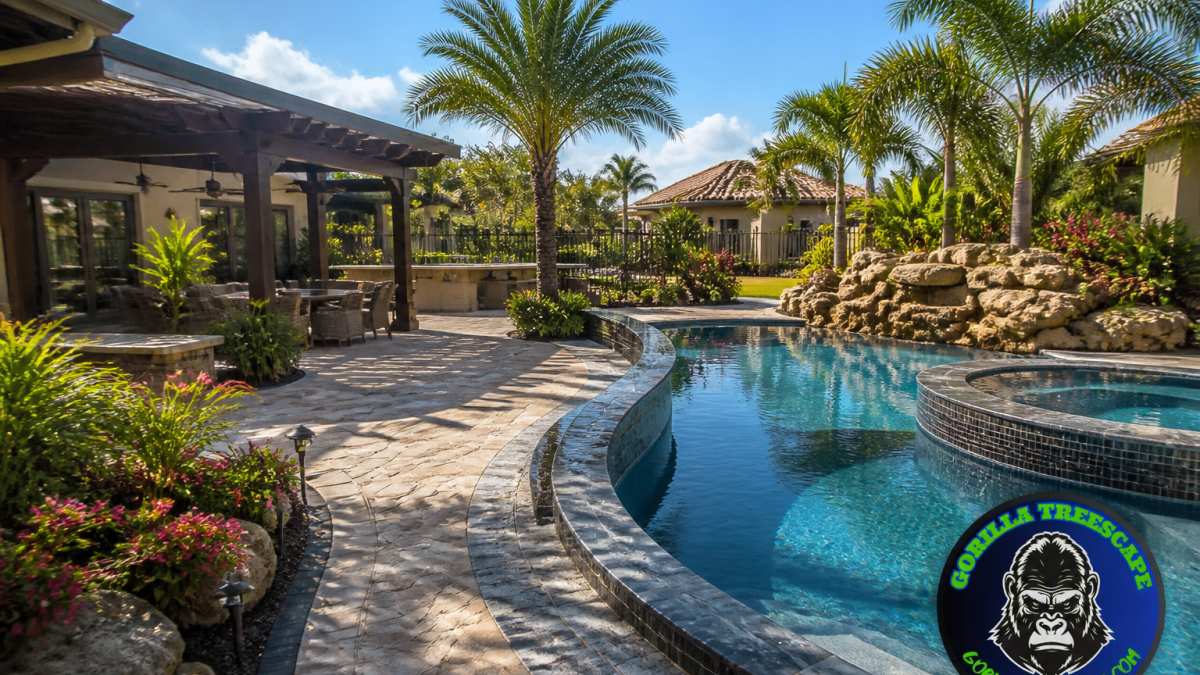
Pool areas demand plants that tolerate chlorine splash, intense sun, and foot traffic. Tropical landscape design around pools balances safety with beauty. Avoid plants with toxic berries or slippery fruits near walkways. Choose species with non-staining foliage and low leaf drop to minimize pool maintenance.
Creating Functional Outdoor Living Spaces
The best poolside landscaping design integrates seating, shade, and visual separation from neighbors. Strategic lighting creates ambiance while improving safety. Shade-tolerant plants thrive under pergolas and tree canopies, extending the usable outdoor living space beyond sun-exposed areas.
Drainage Solutions and Soil Health
Tropical soils often lack organic matter and nutrients. Amending soil with compost improves water retention and plant vigor. In areas with poor drainage, raised planting beds or mounded designs prevent waterlogging while accommodating root systems.
Tropical Garden Maintenance Tips for Year-Round Health
Maintaining a tropical landscape design requires seasonal awareness and proactive management of region-specific threats. South Florida's warm, humid climate creates ideal conditions for pests and diseases that damage or kill tropical plants if left unchecked. Success depends on understanding these threats and implementing prevention strategies before problems become severe.
Seasonal Care and Climate-Specific Maintenance
Spring (March-May) brings active growth and is the ideal time for pruning, fertilizing, and planting. New growth hardens off before summer heat arrives, giving plants time to establish. Summer (June-September) demands consistent irrigation and vigilant pest monitoring because heat and humidity accelerate both plant growth and pest reproduction. Fall (October-November) is critical preparation time before hurricane season; pruning dead branches, securing loose limbs, and staking young trees minimize storm damage.
Pest and Disease Management for Tropical Plants
Several pests are endemic to South Florida and pose serious threats to tropical landscapes.
Hurricane Season Preparation
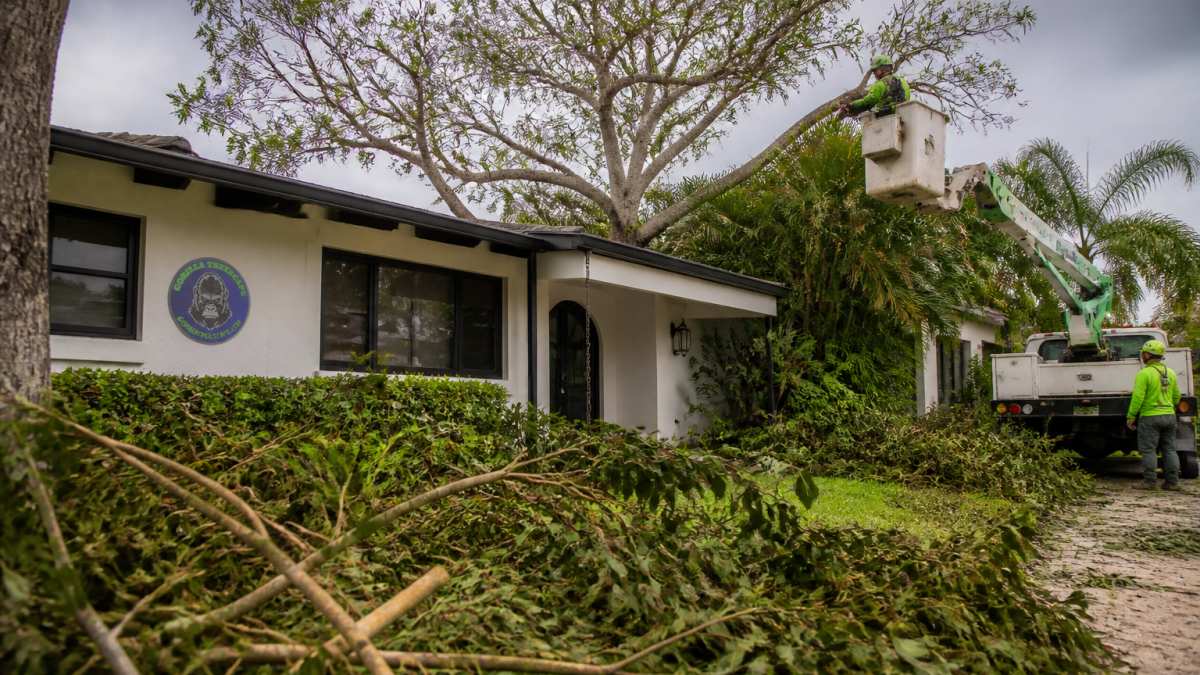
Hurricane season preparation is critical for tropical landscape design in South Florida. Prune dead branches and remove dead fronds from palms to reduce wind resistance and falling debris. Secure loose limbs with proper cabling if they threaten structures. Stake young trees to prevent uprooting in high winds. These steps minimize storm damage and accelerate recovery if severe weather strikes. Post-storm inspection and prompt removal of damaged limbs prevent secondary pest infestations and disease entry points.
Strategic Lighting and Modern Tropical Aesthetics
Strategic night lighting transforms tropical landscape design after dark. Uplighting highlights specimen plants and palms, creating dramatic shadows. Path lighting improves safety while guiding movement through outdoor spaces. Soft, warm-colored lights complement tropical plant textures better than bright white.
Budgeting, ROI, and Professional Installation
Tropical landscape design projects vary widely in scope and investment. A comprehensive installation typically requires an initial investment.
Frequently Asked Questions
What are the best plants for tropical landscape design?
Native species perform best in tropical climates. Sea grape, gumbo limbo, and cocoplum thrive in sandy, well-draining soil and tolerate salt spray and humidity. For layered foliage, combine canopy palms with mid-story shrubs like ixora and ground covers such as beach sunflower. Salt-tolerant species like buttonwood and seagrape handle coastal exposure. Choose plants suited to your sun exposure and drainage conditions, shade-tolerant options like coontie work under dense canopy.
How do you maintain a tropical garden in this climate?
Tropical garden maintenance tips focus on consistent watering during dry seasons, mulching to retain moisture, and regular pruning to maintain shape and airflow. Monitor for pests like scale insects and spider mites common in humid climates. Inspect drainage after heavy rains, poor drainage causes root rot. Prune dead or storm-damaged branches promptly, especially before hurricane season. Most native tropicals require less fertilizer than exotic species.
How much does professional tropical landscape design add to property value?
Well-designed outdoor spaces typically increase curb appeal and perceived property value, though exact ROI varies by market, project scope, and existing conditions. Quality hardscaping, mature plantings, and functional outdoor living areas attract buyers and justify higher asking prices. However, value depends on installation quality, plant health, and maintenance. Professional design and installation ensure longevity and proper drainage, preventing costly repairs later. Request references and portfolio examples from designers to understand long-term value delivery.
What's the best way to incorporate hardscaping into a tropical garden?
Hardscapes like pavers, decking, and retaining walls define spaces and manage drainage in tropical landscapes. Use materials that withstand humidity and salt spray, permeable pavers reduce flooding, while natural stone adds texture. Position hardscapes to frame views and create functional zones for seating, dining, or pool areas. Ensure proper grading away from structures to prevent water pooling. Combine hardscapes with layered tropical foliage to soften edges and create visual interest. Professional installation handles drainage and foundation work that prevents long-term settling or damage.
Can I design a tropical landscape in a small backyard?
Small tropical gardens work well with vertical layering and strategic plant selection. Use shade-tolerant understorey plants and compact palms rather than full-size canopy trees. Vertical gardens, wall-mounted planters, and trellised vines maximize space without overwhelming the area. Hardscaping like pavers or decking creates functional zones in tight footprints. Native plants adapted to your specific microclimate, sun exposure, drainage, salt tolerance, perform better in constrained spaces. Professional designers assess HOA restrictions and lot conditions to maximize your available space.
How do I fix drainage problems in my tropical landscape?
Drainage failures often stem from poor soil amendment, compacted earth, or incorrect grading. Tropical soils need organic matter and sand incorporation to improve permeability, oolitic limestone and compost create better drainage. Grade land away from structures at a 1-2% slope minimum. Install French drains or dry wells in low spots where water pools. Raised beds or mounding improve drainage in flat terrain. Professional assessment identifies whether the issue is surface water, groundwater, or soil composition, each requires different solutions to prevent root rot and foundation damage.
What's the difference between modern and traditional tropical landscape design?
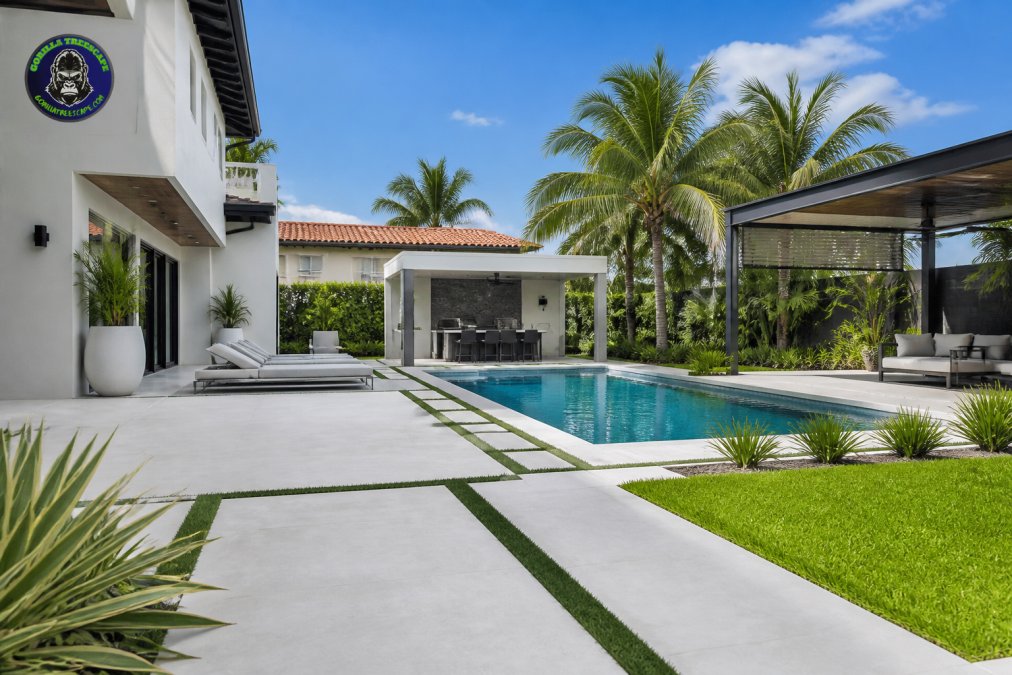
Traditional tropical design emphasizes lush, dense foliage and informal plant arrangements with curving pathways and water features like koi ponds. Modern tropical aesthetics simplify plant palettes, use geometric hardscaping, and integrate clean lines with strategic lighting. Contemporary designs often include outdoor kitchens, decking, and functional seating areas. Both styles use native plants and water features; the difference lies in spatial organization and visual restraint. Your choice depends on architectural style, personal preference, and how the landscape functions for your household.