 how-to
How to Design a Modern Minimalist Garden for Small Spaces
Last Updated: October 22, 2026
Quick Summary
To design a minimalist garden for small spaces, measure your yard and sketch it to scale before buying anything, then divide it into living, path, and planting zones while keeping at least one open area of negative space. Choose two hardscape materials, repeat three to five plant species, and place one bold focal point so the eye has somewhere to rest.
- Sketch your yard on graph paper with one square equal to one foot, marking doors, windows, and sun path.
- Keep main paths at least 36 inches wide and secondary paths at least 24 inches wide.
- Use the 60-30-10 rule: 60% calm base, 30% secondary texture, 10% bold focal point.
- Fix grade and drainage before any hardscape goes down, since heavy summer rain exposes bad grading.
- Raise planters to 18 to 24 inches so they can be reached without bending.
Table of Contents
- Start With a Small Garden Layout Plan
- Choose Hardscaping That Defines the Space
- Small Garden Design Ideas That Add Depth
- Pick the Best Plants for a Minimalist Garden
- Build a Low-Maintenance Small Garden Design
- Common Mistakes to Avoid
- Frequently Asked Questions
Start With a Small Garden Layout Plan
A modern minimalist garden works because of what you leave out, not what you pack in. At Gorilla Treescape LLC, we design compact yards, and the ones that feel calm and expensive all start with a plan on paper.
The goal is simple: use clean lines, open space, and a few strong plants to make a tight yard feel bigger.
Measure First, Then Zone
Grab a tape measure and sketch your yard to scale on graph paper (one square equals one foot works well for most residential lots).
A common mistake is buying plants and pavers before the plan exists. Measure twice, buy once.
Then split the yard into three zones:
- Living zone: seating, fire pit, or outdoor kitchen
- Path zone: walkways connecting doors to seating
- Planting zone: beds, containers, and green walls
Keep at least one open area. Empty space, often called negative space, is what makes a minimalist garden feel calm instead of crowded.
Small-Space Dimensions That Actually Work
Inspiration photos rarely show a tape measure, which is why so many small gardens feel cramped once built. These clearances are the ones most practitioners rely on:
| Element | Minimum | Comfortable |
|---|---|---|
| Main path width | 36 in | 48 in |
| Secondary path | 24 in | 30 in |
| Seating clearance from table edge | 30 in | 36 in |
| Walkway between planter and wall | 24 in | 36 in |
| Depth of a single-layer planting bed | 18 in | 24-36 in |
| Step riser height | 4-6 in | 5 in |
| Step tread depth | 12 in | 14-16 in |
A 10 ft × 12 ft patio is enough for a four-person dining set plus a lounge chair if you keep circulation at 36 in. Below that, choose a bistro set or built-in bench instead of freestanding furniture.
Proportion Rules for Tight Yards
- Furniture scale: keep the largest piece no more than one-third the width of the patio it sits on. A 6 ft sofa on a 12 ft patio reads balanced; an 8 ft sectional swallows it.
- Plant height: the tallest plant should be roughly one-third to one-half the height of the wall or fence behind it. A 6 ft fence pairs well with a 2-3 ft shrub layer and one 4-6 ft specimen tree.
- Bed depth: a bed narrower than 18 in cannot hold a layered planting scheme. Either widen it or convert it to a container run.
The 60-30-10 Rule for Open Space
Use this simple ratio for every surface and planting bed:
- 60% calm base: paving, gravel, or lawn
- 30% secondary texture: plants, wood, or stone accents
- 10% bold focal point: one tree, one sculpture, one color pop
Most small yards fail because every square foot does three jobs at once. Pick one role per area.
A Sequenced Design Process
Most inspiration roundups stop at ideas. A workable plan follows a sequence:
- Measure and photograph the empty yard from the main window and the back door.
- Draw the zones to scale and test furniture footprints on paper before buying.
- Fix grade and drainage, this comes before any hardscape.
- Choose two hardscape materials and lock the paving module.
- Place the focal point (one tree, one sculpture, one water feature).
- Layer planting from structural to ground cover.
- Add furniture and lighting last, sized to the patio.
Choose Hardscaping That Defines the Space
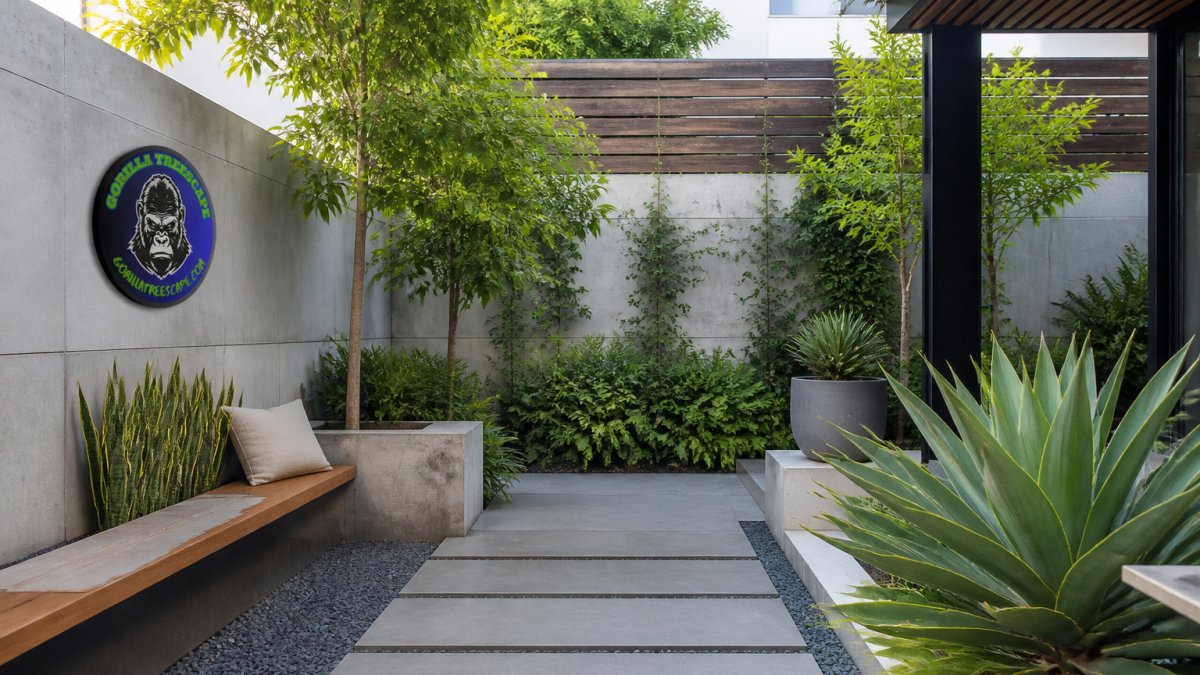
Hardscaping is the backbone of a minimalist garden. Paving, gravel, walls, and raised beds set the lines, and plants fill in around them.
Keep the material list short. Two materials, three at most, create contrast without visual clutter.
For paths, use straight runs or gentle single curves.
| Element | Best Choice for Small Yards | Why It Works |
|---|---|---|
| Patio surface | Large concrete or porcelain pavers | Fewer joints, cleaner look |
| Paths | Straight gravel or stepping stones | Cheaper, easy to adjust |
| Borders | Steel or concrete edging | Sharp, refined edges |
| Beds | Raised planters | Defines zones, improves drainage |
Drainage is the piece most homeowners skip. In South Florida, heavy summer rain exposes a bad grade fast.
Small Garden Design Ideas That Add Depth
Small garden design ideas work best when they trick the eye. Depth comes from layers: tall plants at the back, mid-height plants in the middle, and low ground cover in front.
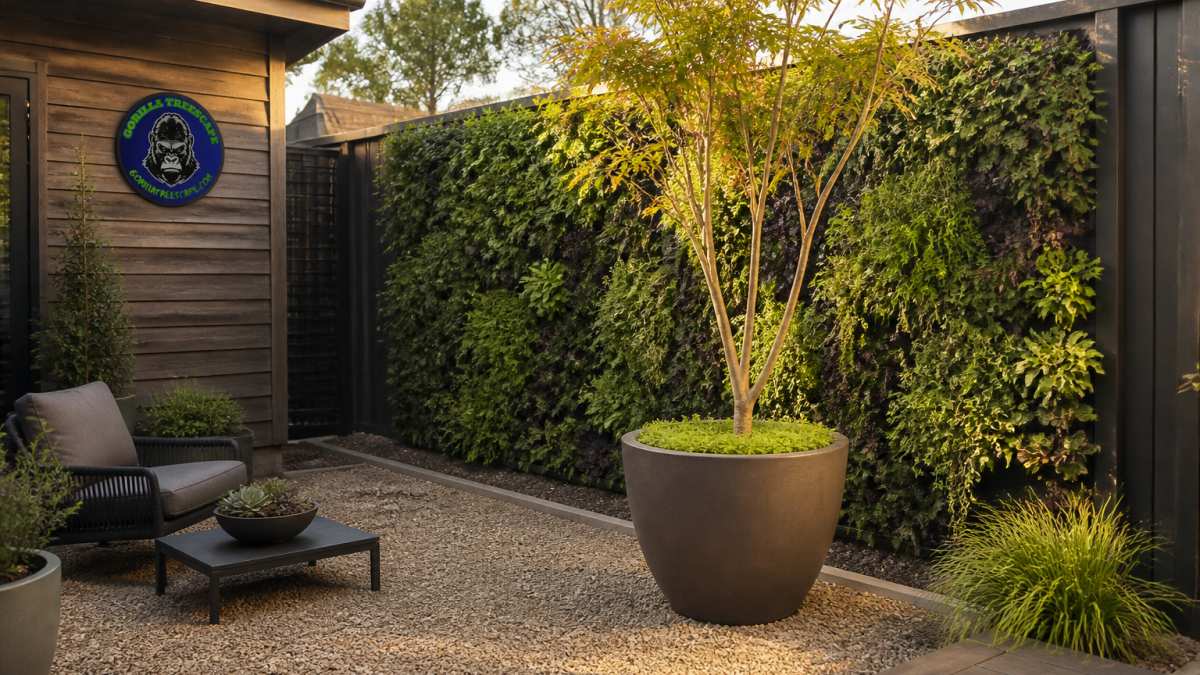
Vertical Gardening and Green Walls
Vertical gardening turns bare walls and fences into planted space. A green wall adds lush color without eating any floor area, which matters in townhouse courtyards and HOA-restricted yards.
We install artificial green walls. Real climbing plants need a trellis, irrigation, and regular trimming. Both options hide ugly fencing and add a soft backdrop for seating.
Steps, Terraces, and Levels
Flat yards can feel dull. A single raised terrace or one step up to a seating area creates separation between zones without a wall. Levels also help with drainage, since water flows away from the house.
Keep steps wide and shallow. Two broad steps read as elegant; five narrow ones read as cramped.
Pick the Best Plants for a Minimalist Garden
The best plants for a minimalist garden are structural, low-fuss, and few in number. Choose three to five species and repeat them.
Build your planting scheme from these groups:
- Structural plants: small trees or upright shrubs for height
- Ornamental grasses: soft movement and texture
- Ground cover: fills beds without bare soil
Avoid a collector's garden in a small yard. Twenty plant types in a tight bed looks busy, not lush.
For South Florida heat and humidity, pick plants suited to your light and water conditions. Our team can recommend species.
Build a Low-Maintenance Small Garden Design
A low-maintenance small garden design comes from smart choices at the start, not extra work later. Fewer plants, drip irrigation, and hardscape that does not stain all cut weekly chores down to minutes. The unique angle here is a maintenance plan you can actually schedule, most minimalist garden guides stop at "choose low-fuss plants" and never explain what upkeep looks like month to month.
Design Choices That Reduce Upkeep
- Group plants by water needs so one irrigation zone covers each bed. Mixing thirsty annuals with drought-tolerant shrubs forces you to overwater one group.
- Use mulch or gravel to cut weeding and hold moisture. A 2-3 in layer of gravel over landscape fabric suits minimalist beds; bark mulch suits planted beds and needs topping up annually.
- Choose slow-growing shrubs that need trimming once or twice a year rather than hedges that demand monthly shearing.
- Skip annual flowers that need replacing every season. Repeat perennials and ornamental grasses instead.
- Keep hardscape simple, fewer joints and fewer materials mean less staining, less re-sanding, and less replacement.
Irrigation That Matches a Minimalist Look
Drip irrigation on a timer is the standard choice for compact modern gardens because it disappears under mulch and delivers water at the root zone instead of spraying walls and paving. A typical setup uses 1/2 in poly tubing with 1/4 in emitter lines to each bed, plus a filter and pressure regulator at the hose bib.
Check emitters monthly during the growing season. Clogged emitters are the most common cause of a plant dying in an otherwise well-designed bed.
A Seasonal Maintenance Calendar
A minimalist garden still needs upkeep. This is the schedule most practitioners follow in a warm, humid climate:
- Spring: refresh mulch or gravel, check irrigation, prune winter damage, fertilize lightly.
- Summer: watch for pests and fungal issues after heavy rain, trim fast growth, check drainage after storms.
- Fall: the main pruning window for most shrubs and small trees, reseed bare spots, clean pavers.
What Low-Maintenance Really Costs
Budget tiers vary widely, so phase the work. A container refresh costs far less than a full hardscape rebuild. A sensible order is:
- Layout and drainage
- Hardscape
- Irrigation
- Planting
- Furniture and lighting
Ask for a quote rather than guessing at totals, since pricing depends on size, materials, and site conditions. A phased plan lets you spread cost across seasons without redoing work.
Accessibility and Adaptable Design
A garden that works for every household member is also easier to maintain. Keep at least one step-free route from the door to the main seating area, use slip-resistant pavers on paths, and raise planters to 18-24 in so they can be reached without bending. Wide, shallow steps and firm gravel or paved paths make the space usable for strollers, wheelchairs, and garden carts alike.
Common Mistakes to Avoid
Most small garden problems trace back to a handful of repeat mistakes. Avoiding them saves money and years of frustration.
- Skipping the plan: buying plants before measuring leads to overcrowding
- Too many materials: three or more paving types create visual clutter
- No focal point: without one strong feature, the eye has nowhere to rest
If your yard has drainage trouble or storm damage, get it assessed before design work starts. Our maintenance team handles repairs and ongoing care.
Frequently Asked Questions
What are the key rules for designing a small garden?
Start with accurate measurements and a simple layout that divides the space into clear zones for sitting, planting, and paths. Keep hardscaping materials to two or three types, choose a restrained plant palette, and use vertical surfaces to add height without eating floor space. Aim for at least 60 percent open or planted area so the garden does not feel crowded. A professional design consultation can help you translate those rules into a buildable plan for your specific lot.
Which plants work best in a minimalist garden?
The best plants for a minimalist garden are structural and repeatable: ornamental grasses, upright shrubs, small multi-stem trees, and low ground covers. In South Florida's heat and humidity, look for compact varieties of podocarpus, dwarf ficus, and clumping bamboo, plus drought-tolerant grasses like muhly. Limit yourself to three to five species and repeat them in groups. This approach creates rhythm, reduces visual clutter, and makes watering and pruning easier to manage.
How can you make a small garden feel larger?
Use diagonal sightlines, extend paving to the fence line, and keep the color palette light and consistent. A focal point such as a single tree, a water feature, or a piece of sculpture draws the eye outward. Vertical elements like a green wall or tall fence panels add height without consuming floor space. Mirrors and reflective surfaces can also trick the eye, though they need regular cleaning in humid climates. Avoid too many small objects, which make a space feel busy and smaller.
How do you keep a minimalist garden low-maintenance?
Choose plants that suit your climate and soil so they need less watering and replacing. Group plants by water needs, install drip irrigation on a timer, and use a thick layer of mulch to suppress weeds. Hardscaping with gravel or large-format pavers reduces mowing and edging. Schedule two seasonal cleanups per year and prune structural plants only as needed. A low-maintenance small garden design still needs regular checks, but the weekly workload drops to watering and light tidying.
A calm, modern garden in a tight yard is achievable, but it depends on planning the layout, hardscape, and planting in the right order. Gorilla Treescape LLC handles the whole process, from permit handling to custom patio and green wall installation, so the design you approve is the one that gets built. Get a quote and turn your small outdoor space into a yard that feels twice its size.