 blog
5 Best Privacy Hedges for Small Yards
Table of Contents
- Why Privacy Hedges Matter for Small Spaces
- Florida Privacy Hedge Plants: Regional Considerations
- Podocarpus vs. Clusia Hedge: Which Works Better
- Privacy Hedge Spacing and Planting Distance
- Low-Maintenance Fence-Line Plants for Year-Round Coverage
- Maintenance, Growth Rates, and What to Expect
- Frequently Asked Questions
Last Updated: October 9, 2026
Why Privacy Hedges Matter for Small Spaces
A privacy hedge is a row of plants or shrubs planted close together to create a natural barrier that blocks views and sounds from neighboring properties.
In a small yard, every square foot counts. A well-chosen privacy hedge does double duty: it creates your outdoor living space while adding greenery and curb appeal.
Gorilla Treescape LLC provides comprehensive landscaping, design, and property maintenance services for both residential and commercial clients. We bring your outdoor vision to life with professional craftsmanship and attention to detail.
This guide covers five privacy hedge plants proven to work in small yards, including which grow fastest, how far apart to space them, and what maintenance each requires.
Florida Privacy Hedge Plants: Regional Considerations
"Florida" is not one growing climate. The state spans USDA hardiness zones 8a in the Panhandle up to 11b in the Keys, and a hedge that sails through a Miami summer can be killed by a single hard freeze in Tallahassee. Match your species to your zone and your yard's specific stresses.
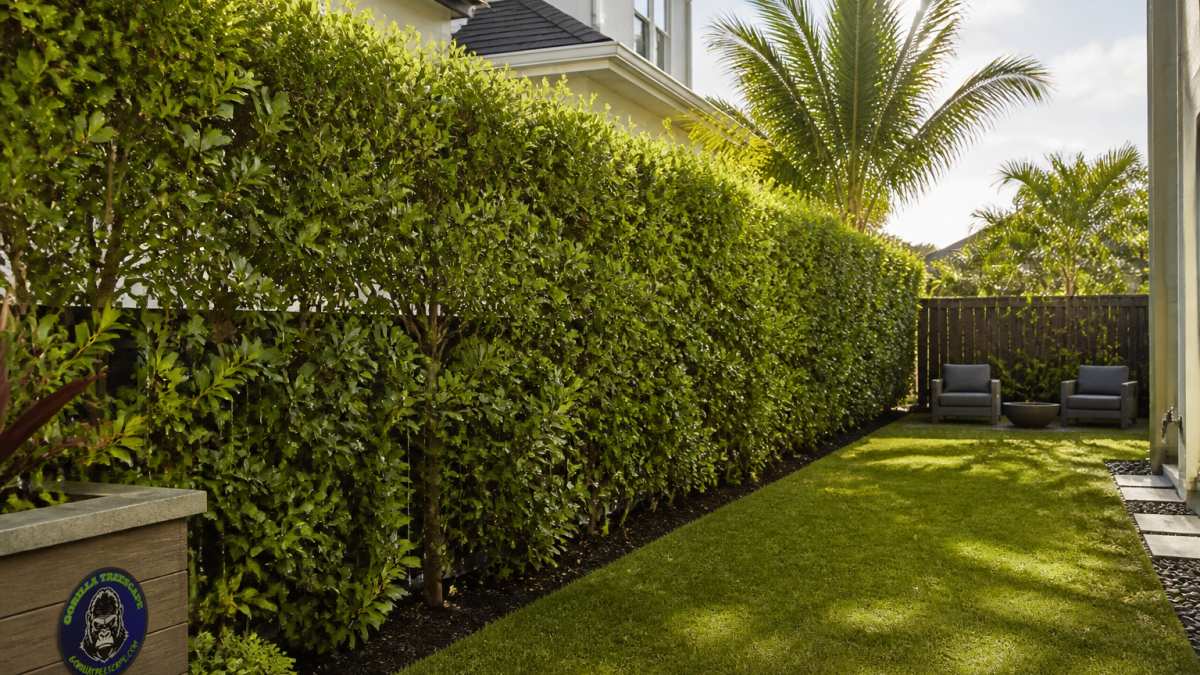
North Florida (USDA zones 8a-9a)
Winter is real here. Overnight lows in the teens and low 20s happen most years, and a hard freeze can defoliate or kill tropical species outright. Plants that hold up:
- Arborvitae (Emerald Green), reliably cold-hardy and the safest narrow evergreen for this region.
- Holly (Nellie R. Stevens, East Palatka), bred for Southern conditions and unfazed by frost.
- Viburnum (Walter's Viburnum), native to the Southeast and extremely cold-tolerant.
- Podocarpus, survives most North Florida winters but can burn in an unusually cold snap; plant it in a sheltered spot.
- Clusia, generally not a good choice here. It is a tropical species and a hard freeze will set it back or kill it.
Central Florida (USDA zones 9b-10a)
This transition band gets warm, humid summers and occasional freezes into the upper 20s every few years. Most of the five species work here, with caveats:
- Clusia, thrives in the warm stretches but needs protection or acceptance of dieback during a freeze event.
- Podocarpus, Holly, Viburnum, Arborvitae, all reliable in this band.
A common pattern is to plant clusia in a protected courtyard or against a south-facing wall and use holly or viburnum on exposed fence lines.
South Florida (USDA zones 10b-11b)
Year-round warmth, high humidity, and, near the coast, salt spray. Heat, salt, and pests are the constraints, not cold.
- Clusia, the workhorse for coastal South Florida. Handles salt spray and heat better than almost anything else on this list.
- Podocarpus, performs well inland and in sheltered coastal spots.
- Viburnum and Holly, both do fine inland; holly tolerates salt spray reasonably well.
- Arborvitae, struggles in the deep tropics and is generally not recommended south of about zone 10a.
What actually drives the regional difference
- Cold hardiness, the biggest factor separating North from South. Check the plant tag's USDA zone range before buying.
- Salt tolerance, matters within a few miles of the coast; salt spray burns foliage and soil salt affects root uptake.
- Heat and humidity, Florida summers stress plants from cooler climates. Southeast and tropical natives handle it best.
- Pest pressure, scale, whitefly, and spider mites are more aggressive in the warm, humid south. Choose species with fewer pest problems and inspect new plants.
- Soil, much of the state is sandy and fast-draining, with pockets of clay and limestone. Amend accordingly.
The five plants below handle Florida's conditions, each offering something different depending on your space and timeline.
Podocarpus vs. Clusia Hedge: Which Works Better
Podocarpus (also called Japanese yew) is a narrow, columnar shrub that grows 20-30 feet tall and stays only 3-4 feet wide. Clusia (also called autograph tree) is wider and more compact, reaching 15-20 feet tall and 8-12 feet wide at maturity.
The choice comes down to your space and patience.
Podocarpus grows faster in the first two years, reaching screening height quickly.
Clusia grows slower but fills in denser, so fewer plants do the job. It also tolerates salt spray better, making it the pick for coastal properties, and it's more cold-hardy, surviving North Florida winters reliably.
Podocarpus works if you want a narrow, columnar look and don't mind planting multiple specimens. Both are low-maintenance once established; the real difference is width and spacing efficiency.
Privacy Hedge Spacing and Planting Distance
Spacing determines how quickly your hedge fills in, how many plants you buy, and whether the mature hedge stays inside your property line. Get it right the first time, moving an established hedge is expensive and often fatal.
Spacing by species
A simple rule: space plants so their mature canopies just touch or slightly overlap. Closer than that wastes money; wider leaves permanent gaps.
- Podocarpus, 3-4 ft apart (narrow, columnar form)
- Clusia, 5-8 ft apart (wide, dense form)
- Arborvitae (Emerald Green), 3-4 ft apart
- Holly (Nellie R. Stevens, East Palatka), 4-6 ft apart
- Viburnum (Walter's Viburnum), 4-5 ft apart
Tighter spacing fills in faster but costs more upfront; wider spacing saves money but takes longer. Most homeowners plant at the closer end and accept a year or two of partial views.
Do the math before you buy
Here is a practical example for a 20-foot property line:
- Clusia at 6 ft apart = 4 plants (fills in roughly 18-24 months)
- Clusia at 8 ft apart = 3 plants (fills in roughly 24-36 months)
- Podocarpus at 3 ft apart = 7 plants (fills in roughly 12-18 months)
For small yards, fewer plants is usually better. Clusia's wider form means you can use fewer specimens and still get full coverage. That saves space and money.
Planting windows
- North and Central Florida, plant in early spring after the last expected freeze, or in fall while the soil is still warm. Avoid planting in the middle of summer, when heat stress is highest.
- South Florida, the rainy season (roughly May through October) is ideal because natural rainfall helps new plants establish. Winter planting works too, but you will need to irrigate more.
Keep the mature hedge on your side of the line
This is the step most homeowners skip, and it is the one that causes the most disputes.
- Property lines, a hedge planted on the line is shared; a hedge planted inside your line is yours. Know which side of the line you are on before you dig.
- Mature spread, a clusia that is 8-12 ft wide at maturity will grow 4-6 ft on each side of its trunk. If you plant 2 ft from the line, half the hedge ends up over the neighbor's yard.
- Setbacks, many municipalities set minimum distances from property lines for hedges and fences. Check your local code before planting.
- HOA rules, many HOAs cap hedge height, restrict species, and require approval before installation. Get written approval first; removing a mature hedge later is costly.
- Utilities, call 811 before you dig. Underground gas, water, electric, and fiber lines run through residential yards, and a hedge's roots will eventually reach them. Overhead power lines also limit how tall a hedge can safely grow.
A note on cost
Cost scales with plant count and size. A larger nursery specimen costs more per plant but screens faster; a smaller one costs less but needs more time and plants. For a small yard, the trade-off usually favors fewer, larger plants.
Low-Maintenance Fence-Line Plants for Year-Round Coverage
The best privacy hedges small yards are evergreen, dense, and need minimal pruning once established. Five options proven in Florida:
1. Clusia (Autograph Tree) Clusia reaches 15-20 feet tall and 8-12 feet wide. It's salt-tolerant, heat-loving, and thrives in South Florida. Foliage is thick and dark green year-round. It tolerates poor soil and drought once established. Pruning is minimal. This is the top choice for small coastal yards.
2. Podocarpus (Japanese Yew) Podocarpus grows 20-30 feet tall but stays only 3-4 feet wide. It's a columnar shape that fits tight spaces.
3. Arborvitae (Emerald Green) Arborvitae is a narrow conifer reaching 15-20 feet tall and 3-4 feet wide. It's cold-hardy and works in North and Central Florida.
4. Viburnum (Susanberry or Walter's Viburnum) Viburnum grows 8-12 feet tall and 6-8 feet wide. It's native to Florida and extremely hardy. Foliage is evergreen and dense.
5. Holly (Nellie R. Stevens or East Palatka) Holly reaches 12-15 feet tall and 6-8 feet wide. It's cold-hardy and works statewide. Foliage is glossy and dark green.
Each species delivers year-round coverage, needs no heavy pruning, and tolerates Florida heat and humidity.
Maintenance, Growth Rates, and What to Expect
Privacy hedges aren't "plant and forget," but they're close. Here's the actual maintenance:
First Year (Establishment Phase)
- Water 2-3 times per week if rainfall is light
- Mulch around the base to retain moisture and regulate soil temperature
- No pruning needed; let plants focus on root development
- Expect slow growth as plants establish
Year Two and Beyond (Maintenance Phase)
- Reduce watering to once per week or less (depends on rainfall and soil)
- Prune once per year in late winter or early spring to maintain shape
- Remove dead branches or diseased foliage
- Most hedges need only light shaping, not heavy trimming
Growth rates vary by species and conditions:
| Species | Years to Full Height | Years to Full Width | Mature Height | Mature Width |
|---|---|---|---|---|
| Clusia | 3-4 | 4-5 | 15-20 ft | 8-12 ft |
| Podocarpus | 2-3 | 3-4 | 20-30 ft | 3-4 ft |
| Arborvitae | 3-4 | 3-4 | 15-20 ft | 3-4 ft |
| Viburnum | 2-3 | 3-4 | 8-12 ft | 6-8 ft |
| Holly | 2-3 | 3-4 | 12-15 ft | 6-8 ft |
Timeline matters: podocarpus or viburnum screen fastest (about 12 months), while clusia delivers a denser result in 18-24 months.
Common mistakes homeowners make:
- Planting too deep (kills the root collar; plant at the same depth it was in the nursery pot)
- Overwatering established plants (causes root rot; water only when soil is dry 2 inches down)
- Pruning too aggressively in the first year (removes energy the plant needs to establish)
- Choosing a species that doesn't match your climate zone (it won't survive or will struggle)
Gorilla Treescape LLC designs and installs privacy hedges for small yards throughout South Florida. We assess your space, recommend the right species for your region and timeline, and manage spacing and planting depth so your hedge establishes fast and stays healthy. We also offer ongoing maintenance.
Creating privacy in a small yard doesn't require sacrificing space or spending a fortune on a fence. The right hedge species grows fast, stays dense, and handles Florida's heat and humidity. Clusia and podocarpus are the best options for most homeowners, but viburnum, holly, and arborvitae work too depending on your region and timeline.
Frequently Asked Questions
What plant makes the best privacy hedge for a small yard?
Clusia and Podocarpus are top choices for small yards because they grow densely without sprawling. Both tolerate pruning well and reach mature heights of 15-20 feet, manageable for compact spaces. Viburnum works for tighter areas, maxing out around 12 feet. Your choice depends on sunlight, soil drainage, and how quickly you need screening. Cold tolerance matters in North Florida, while salt tolerance becomes critical near coastal areas.
How far apart should you plant shrubs for a privacy hedge?
Space most privacy shrubs 3-5 feet apart for fast-growing varieties like Clusia, or 4-6 feet for slower-growing species like Podocarpus. Closer spacing (3 feet) fills gaps faster but requires more plants and investment. Wider spacing (5-6 feet) costs less upfront but takes 2-3 years longer to establish dense coverage. Measure your linear footage and divide by your chosen spacing to calculate how many plants you'll need.
Which grows faster, Podocarpus or Clusia?
Clusia typically grows 2-3 feet per year under ideal conditions, while Podocarpus typically grows 1-2 feet annually. Both eventually reach similar mature heights of 15-20 feet.
What are some low-maintenance plants that can be planted on fence lines?
Clusia, Podocarpus, and Viburnum all thrive as fence-line plants with minimal care once established. They tolerate drought, resist most pests, and need pruning only once or twice yearly. Arborvitae works in cooler regions and handles salt spray near coastal properties. All these species prefer well-drained soil and benefit from consistent watering during establishment (first 6-12 months), then require far less attention as their root systems mature.