 how-to
How to Design a Functional Outdoor Living Space
Table of Contents
- Define Your Outdoor Living Space Layout
- Create a Multi-Functional Outdoor Living Space
- Design a Small Outdoor Living Space
- Select Durable Materials and Weather-Resistant Furniture
- Build an Outdoor Living Space on a Budget
- Add Shade, Lighting, and Ambiance
- Plan for Climate, Drainage, and Maintenance
- Frequently Asked Questions
Last Updated: October 14, 2026
Define Your Outdoor Living Space Layout
A functional outdoor living space starts with clear planning. Before you buy furniture or break ground, map out how you'll actually use the area. This determines everything that comes next.
Map out functional zones
Your backyard works best when different activities have their own space. Think of zones like rooms in your home.
Start by walking your yard at different times of day. Notice where the sun hits. See where wind flows. Check where water pools after rain. These details matter more than you'd think.
Sketch your space on paper. Mark where you want to eat, relax, and socialize. Leave pathways between zones so people can move freely.
Common zones include:
- Dining area near the kitchen door
- Lounge seating away from the grill
- Conversation spot with good sightlines
- Cooking or grilling station
- Storage for cushions and tools
The size of each zone depends on your space. A small yard might combine dining and lounging. A larger yard can spread them out.
Plan indoor-outdoor flow
Your outdoor living space should feel like an extension of your home. Think about how people move from inside to outside.
Position your main seating near the kitchen or living room door. This creates a natural traffic pattern. Guests won't feel like they're leaving the house entirely.
Place dining areas where you can easily carry food and drinks from the kitchen. Professional Driveways & Decks installation ensures your patio or deck is built to last and positioned perfectly for flow.
Pathways matter too. Create clear walking routes between zones. Use pavers, gravel, or mulch to define where people should walk. This protects plants and keeps the space organized.
Create a Multi-Functional Outdoor Living Space
A well-designed outdoor living space serves multiple purposes. You want to dine, relax, and entertain without feeling cramped. The key is layering activities with clear separation.
Dining and cooking zones
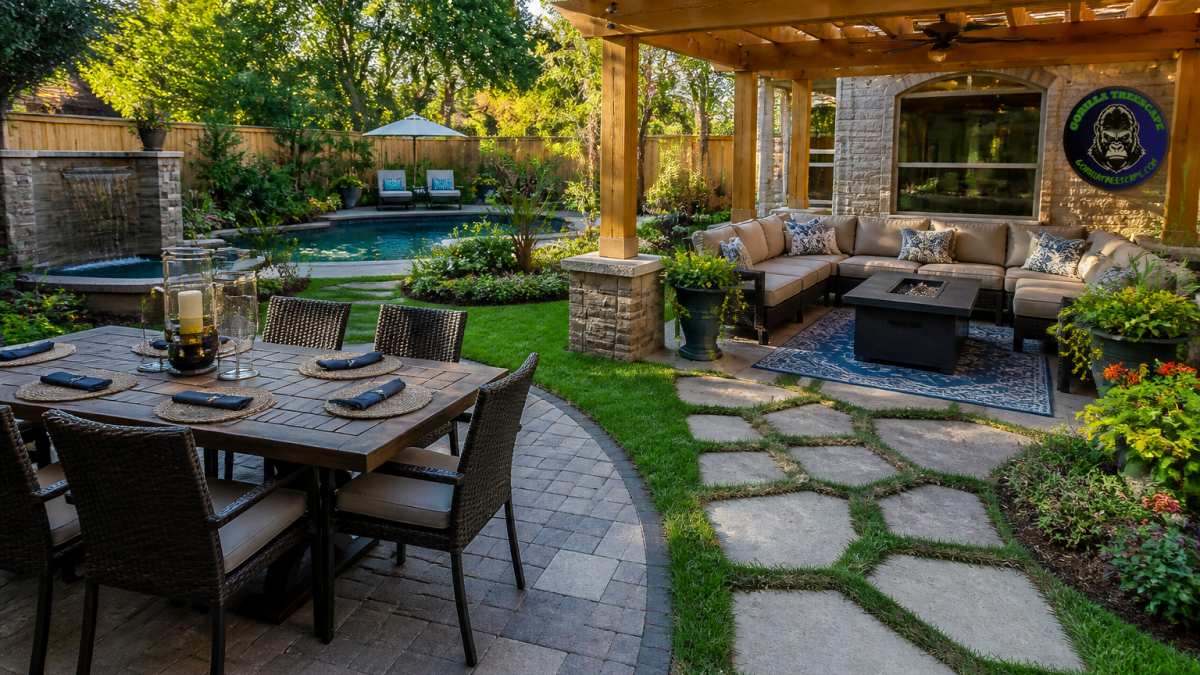
Your dining area should be close to food preparation. A table for four to six people works for most homes.
Position your grill or outdoor kitchen near the dining table but not directly upwind. Smoke and heat should drift away from where people sit.
Consider shade for the dining area. Eating in direct sun gets uncomfortable fast. A pergola, umbrella, or nearby tree helps. Even partial shade makes a big difference during midday meals.
Storage near the cooking zone saves steps. A weatherproof cabinet or bench with hidden storage keeps grilling tools, napkins, and utensils close by. This prevents trips back inside.
Lounge and conversation areas
Lounging areas need comfortable seating and good sightlines. Position chairs so people can see each other and enjoy the view. A conversation area with four to six seats works well for most gatherings.
Use outdoor sofas, lounge chairs, and side tables. Arrange them in a circle or U-shape so people face each other. Avoid lining chairs against the house like a waiting room.
Add a focal point. This might be a fire pit, water feature, or view of your garden. A focal point gives people something to look at and creates a gathering spot. It makes the space feel intentional rather than random.
Design a Small Outdoor Living Space
Small yards need smart planning. You can still have multiple zones, but they'll be compact. The trick is choosing what matters most to you.
Maximize vertical space and storage
Go up when you can't go out. Tall planters, wall-mounted shelves, and hanging gardens save ground space. Vines on a trellis add greenery without taking up room.
Storage is crucial in small spaces. Use benches with hidden compartments. Install wall-mounted cabinets. Choose furniture that doubles as storage. Every piece should earn its spot.
Vertical elements also create the feeling of a larger space. Tall plants, pergolas, and trellises draw the eye upward. This makes your yard feel deeper and more interesting.
Choose compact, scaled furniture
Standard furniture overwhelms small yards. Look for pieces designed for tight spaces. A bistro table for two takes up far less room than a dining table for six.
Folding chairs and tables let you adjust the space for different occasions. When you're not entertaining, fold them away. This keeps the yard open and breathable.
Choose furniture with legs rather than solid bases. You can see through and past the pieces. This makes the space feel less cluttered even when furniture is present.
Select Durable Materials and Weather-Resistant Furniture
Your outdoor living space faces sun, rain, and temperature swings. Materials matter for both durability and comfort.
Outdoor furniture fabrics and construction
Look for fabrics rated for outdoor use. Sunbrella and similar brands resist fading and mildew. These fabrics dry quickly and handle moisture well.
Check the frame material. Teak and cedar are naturally weather-resistant woods. Aluminum and stainless steel won't rust. Avoid untreated wood unless you plan to refinish it yearly.
Cushions should have removable, washable covers. This lets you clean them easily and replace covers if they fade or wear.
Wicker and rattan work outdoors if they're synthetic or treated. Natural wicker rots in wet climates. Synthetic versions look similar but last much longer. Check the product details before buying.
Patio surfaces and decking options
Your patio surface sets the tone for the whole space. Concrete is affordable and low-maintenance but can crack in freeze-thaw cycles. Seal it every few years to prevent stains.
Pavers offer more visual interest than concrete. They're easier to replace if one cracks. Permeable pavers let water drain, which helps with flooding and reduces standing water.
Wood decks are warm underfoot and look natural. Pressure-treated lumber resists rot. Composite decking mimics wood but requires less maintenance.
Gravel and mulch are budget-friendly for pathways. They drain well and are easy to refresh. However, they require raking and occasional topping off.
Build an Outdoor Living Space on a Budget
You don't need to spend a fortune to create a functional outdoor living space. Smart choices and phased planning keep costs down.
Phase your project over time
Start with the basics. Build your patio or deck first. Add seating and a dining table. These create the foundation for everything else.
Add elements in phases. Year one might be the patio and basic furniture. Year two, add a pergola or shade structure. Year three, install landscape lighting or plants. This spreads costs over time and lets you adjust as your needs change.
Buy quality where it matters most. Invest in durable furniture and decking. Skimp on decorative items you can refresh later. A good patio surface lasts decades. Throw pillows can be replaced annually.
Prioritize high-impact, low-cost elements
Plants and greenery transform a space without huge expense. Start seeds indoors or buy young plants. Container gardens let you experiment without permanent commitment.
Lighting changes the mood and extends usability into evening. String lights are cheap and cheerful. Solar lights need no wiring. These are easy upgrades that make a big impact.
Paint or stain existing structures. A fresh coat on a fence or pergola feels like a new addition. This costs far less than building something new.
Repurpose items you already have. Old chairs get new cushions. Wooden pallets become planters or seating. This approach saves money and adds character.
Add Shade, Lighting, and Ambiance
Shade and lighting transform your outdoor living space from basic to inviting. They also extend the hours you can actually use the area.
Pergolas, gazebos, and covered patios
A pergola provides partial shade while letting light through. It's less expensive than a full roof and creates a defined outdoor room. Vines grow up the sides for additional shade and privacy.
A gazebo or covered patio offers full protection from sun and light rain. These cost more but let you use the space in various weather conditions.
Consider retractable shade structures. These give you flexibility. Pull them out when you need shade, roll them up when you want full sun.
Position shade where you spend the most time. Shade over the dining area means comfortable meals. Shade over lounging areas keeps people cool during relaxation.
Lighting, plants, and focal points
String lights create ambiance and make the space feel magical. Hang them overhead or along fence lines.
Lanterns and candles add warmth. Battery-operated versions are safer than real flames. Place them on tables or hang them from pergolas.
Uplighting on plants or structures highlights your landscape design. Spotlights on a focal point draw attention. These create depth and visual interest after dark.
Plants soften hard surfaces and add color. Container plants are easy to move and adjust. Climbing vines on structures provide privacy and shade.
A focal point gives the eye somewhere to rest. This might be a small fountain, sculpture, or specimen plant.
Plan for Climate, Drainage, and Maintenance
Your climate shapes what works in your outdoor living space. Sun, wind, and water all affect design and material choices.
Sun, wind, and water management
Map the sun's path through your yard. Note where afternoon heat is strongest. This determines where you need shade most. In hot climates, afternoon shade is essential for comfort.
Check wind patterns. Wind makes outdoor seating uncomfortable and dries out plants. Structures, walls, or dense plantings can block wind without blocking views.
Drainage is critical. Water pooling around your patio causes damage and creates mosquito breeding grounds. Grade the land so water flows away from structures.
Test soil before planting. Some areas drain too fast. Professional Landscaping And Outdoor Living Design services assess drainage issues and site conditions to ensure your outdoor living space stays dry and usable year-round.
Long-term upkeep and seasonal adjustments
Plan for maintenance from the start. Choose materials that fit your willingness to maintain them. Teak looks beautiful but needs annual oiling.
Seasonal adjustments extend your space's usability. In winter, move tender plants indoors or cover them. In summer, add extra shade and water features for cooling.
Set up a maintenance routine. Sweep and clean regularly. Check furniture for damage. Reseal wood and concrete every few years.
Store off-season items properly. Cushions, throw pillows, and lightweight furniture should go indoors or into weatherproof storage.
Creating a functional outdoor living space takes planning, but the payoff is huge. You gain extra room for entertaining, relaxing, and enjoying time with family.
At Gorilla Treescape LLC, we help homeowners design and build outdoor living spaces that match their lifestyle and budget. Ready to transform your backyard? Get A Quote from Gorilla Treescape LLC and start planning your outdoor oasis today.
Frequently Asked Questions
How do you plan an outdoor living space?
Start by mapping your yard's dimensions, sun exposure, and drainage patterns. Define activity zones: dining, cooking, lounging, and conversation areas. Sketch traffic flow from indoor rooms to each zone. Consider sight lines and privacy needs. Identify shade requirements and wind patterns. Document existing trees, slopes, and utilities before finalizing your layout. This planning phase prevents costly redesigns later.
What should a functional outdoor living space include?
A functional outdoor living space needs clear activity zones with appropriate furniture for dining, cooking, lounging, and socializing. Include adequate shade from pergolas or gazebos, weather-resistant seating and tables, proper lighting for evening use, and defined pathways between zones. Add storage for cushions and tools, greenery for privacy and ambiance, and surfaces that handle water drainage. Each zone should be accessible from indoor rooms and sized proportionally to your yard.
How do you make a small outdoor living space functional?
In small spaces, choose multipurpose furniture that doubles as storage, use vertical elements like wall-mounted planters and trellises, and select scaled-down pieces sized for compact yards. Define zones with subtle level changes, paving patterns, or low walls rather than full-height barriers. Maximize natural light and create sightlines to make the space feel larger. Prioritize one or two high-use activities rather than cramming all functions into limited square footage.
How much does it cost to create an outdoor living space?
Costs vary widely based on yard size, materials, and complexity. A basic patio with seating may cost far less than a full outdoor kitchen with pergola and lighting. Phasing your project over time reduces upfront expenses: start with paving and basic furniture, then add shade structures and amenities later. Professional design and installation typically costs more than DIY approaches. Contact Gorilla Treescape LLC for a custom quote tailored to your specific goals and budget.