 how-to
Custom Pergolas Builder Miami: 2026 How-To Guide
Table of Contents
- What You'll Need Before Hiring a Custom Pergolas Builder in Miami
- Pergola Permit Requirements in Miami-Dade County
- Best Materials for Outdoor Structures in Florida
- Custom Pergola Design Ideas for South Florida Backyards
- Step-by-Step: How the Build Process Works
- Common Mistakes to Avoid When Building a Pergola
- Frequently Asked Questions
Last Updated: October 1, 2026
What You'll Need Before Hiring a Custom Pergolas Builder in Miami
Building custom pergolas in South Florida starts long before the first post goes into the ground. It starts with a clear plan, a realistic budget, and a builder who understands how salt air, summer storms, and local code shape every decision. This guide from Gorilla Treescape LLC walks you through the full process, from permits to installation, so you know exactly what to expect.
A custom pergola is a site-built shade structure designed around your specific yard, roof line, and lifestyle rather than assembled from a fixed kit. That distinction matters in coastal Florida, where wind exposure and humidity drive material and engineering choices.
Before you call anyone, gather these basics:
- Property survey and plot plan showing setbacks
- HOA guidelines if you live in a deed-restricted community
- Rough budget range and desired footprint
- Photos of your yard at different times of day
- A list of how you want to use the space (dining, lounging, outdoor kitchen)
Having these ready speeds up every conversation and helps a builder give you an accurate picture faster.
Pergola Permit Requirements in Miami-Dade County
Most pergolas in Miami-Dade County require a building permit because they are permanent structures attached to or anchored in the ground. A permit confirms your project meets the Florida Building Code and local wind-load standards.
The permit process typically involves submitting drawings, paying fees, and passing inspections at key stages. Skipping this step can lead to fines, forced removal, or problems when you sell your home.
Zoning and Setback Rules That Affect Your Project
Setback rules control how close a structure can sit to your property lines. These distances vary by zoning district and lot size, so the same pergola design can be approved on one street and rejected on the next.
Your builder should pull your property's zoning information and confirm setbacks before finalizing a design. For official requirements, check the Miami-Dade County building and zoning portal.
Best Materials for Outdoor Structures in Florida
Material choice is the single biggest factor in how long your pergola survives coastal Florida. Humidity, salt spray, and intense UV exposure punish anything that isn't rated for the environment. The three common options are aluminum, pressure-treated wood, and cedar or other natural woods. Each has trade-offs in cost, upkeep, and lifespan.
Aluminum vs. Wood: Which Lasts in Coastal Humidity?
Aluminum wins on durability in coastal conditions. A powder-coated aluminum frame resists corrosion, termites, and rot, and it holds its finish far longer than wood near saltwater. The key mechanism is the powder-coat itself: a factory-applied, electrostatically bonded finish that seals the aluminum against salt-laden air. When that coating is scratched or cut during installation, the exposed aluminum can begin to pit, so touch-up paint on cut ends and fastener points matters more than most homeowners realize.
Wood offers warmth and a traditional look, but it needs regular sealing and inspection. In coastal humidity, untreated wood can show rot and fastener corrosion within a few seasons. Pressure-treated lumber resists insects and decay better than untreated pine, but the treatment chemicals do not stop surface checking, warping, or the gradual breakdown of the finish under UV. Cedar and other natural woods weather to a silver-gray patina if left alone, or require annual sealing to hold their color.
| Material | Coastal Durability | Maintenance | Best For |
|---|---|---|---|
| Powder-coated aluminum | High | Low | Salt-air properties, low-upkeep owners |
| Pressure-treated wood | Moderate | Medium | Budget-conscious builds |
| Cedar / natural wood | Moderate | High | Traditional aesthetics |
For most coastal properties, aluminum is the practical choice. But "aluminum" is not a single product. The alloy, the thickness of the extrusion, and the quality of the powder coat all vary. A builder who can tell you the alloy series and the coating thickness is usually the one who understands coastal performance.
Custom Pergola Design Ideas for South Florida Backyards
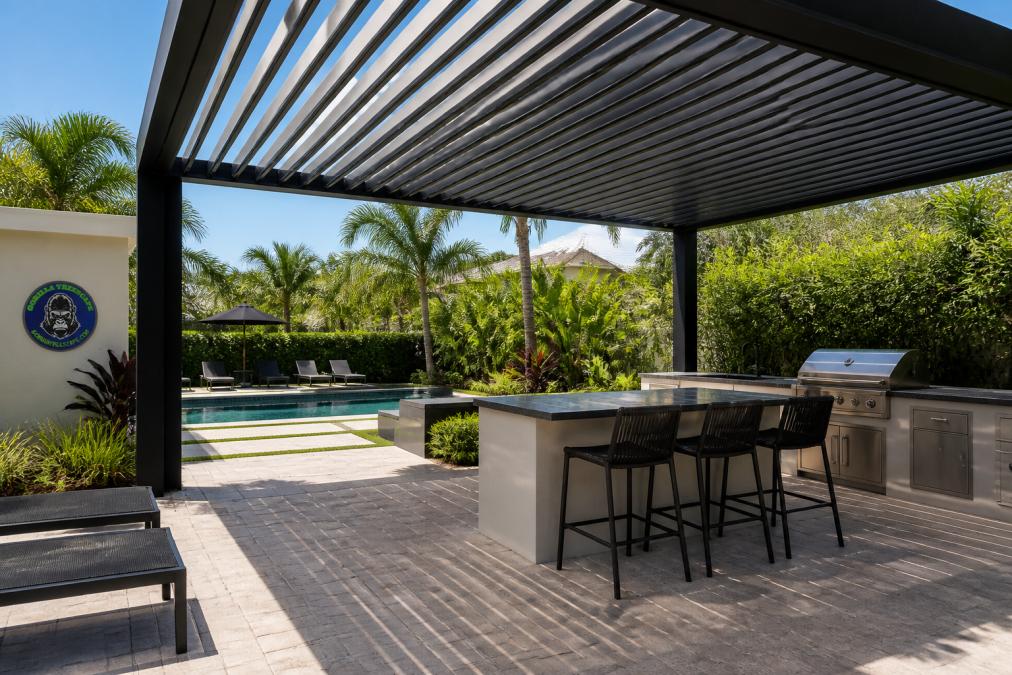
Design should follow how you actually live outside. A pergola over a dining table needs different proportions than one shading a lounge area or an outdoor kitchen. But in Miami-Dade, design also has to clear two hurdles most design articles ignore: the building department and your HOA.
Design Choices That Affect Permitting and HOA Approval
Not every pergola design is equally easy to permit. Attached structures, structures over a certain height, and structures with solid roofs tend to trigger more scrutiny than open, detached shade structures. If your design includes electrical work for lighting or motorized louvers, that adds an electrical permit and inspection to the scope.
HOA architectural review is a separate approval from the building permit, and it can be stricter. Many deed-restricted communities in South Florida restrict roof color, post style, and even the footprint relative to the home.
Heat Mitigation and Energy Efficiency
The roof style you choose changes how much heat reaches your patio and your home's exterior walls. An open-louver or slat roof provides partial shade and airflow. A solid insulated roof blocks more sun and can reduce radiant heat gain on adjacent walls and windows, which some homeowners find takes pressure off their cooling system during peak summer afternoons. Motorized louvered roofs let you close the louvers for rain or open them for breeze, which is why they are popular in South Florida backyards.
Popular directions in South Florida backyards include:
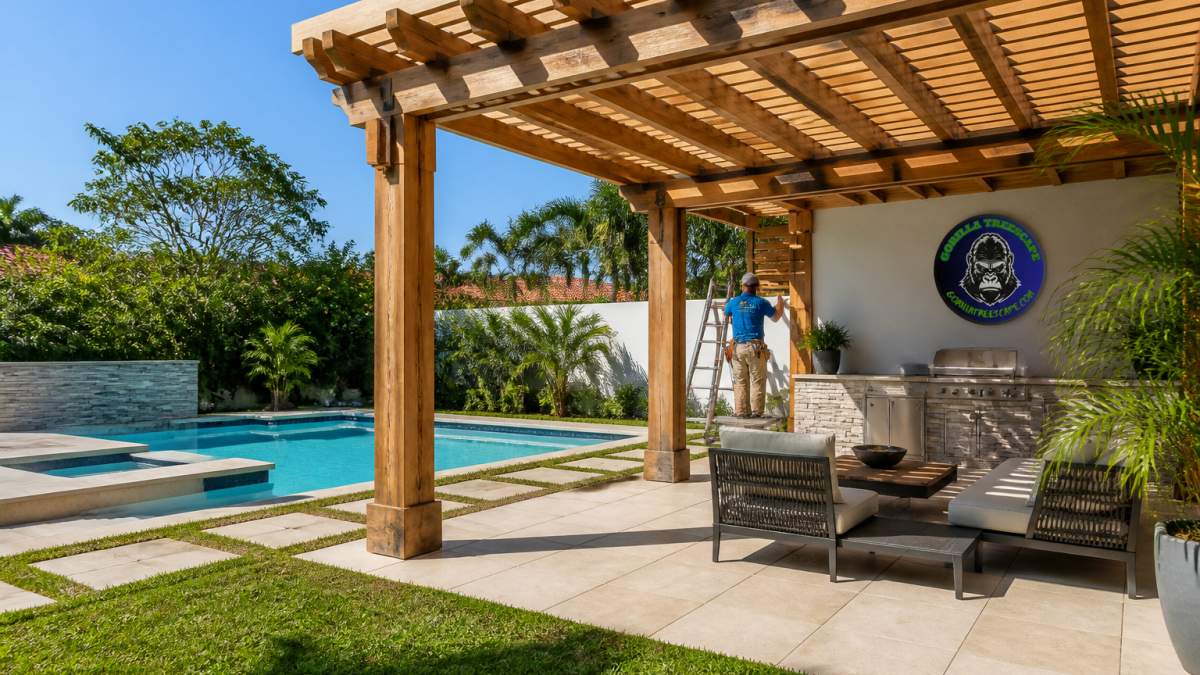
- Louvered roofs that adjust for sun and rain
- Motorized pergolas with remote or app control
- Integrated outdoor kitchens built under the structure
- Tropical planting schemes framing the pergola with palms and native greenery
- Pergolas over pool decks for shaded seating near the water
Step-by-Step: How the Build Process Works
A well-run pergola project moves through three clear phases. Knowing them helps you spot a builder who is organized versus one who is improvising.
Step 1: Site Assessment and Measurements
The builder visits your property to measure the space, check sun exposure, and identify utilities or drainage issues. This is also when setbacks and HOA rules get confirmed.
Step 2: Design Approval and Permitting
Drawings are prepared and submitted for permit. Gorilla Treescape LLC handles permit processing for projects, which removes a major source of delay for homeowners who have never pulled a permit before.
Step 3: Fabrication and Installation
Once approved, materials are fabricated and the structure is installed, followed by final inspection. A clean installation includes proper footings, corrosion-resistant fasteners, and a finish that stands up to coastal weather.
Common Mistakes to Avoid When Building a Pergola
The same errors show up on project after project. Avoiding them saves money and frustration.
- Skipping the permit to save time, then facing fines or removal
- Choosing the wrong material for salt-air exposure
- Ignoring drainage so water pools around the footings
- Sizing the structure wrong for the furniture and traffic flow
- Hiring on price alone and getting poor workmanship
- Forgetting HOA approval and having to modify after installation
Frequently Asked Questions
Do I need a permit for a pergola in Miami-Dade County?
Yes, most pergolas require a building permit in Miami-Dade County, especially if they are attached to your home or exceed certain size thresholds. The county also enforces the High Velocity Hurricane Zone (HVHZ) code, which means your structure must meet strict wind-load requirements. A licensed contractor typically handles the permit application, product approvals, and inspections for you, which can take several weeks depending on the scope.
How do I choose the best materials for outdoor structures in Florida?
Aluminum is the most practical choice for coastal South Florida because it resists corrosion, termites, and warping from humidity. Powder-coated finishes add another layer of protection against salt air and UV exposure. Wood can work if it is pressure-treated or a rot-resistant species like cedar, but it requires more frequent sealing and maintenance. Talk to your builder about wind ratings and finish options that match your budget and design goals.
What are some custom pergola design ideas for a small backyard?
For compact spaces, consider a wall-mounted pergola that extends from your home rather than a freestanding structure. Louvered roofs let you adjust shade without blocking airflow, and built-in seating or planters can double as functional elements. Motorized pergolas with integrated LED lighting and ceiling fans add comfort without taking up floor space. A builder experienced with tight lots and HOA rules can help you maximize what you have.
How long does it take to build a custom pergola in Miami?
Timeline depends on permit approval, material availability, and project complexity. Permit review in Miami-Dade can take a few weeks, and fabrication of a custom aluminum or louvered structure may add additional lead time. A well-managed project from a local builder often moves from signed contract to completed installation in under two months, assuming no major revisions or inspection delays. Ask your contractor for a realistic schedule upfront.
A custom pergola can transform a sun-baked patio into a space you actually use, but only when the design, materials, and permits are handled correctly from the start. Gorilla Treescape LLC brings seamless project management from concept to completion, with permit handling, custom design, and installation under one roof. Get a quote from Gorilla Treescape LLC and turn your backyard into a shaded outdoor retreat built for Florida weather.