 blog
blog
Modern Patio Design Trends 2026: 7 Looks That Work
Table of Contents
- Multifunctional Patios: One Space, Many Uses
- Warm vs. Cool Color Palettes: What's In for 2026
- Layered Lighting and Smart Patio Lighting Technology
- Modern Outdoor Kitchen Design Ideas for Entertaining
- Sustainable Materials and Eco-Friendly Patio Design
- Cost of Custom Pool Installation 2026: What to Expect
- Frequently Asked Questions
Last Updated: September 16, 2026
Multifunctional Patios: One Space, Many Uses
The modern patio design trends of today have moved far beyond a single-purpose slab for a grill and four chairs. It is a flexible outdoor room that shifts from morning coffee spot to afternoon workspace to evening entertaining space, often within the same day.
That shift is driving modern patio design trends 2026 toward zoning rather than decoration. Instead of one open rectangle, designers carve the footprint into distinct areas: a conversational seating cluster, a dining zone, a compact outdoor kitchen, and often a quiet corner for reading or working. At Gorilla Treescape LLC, we plan these zones during the first site walk.
The practical framework most homeowners find useful is the three-zone rule:
- Social zone, conversational seating around a fire feature or water feature
- Functional zone, outdoor kitchen, prep counter, or bar seating
- Retreat zone, a shaded corner with a lounge chair, hammock, or zen retreat feel
Multifunctional space works best when zones overlap slightly rather than sit in rigid boxes. A wide counter ledge doubles as a buffet during parties and a laptop perch on weekdays. A pergola provides shade for dining and structure for climbing plants.
Warm vs. Cool Color Palettes: What's In for 2026
Warm neutrals are winning the residential market this year, but cool coastal tones still dominate in humid, sun-heavy climates. The choice comes down to how your patio interacts with the house, the light, and the landscape around it, and it comes down to how much maintenance you are willing to do.
A warm color palette leans on sand, terracotta, clay, and soft cream tones. It pairs naturally with wood-look porcelain, travertine, and natural textures like rattan and teak. Warm palettes make a patio feel inviting at dusk and photograph beautifully against greenery. The trade-off is upkeep: light warm tones show dust, pollen, and water spotting faster than mid-tones, so they reward homeowners who rinse and sweep regularly.
Cool palettes pull from gray, slate, charcoal, and soft blue. They read as contemporary and modern neutral, and they hide water spotting and dust better than light warm tones, which matters in a climate with heavy summer rain. Black accents, dark metal furniture frames, and charcoal cushions anchor a cool scheme without making it feel cold. The trade-off here is heat: dark hardscape and dark metal absorb solar gain, so in a hot, sunny market a fully cool, dark palette can be uncomfortable underfoot by mid-afternoon. If you want the cool look in a hot climate, keep the floor in a mid-tone and push the dark tones into vertical elements, furniture frames, and accents.
A useful middle path: keep the hardscape and patio flooring in a warm neutral, then introduce cool tones through textiles, an outdoor rug, and accent cushions. That way you can shift the mood seasonally without redoing stone.
Contrast and accessibility. Color is not only aesthetic. It is a safety tool. Steps, level changes, and the edge of a patio should have visible contrast so they are easy to read for everyone, including guests with low vision or mobility limitations. A dark step nosing against a light paver, or a light border band around a dark patio, prevents trips and makes the space easier to navigate at night. This is one of the most overlooked details in trend-driven patio design, and it costs almost nothing to get right during construction.
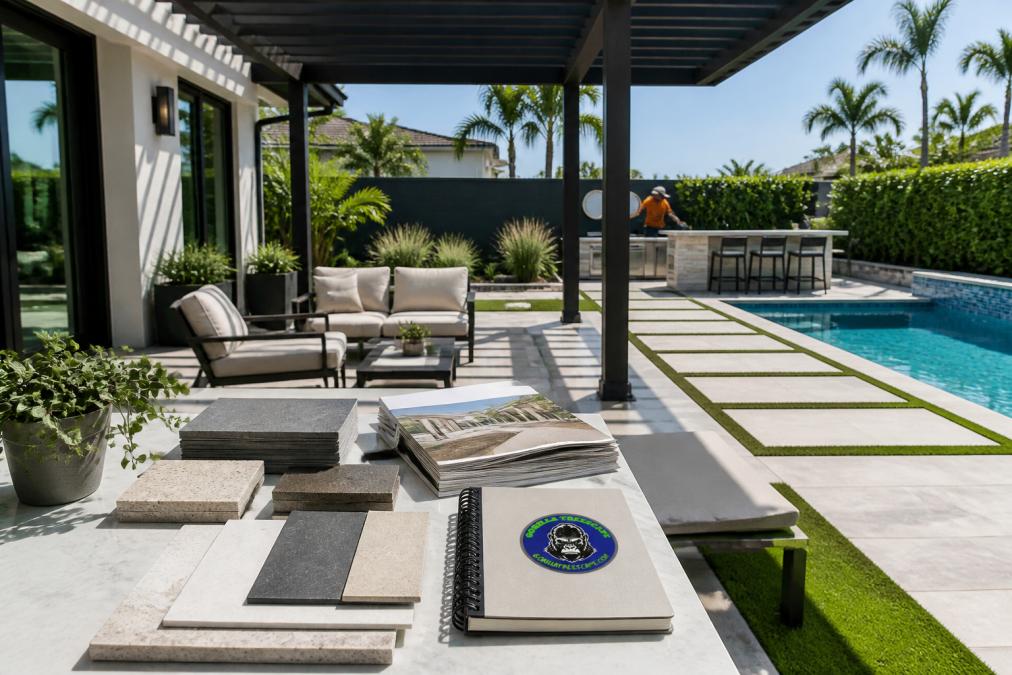
How to test a palette before you commit. Buy one box of the actual paver or tile you are considering, plus a few cushion and rug swatches, and leave them on the patio for a week. Look at them in morning light, at noon, at dusk, and after rain. Colors shift dramatically under different light, and a tone that looks warm and inviting in a showroom can read flat or cold once it is outside. This step costs very little and prevents the most expensive mistake in patio design: redoing a hardscape because the color was wrong.
A note on fading and longevity. UV exposure fades textiles, painted finishes, and some composite materials faster than most homeowners expect. Deep, saturated colors tend to show fade more obviously than mid-tones and neutrals. If your patio gets full sun all day, lean toward mid-tone cushions and rugs, and plan to replace or rotate them every few seasons. Store cushions during the off-season to extend their life.
Layered Lighting and Smart Patio Lighting Technology
Smart patio lighting technology has moved from novelty to default in mid-range projects. The reason is simple: layered lighting makes an outdoor space usable after sunset, and app or voice control makes it effortless to switch between moods.
Layered lighting means three tiers working together. Ambient lighting comes from overhead fixtures, string lights, or a pergola-mounted system. Task lighting covers the grill station, prep counters, and steps. Accent lighting washes walls, uplights trees, and highlights a fire feature or water feature.
The smart layer is what ties it together. Most current systems let you:
- Schedule lights to come on at sunset and dim automatically
- Set separate scenes for dining, entertaining, and quiet evenings
- Control everything from a phone or voice assistant
- Add motion sensors for pathways and security
What most guides miss is the wiring reality. Smart lighting needs a power source and, in most cases, a low-voltage transformer sized for the total fixture load. Decide on the system before the patio is built, not after.
Modern Outdoor Kitchen Design Ideas for Entertaining
An outdoor kitchen earns its cost when it is designed around how you actually host, not around a catalog photo. The strongest layouts keep the cook facing the guests, keep prep surfaces within arm's reach, and keep traffic out of the cooking zone.
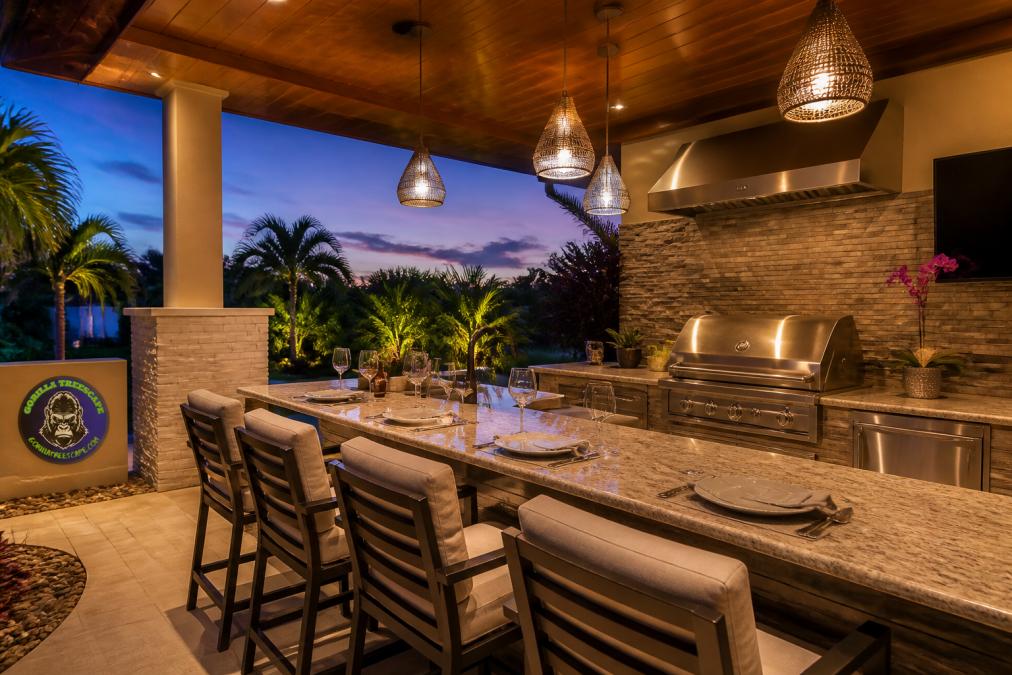
Start with the work triangle: grill, prep counter, and refrigerator or cooler within a few steps of each other. Add a stone dining table or bar-height counter nearby so guests can sit while you cook. A built-in sink saves countless trips inside, and a small under-counter fridge keeps drinks out of the kitchen.
For materials, weather-resistant surfaces matter more than style. Stone countertops, sealed concrete, and porcelain tile hold up to sun, rain, and heat far better than untreated wood. If you want the look of wood, choose composite decking or wood-look tile.
Ventilation and clearance are the details nobody mentions until the first cookout. Grills need clearance from combustible walls, and a covered kitchen needs proper airflow so smoke does not stain the ceiling or drift into the house.
Sustainable Materials and Eco-Friendly Patio Design
Eco-conscious patio design in 2026 is less about a label and more about lifespan. The most sustainable material is usually the one you install once and do not replace in five years.
Composite decking made from recycled content, reclaimed teak, and responsibly sourced stone all reduce environmental load. Permeable pavers and gravel joints let rainwater drain back into the ground instead of running off into storm systems, which also helps with the drainage problems many backyards already have.
Two approaches worth considering:
- Vertical gardening on pergolas, walls, or freestanding trellises adds greenery without consuming floor space
- Native and climate-adapted planting around the patio perimeter reduces irrigation demand and survives heat and humidity better than exotic species
Biophilic design, the practice of connecting built spaces to natural elements, fits naturally here.
Cost of Custom Pool Installation 2026: What to Expect
The cost of custom pool installation 2026 depends on size, shape, access, and how much hardscape surrounds it. There is no single number that applies across projects, and any contractor quoting a flat figure before seeing your yard is guessing.
Several variables move the total most:
| Factor | Why It Changes Cost |
|---|---|
| Pool size and depth | More excavation, steel, and finish material |
| Access to the yard | Tight gates and slopes require smaller equipment and more labor |
| Patio and decking area | Larger surround means more stone, tile, or pavers |
| Features | Water features, fire features, and lighting add systems |
| Permits and inspections | Required for pool and electrical work in most jurisdictions |
| Drainage and grading | Fixing water problems before the build prevents damage later |
Frequently Asked Questions
What are the hottest patio design trends for 2026?
The hottest trends include multifunctional layouts that blend dining and lounging, warm color palettes with natural textures, layered lighting with smart controls, and sustainable materials like recycled composite decking. Outdoor kitchens remain popular, and biophilic design elements such as vertical gardens are gaining traction. These trends focus on creating comfortable, stylish spaces that reflect personal style and support outdoor living year-round.
How can I make my patio look more high-end on a budget?
Focus on a few impactful upgrades: add layered lighting with string lights or solar path lights, use an outdoor rug to define the seating area, and incorporate large-format tiles or stone pavers for a polished look. Upcycle existing furniture with weather-resistant cushions and a fresh coat of paint. These changes can transform your patio without a full renovation.
What materials are trending for modern patios in 2026?
Porcelain pavers, recycled composite decking, and natural stone like travertine are trending for their durability and low maintenance. Homeowners are also choosing sustainable options such as reclaimed wood and bamboo. These materials offer weather resistance and align with eco-friendly design goals, making them ideal for modern patios.
How do I integrate sustainable landscaping into my patio design?
Start by selecting native plants that require less water and maintenance. Incorporate permeable pavers to manage runoff, and add a rain garden or bioswale to capture rainwater. Use recycled materials for furniture and decor, and install solar-powered lighting. These strategies reduce environmental impact while enhancing the patio's natural beauty.