 how-to
How Long Does Custom Pool Construction Take?
Table of Contents
- How Long Does Custom Pool Construction Take? The Honest Answer
- Custom Pool Construction Stages: A Phase-by-Phase Schedule
- Pool Building Permit Timeline: Why Approvals Set the Pace
- Timelines by Pool Type: Concrete vs Fiberglass vs Vinyl
- Pool Construction Delays: What Slows a Build Down
- Your Pool Construction Checklist: How to Stay on Schedule
- From Dig to Swim: When the Pool Is Truly Ready
- Frequently Asked Questions
Last Updated: October 15, 2026
How Long Does Custom Pool Construction Take? The Honest Answer
Most homeowners want a straight number, so here it is: custom pool construction typically takes six to twelve weeks from the first dig to the day you can swim. The full process, from your first design meeting to the final inspection, usually runs three to six months. This guide from Gorilla Treescape LLC breaks down every stage, so you know exactly where the time goes.
The gap between those two numbers confuses people. Excavation to swim is fast. Planning, design, and permits are what stretch the calendar. According to the U.S. Census Bureau's Building Permits Survey, permit review times vary widely by jurisdiction, which is why two neighbors can start the same week and finish months apart.
Understanding the custom pool construction timeline helps you plan around the slow parts. Below, we walk through each phase, compare timelines by pool type, and show you how to avoid the delays that stall most backyard projects.
Custom Pool Construction Stages: A Phase-by-Phase Schedule
A custom pool build moves through six distinct stages, not three. Each has its own realistic duration range and its own risk of delay.
| Stage | Typical Duration | What Happens | Main Risk |
|---|---|---|---|
| Design and engineering | 2-4 weeks | Shape, depth, features, structural drawings | Indecision on features |
| Permitting and HOA approval | 2-6 weeks | Plan review, zoning check, HOA sign-off | Incomplete submittals |
| Excavation and layout | 3-7 days | Staking, digging, rough grading | Access, soil, utilities |
| Shell and rough plumbing | 2-4 weeks | Rebar, plumbing, gunite or shotcrete, curing | Weather, inspection gaps |
| Finishes and equipment | 2-4 weeks | Tile, coping, decking, plaster, pumps, filters, heater | Material lead times |
| Startup and final inspection | 3-7 days | Equipment commissioning, water balancing, final sign-off | Scheduling the inspector |
Design and engineering (2-4 weeks). You finalize shape, depth, tanning ledges, spas, and water features. Structural drawings and engineering stamps are produced here. Every change after this point ripples through the schedule.
Permitting and HOA approval (2-6 weeks). This runs parallel to nothing, it gates excavation. A complete submittal with engineered drawings moves fastest.
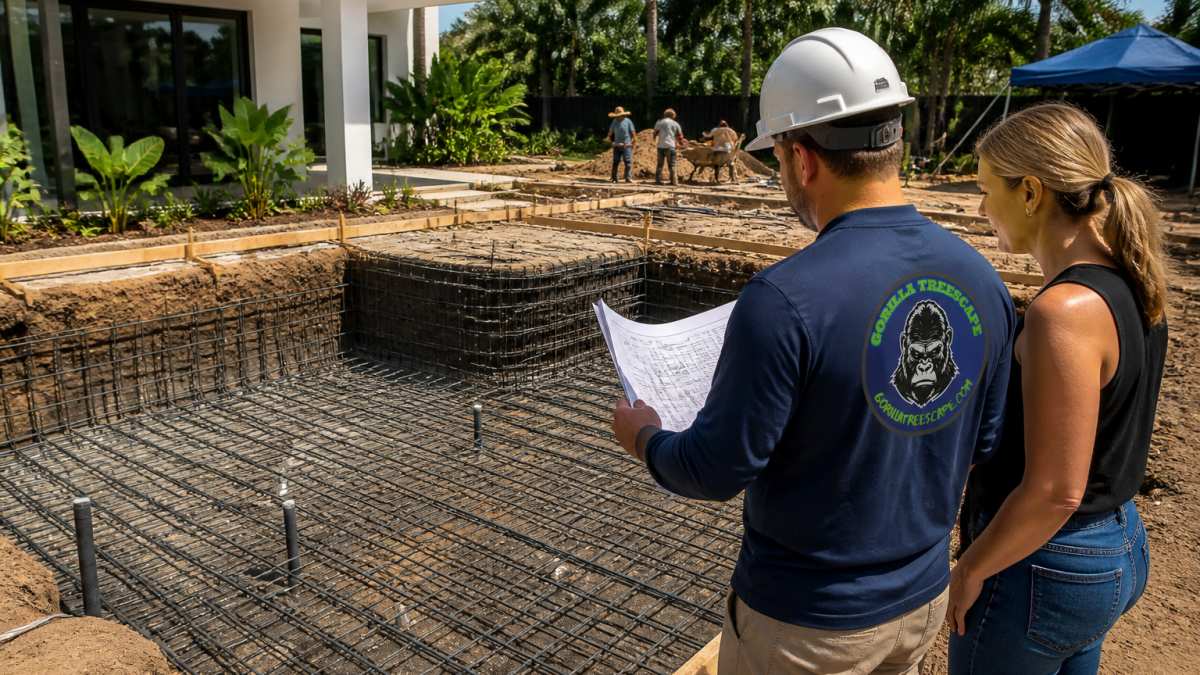
Excavation and layout (3-7 days). Crews stake the pool, dig, and rough-grade. A standard backyard with wide side access takes three to four days. Narrow access, rock, or high water tables push it to a week or more.
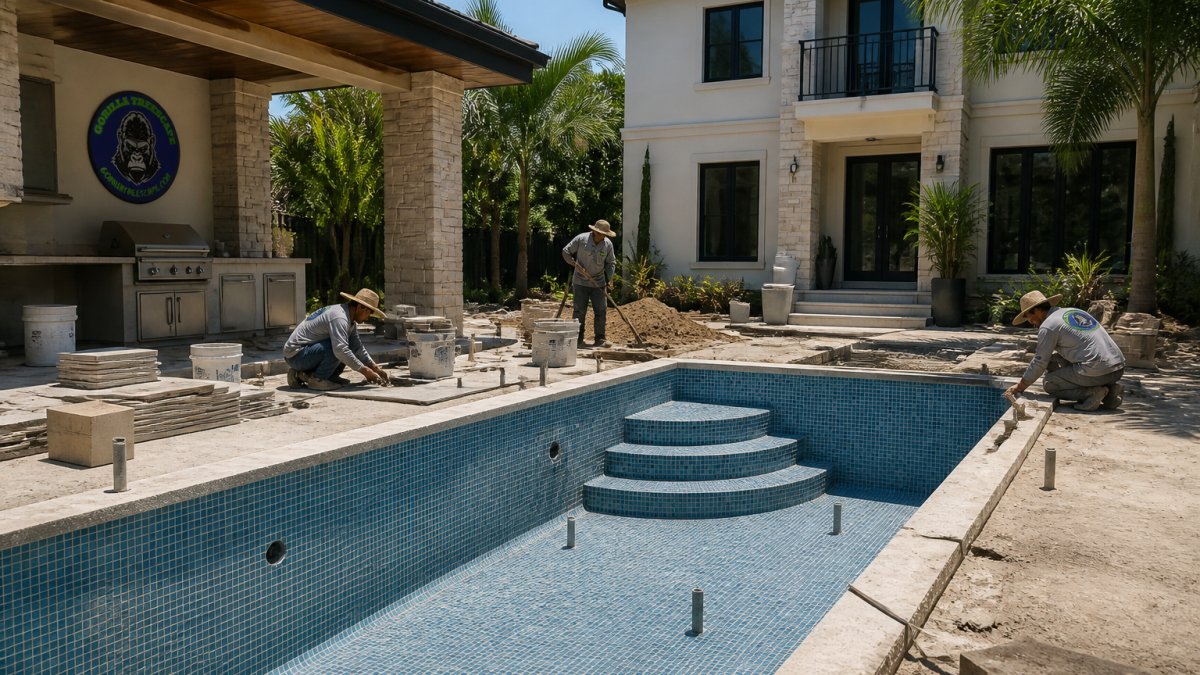
Shell and rough plumbing (2-4 weeks). Rebar grid goes in, plumbing is run, and gunite or shotcrete is applied. The shell then cures.
Finishes and equipment (2-4 weeks). Waterline tile, coping, decking, interior plaster or pebble finish, pumps, filters, heaters, and sanitizing equipment all land in this window. This is where material lead times bite hardest.
Startup and final inspection (3-7 days). The pool is filled, equipment is commissioned, chemicals are balanced, and the final inspection is scheduled. This is the true endpoint, not the day the shell goes in.
Phase 1: Planning, Pool Design, and Permitting
Planning and design take two to four weeks for most projects. You pick the shape, depth, and features, then finalize drawings before anything gets submitted.
Permitting adds another two to six weeks on top. Some jurisdictions move faster; others take longer. The key distinction is that permitting is approval time, not construction time, nothing digs until the paperwork clears.
Phase 2: Excavation and Site Preparation
Excavation and site prep run three to seven days for a standard lot. Crews dig the hole, shape the walls, and prep the ground for the shell.
Access matters here. A narrow side yard or HOA setback can slow equipment movement and add days. Rock, high water tables, or buried utilities can add a week or more.
Phase 3: Pool Shell, Equipment, and Finishing Work
The shell, equipment, and finishing work take four to eight weeks combined. This covers the shell install, plumbing, pumps, filters, decking, and interior finish.
Finishing is where small delays stack up. Tile, plaster, and equipment hookups each need their own window. Ordering specialty materials early is the single most effective way to keep this phase on schedule.
Pool Building Permit Timeline: Why Approvals Set the Pace
The pool building permit timeline is the single biggest variable in any build. Approvals set the pace because nothing digs until the paperwork clears.
Most permits take two to six weeks. Some take longer if your project needs zoning review or HOA sign-off.
Timelines vary by location and project type. A simple pool in a standard lot moves fast. A pool with a spa, retaining wall, or patio addition triggers extra review.
To speed things up:
- Submit complete drawings the first time
- Confirm HOA rules before you apply
- Ask your builder to handle the paperwork
Timelines by Pool Type: Concrete vs Fiberglass vs Vinyl
Pool type changes the schedule more than most people expect. Concrete pools take longest, fiberglass is fastest, and vinyl sits in the middle. But the differences are not just about the shell, they affect permitting complexity, site work, and how quickly you can swim.
Here is the side-by-side comparison:
| Pool Type | Shell Build Time | Total Project Time | Permitting Complexity | Best For |
|---|---|---|---|---|
| Concrete (gunite/shotcrete) | 8-12 weeks | 3-6 months | Highest, engineered drawings, inspections | Custom shapes, spas, water features |
| Fiberglass | 3-6 weeks | 6-10 weeks | Moderate, pre-engineered shell | Fast installs, low upkeep |
| Vinyl liner | 4-6 weeks | 2-4 months | Moderate, panel and liner specs | Budget-friendly builds |
Concrete pools (8-12 weeks shell, 3-6 months total). A custom concrete pool gives you endless design freedom, but the shell has to cure before finishing. That curing time is built into the schedule and cannot be rushed. Concrete also triggers the most inspections, rebar, plumbing, electrical, and final, each of which needs its own scheduling window. The upside is that any shape, depth, or feature is possible.
Fiberglass pools (3-6 weeks shell, 6-10 weeks total). Fiberglass pool installation is quick because the shell arrives pre-made and pre-engineered. Crews excavate, set the shell, plumb it, and backfill in days, not weeks. Because the shell is manufactured off-site, there is no curing period. Permitting is often simpler since the shell is pre-approved by the manufacturer. The trade-off is limited shapes and sizes, you pick from what is available.
Vinyl liner pools (4-6 weeks shell, 2-4 months total). Vinyl pools balance cost and speed. The walls and floor are set first, then the liner goes in. There is no curing period, but the liner must be ordered to spec, and site work for the panel walls takes time. Vinyl is the most budget-friendly option and the liner can be replaced later, but it offers less design flexibility than concrete.
A custom pool in concrete is the slowest path but the only one that supports fully custom shapes, integrated spas, and complex water features. If speed matters more than customization, fiberglass is the clear winner. If budget is the priority, vinyl delivers the shortest path to a swimmable pool at the lowest cost.
Pool Construction Delays: What Slows a Build Down
Pool construction delays come from a short list of usual suspects. Weather, permits, and site surprises top the list.
Rain is the biggest one. Wet ground stops excavation and can delay concrete work for days.
Other common delays:
- Slow permit review or missing approvals
- Soil conditions that need extra prep
- Equipment or material backorders
- Inspection scheduling gaps
- Changes made after work starts
Peak season makes everything slower. Builders juggle more jobs, and inspectors get backed up.
Your Pool Construction Checklist: How to Stay on Schedule
A pool construction checklist keeps your project moving. It helps you prep early and catch problems before they cost you time.
Use this list:
- Finalize design and features before permitting
- Confirm HOA and setback rules
- Submit complete permit drawings
- Clear equipment access to the backyard
- Lock in your material selections early
- Schedule inspections as soon as each stage ends
- Keep one point of contact with your builder
- Plan landscaping and surrounding work ahead
Homeowners who prep early avoid most delays. The work you do before the dig saves weeks later.
At Gorilla Treescape LLC, we handle permits for projects, which keeps your build on track from day one. We also offer Landscaping And Outdoor Living Design to plan the pool and the spaces around it as one cohesive project, so the decking, plantings, and outdoor rooms are ready when the water is.
From Dig to Swim: When the Pool Is Truly Ready
From dig to swim, the pool is ready when it passes final inspection and the water is balanced. That is the real finish line, not the day the shell goes in.
Many homeowners think the pool is done when it looks full. It is not. You still need:
- Final inspection sign-off
- Equipment testing and startup
- Water balancing and treatment
- A short wait before heavy use
Landscaping and surrounding work often finish after the pool. Decks, patios, and plantings come next, and that adds time to the overall project. Once the pool is running, ongoing Landscaping & Pool Maintenance keeps both the water and the surrounding plantings in shape season after season.
If you want the whole backyard done at once, plan the pool and outdoor living spaces together. Our guidance from the U.S. EPA on outdoor water use can help you think about water and landscaping in one plan.
Frequently Asked Questions
How long does it take to build a custom inground pool?
Most custom inground pools take 3 to 6 months from signed contract to swimming, though the construction itself often runs 8 to 16 weeks once permits are in hand. Concrete pools usually land at the longer end because of the shell cure and finish work. Fiberglass and vinyl builds move faster. Site conditions, weather, and inspection scheduling all shift the final date, so treat any estimate as a range, not a promise.
What are the stages of custom pool construction?
A typical build moves through five stages: design and permitting, excavation and site preparation, pool shell installation, pool equipment and utilities, and finishing work like decking, landscaping, and water balancing. Each stage depends on the one before it, so a slow permit or a rain-soaked dig pushes everything downstream. Ask your contractor for a written schedule that lists each stage with its own duration range.
Does a concrete pool take longer to build than a fiberglass pool?
Yes, generally. A concrete pool is built on site, so it includes excavation, steel and plumbing, gunite or shotcrete application, a curing period, and interior finishing. That process commonly runs 12 to 16 weeks or more. A fiberglass pool arrives as a pre-made shell, so installation often finishes in 6 to 10 weeks. Vinyl falls in between. The gap widens further when you add custom features like spas, tanning ledges, or water features.
What can delay a custom pool construction project?
The most common delays are permit backlogs, heavy rain, unexpected soil or rock conditions, inspection scheduling, and material lead times for pumps, heaters, and finishes. Change orders mid-build also add weeks. To reduce risk, submit permit applications early, avoid starting in peak season, lock in equipment orders before excavation, and keep decisions on finishes and features settled before the dig begins.
A custom pool build rewards homeowners who plan ahead. The crews move fast; the calendar does not. Gorilla Treescape LLC manages the full process, from custom pool and patio design to permit handling and finishing work, so your project stays on schedule. Our team brings seamless project management from concept to completion, backed by a 5.0 rating from 34 reviews. Get a quote from Gorilla Treescape LLC and turn your backyard into the space you have been planning.