 how-to
Benefits of Lawn Aeration and Top Dressing
Table of Contents
- Why Lawn Aeration and Top Dressing Work Better Together
- Aeration and Top Dressing Order: Which Comes First
- Benefits of Lawn Aeration: Fixing Compaction and Thatch
- Benefits of Top Dressing: Building Soil Structure and Organic Matter
- Best Time to Aerate and Top Dress Lawn
- Best Top Dressing Material for Lawns
- How to Level an Uneven Lawn With Top Dressing
- Common Mistakes, Risks, and What Results to Expect
- Frequently Asked Questions
Last Updated: October 12, 2026
Why Lawn Aeration and Top Dressing Work Better Together
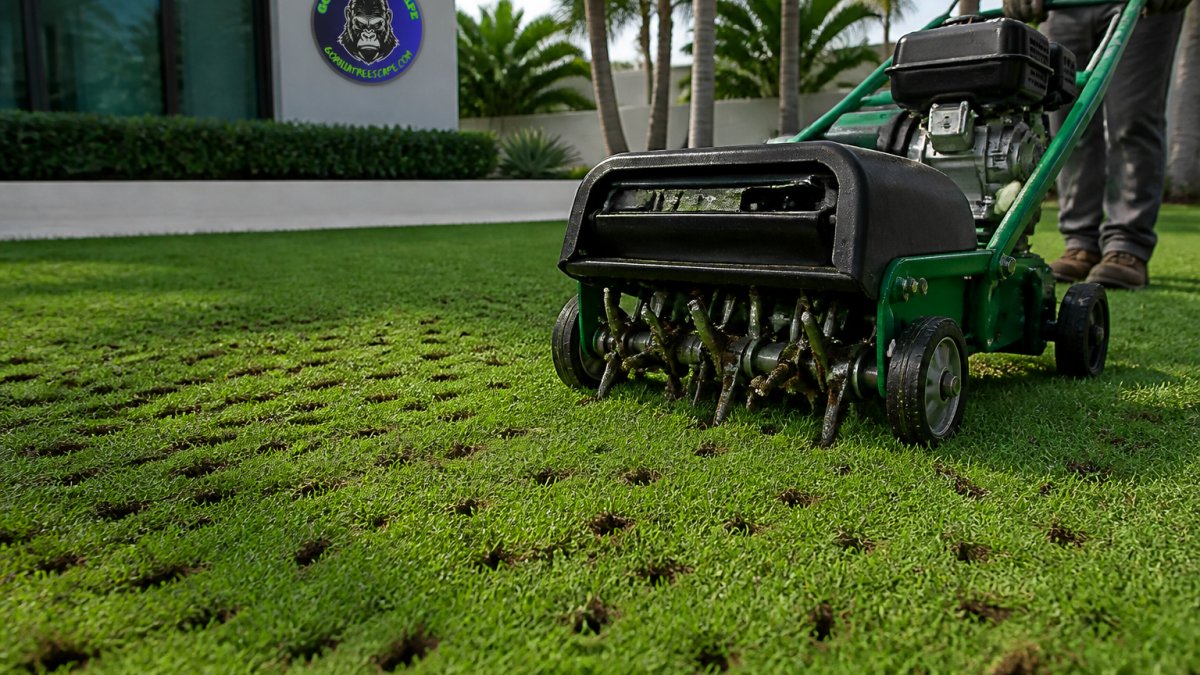
Lawn aeration pulls small plugs of soil from your turf to open up compacted ground.
We see the same pattern across South Florida yards: grass thins out, water pools after storms, and fertilizer stops working.
Most homeowners do one without the other. That is the mistake: aeration holes close within weeks if left empty, and top dressing alone never reaches the root zone.
Aeration and Top Dressing Order: Which Comes First
Aerate first, then top dress. Aeration opens channels into the soil, and top dressing fills them with organic material that reaches the root zone.
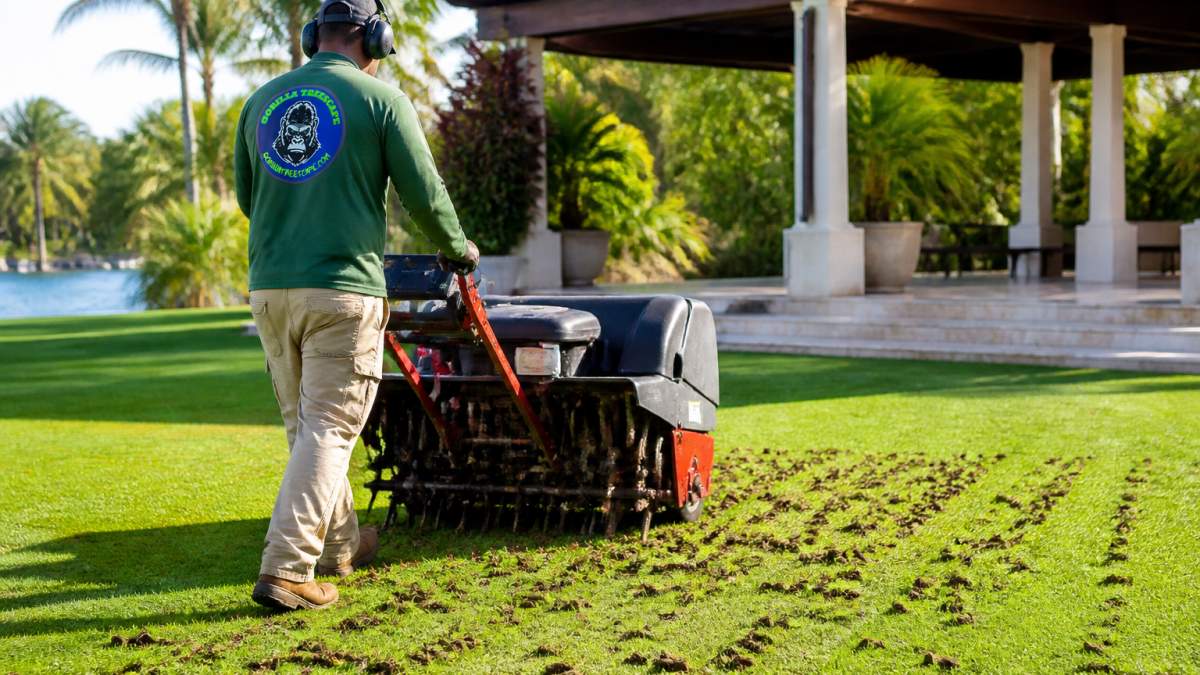
Here is the sequence that works:
- Mow the lawn shorter than usual, about 1 to 1.5 inches
- Water lightly the day before to soften the soil
- Run a core aerator across the lawn in two directions
- Leave the plugs to break down, or rake them lightly
- Spread top dressing in a thin layer, no more than 0.5 inch
- Work it into the holes with a push broom or drag mat
- Water deeply and keep foot traffic off for a few days
The University of Florida IFAS extension guidance on lawn care recommends core aeration over spike aeration for compacted soils. Core aeration removes actual plugs, which gives soil room to expand. Spike aerators just poke holes and can make compaction worse over time.
Benefits of Lawn Aeration: Fixing Compaction and Thatch
Aeration fixes two problems that quietly ruin lawns: soil compaction and thatch buildup. Both block water, air, and nutrients from reaching the root zone.
Compaction happens when soil particles get pressed together by foot traffic, mowers, and heavy rain. In South Florida, sandy soils compact fast, especially over clay fill.
Thatch is the layer of dead stems and roots between the grass blades and the soil surface.
How Aeration Improves Water, Air, and Nutrient Movement
Aeration holes act like small wells: water flows in instead of running off, air reaches the roots, and fertilizer follows the same path down. Roots need oxygen; when soil is sealed off, they stay shallow and the lawn dries out fast. Aeration also feeds the soil microorganisms that break down thatch.
Reducing Soil Compaction and Managing Thatch
Core aeration removes plugs of soil, giving compacted ground room to expand. Do this once or twice a year on heavy-use lawns; high-traffic areas may need it more often.
For thatch, aeration works best alongside top dressing. The material you spread after aerating adds microbes that eat through thatch naturally, slower than dethatching, but it does not tear up the lawn.
Benefits of Top Dressing: Building Soil Structure and Organic Matter
Top dressing builds soil structure by adding organic matter to the surface layer, which works down over time and changes how soil holds water and nutrients:
- Better soil structure. Compost and sand blends improve how soil particles bind together.
- More organic matter. This feeds the microorganisms that keep soil alive.
- Smoother surface. Thin layers fill low spots over time.
Improving Root Growth, Lawn Density, and Water Retention
Roots grow where they find air, water, and nutrients, and top dressing creates that environment in the top inch of soil where most grass roots live. A denser lawn follows: thick turf crowds out weeds, shades the soil, and stands up better to foot traffic and summer stress.
Organic matter holds moisture like a sponge and releases it slowly, so there is less runoff after storms and less stress during dry stretches.
Best Time to Aerate and Top Dress Lawn
The best time to aerate and top dress is during your lawn's active growing season. Grass recovers from aeration holes only when it is actively growing. Aerate during dormancy and the holes sit open for weeks, inviting weeds and drying out the root zone.
Warm-Season Grasses
Warm-season grasses grow most vigorously in late spring through midsummer, when soil temperatures are consistently warm.
| Grass Type | Best Aeration Window | Why It Works |
|---|---|---|
| St. Augustine | Late spring to early summer | Fast recovery in heat |
| Bermuda | Late spring to midsummer | Aggressive growth fills holes |
| Zoysia | Early summer | Slow grower needs warm soil |
| Bahia | Late spring | Deep roots recover quickly |
| Centipede | Late spring to early summer | Thin turf benefits from warm-season recovery |
Avoid aerating warm-season lawns in fall. Growth slows, holes stay open through winter, and recovery stalls until spring.
Cool-Season Grasses
Cool-season grasses do best when aerated in early fall, while soil is still warm but air temperatures are dropping, giving roots time to recover before cold sets in. Early spring works in mild climates, but fall sets the lawn up better for winter and spring green-up.
| Grass Type | Best Aeration Window | Why It Works |
|---|---|---|
| Tall fescue | Early fall | Strong root growth in cooling soil |
| Kentucky bluegrass | Early fall | Recovers before dormancy |
| Perennial ryegrass | Early fall | Fast establishment in mild temperatures |
| Fine fescue | Early fall | Avoids summer heat stress |
Climate and Weather Caveats
Timing is not just about the calendar. Local conditions decide whether a window is actually open.
- Rainfall: Aerate when soil is moist but not saturated. Dry, hard soil blocks the tines; soggy soil turns to ruts.
- Heat stress: Skip aeration during drought or extended heat, since stressed grass cannot recover.
- Cold snaps: Do not aerate right before a freeze. Open holes plus frozen ground slow recovery and can leave uneven surfaces.
Cost and DIY Versus Professional
Aeration and top dressing are both doable as DIY projects, but equipment and material handling push many homeowners toward hiring out.
- DIY aeration: Core aerators rent by the half or full day. The machine is heavy, hard to steer on slopes, and needs a truck or trailer. Budget for rental, fuel, and labor.
- DIY top dressing: Material is usually the bigger expense. Compost and blended mixes sell by the cubic yard, and delivery adds to the total. Spreading by hand is slow but workable on small lawns.
- Professional aeration and top dressing: A crew brings the aerator, material, and spreading equipment. Pricing varies by lawn size, material choice, and local labor rates, so get quotes based on square footage and material volume rather than a flat rate.
Sequencing the Two Practices
If you are doing both in the same season, schedule aeration for the start of the active growing window and top dressing immediately after, giving the grass the full season to recover and the material time to work into the soil.
Best Top Dressing Material for Lawns
The best top dressing material depends on your existing soil, your grass type, and what you want the lawn to do. There is no universal best mix, the right choice matches the soil already under your grass.
The core rule: never create a sharp boundary between your top dressing and your native soil. A layer that drains very differently from the soil below acts like a barrier, and water stacks up at the interface.
Material Options and When Each Works
- Compost: Decomposed organic matter, screened so it spreads evenly. Best for lawns with low organic matter, thin turf, or poor nutrient holding. Adds microbes and slow-release nutrients, holds moisture well, but can crust if applied too thick.
- Sand: Coarse, washed builder's or masonry sand. Best for leveling and improving drainage in heavy, fine-textured soil. Adds no nutrients or organic matter, and used alone on sandy soil it does nothing useful.
- Compost and sand blend: The most forgiving all-around choice for most lawns. Balances water holding and drainage, spreads easily, and works into aeration holes without smothering crowns. A common starting ratio is roughly 60 to 70 percent compost to 30 to 40 percent sand by volume, adjusted toward sand for heavy soil and toward compost for sandy soil.
Matching Material to Soil Type
- Sandy soil: Lean toward compost-heavy blends. Plain sand drains away too fast and carries nutrients with it. Compost holds moisture and nutrients in the root zone.
- Clay or heavy soil: Lean toward a sand-and-compost blend. Straight compost on clay can stay wet and seal the surface. Sand opens the structure, and compost keeps it from turning into a brick.
- Loam: A balanced compost and sand blend maintains what you already have. Avoid heavy sand or heavy clay additions.
Application Rates and Depth
Depth matters more than material choice. Thin and repeated beats thick and fast every time.
- Routine top dressing after aeration: Spread no more than 0.25 to 0.5 inch across the lawn. This fills aeration holes without burying crowns.
- Leveling low spots: Apply in thin lifts of 0.25 to 0.5 inch, let the grass grow through, then repeat. Most lawns need three to five passes over a season to correct noticeable unevenness.
- Material quantity: About 1 cubic yard covers roughly 1,000 square feet at a 0.25-inch depth; double that for 0.5 inch. Measure your lawn area first, then order by the cubic yard.
Matching Material to Your Goal
- Greener, healthier turf: Compost-heavy blend.
- Flatter surface: Sand or a sand-heavy blend, applied in thin repeated lifts.
- Better drainage: Sand-heavy blend on heavy soil, worked into aeration holes.
When in doubt, choose a balanced blend and apply it thin. You can always add more next season; you cannot easily undo a layer that was too thick or the wrong texture.
How to Level an Uneven Lawn With Top Dressing
Leveling an uneven lawn with top dressing takes patience, not muscle: thin layers, repeated over time.
Follow these steps:
- Identify the low spots. Walk the lawn after rain and mark where water pools.
- Mow low, about 1 inch, so the grass does not get buried.
- Spread a thin layer, no more than 0.5 inch, over the low areas.
- Work the material in with a push broom so it settles between blades.
- Water lightly to settle it further.
- Wait two to three weeks for the grass to grow through.
- Repeat until the surface is level.
Raising a lawn more than 0.5 inch at once smothers the grass. Most lawns need three to five passes over a season.
This same method smooths out bumpy yards after construction or heavy equipment traffic. If your yard needs drainage work before leveling, that comes first.
Common Mistakes, Risks, and What Results to Expect
The biggest mistake is doing too much at once. Thick top dressing layers smother grass.
Watch for these:
- Top dressing too thick. More than 0.5 inch buries the crown and kills grass.
- Aerating dry, hard soil. The tines cannot penetrate. Water first.
- Using the wrong material. Sand on clay, or clay on sand, creates a barrier layer.
Results take time. Expect visible improvement in four to six weeks for aeration.
What you should see: thicker turf, fewer weeds, better water absorption, and a lawn that bounces back faster after summer stress.
A healthy lawn starts with healthy soil, and that is not something you fix with a bag of fertilizer.
Frequently Asked Questions
Should you aerate before or after top dressing?
Aerate first, then top dress. Core aeration pulls small plugs of soil from the lawn and leaves channels open through the thatch layer. Applying top dressing material while those holes are open lets the compost or sand blend work its way down toward the root zone instead of sitting on the surface. Wait until the plugs have dried enough to break apart, usually a day or two, then spread your material and water it in.
What are the benefits of aerating and top-dressing a lawn?
Aeration relieves soil compaction so water, air, and nutrients can reach the roots. Top dressing adds organic matter that improves soil structure, feeds soil microorganisms, and smooths small dips in the surface. Together they support deeper root growth, thicker turf, and better water retention heading into summer stress. Many homeowners also notice stronger recovery after foot traffic and fewer bare patches over time.
How often should you aerate and top-dress your lawn?
Most lawns benefit from core aeration once a year, ideally during the active growing season for your grass type. Top dressing can be done once or twice a year at a light rate, about a quarter inch per pass. Lawns with heavy clay soil, compacted areas, or constant foot traffic may need aeration more often. If you are overseeding, aerating right before gives the seed better soil contact.
Can top dressing help level an uneven lawn?
Yes, but it works best as a gradual process. Spread a thin layer of top dressing material, no more than half an inch at a time, over low spots and work it in with a rake or drag mat. Repeat every few weeks during the growing season rather than dumping a thick layer all at once, which can smother the grass. For larger dips, combine top dressing with core aeration so the material settles into the holes.