 how-to
How to Fix an Uneven Lawn: Step-by-Step Guide
Table of Contents
- What Causes an Uneven Lawn
- Best Tools for Leveling a Lawn
- Lawn Aeration Before Leveling: Why It Matters
- Top Dressing a Lawn to Fill Depressions
- How to Fix Lawn Ruts and Severe Uneven Terrain
- How to Fix an Uneven Lawn: Full Step-by-Step Process
- DIY vs. Professional Lawn Leveling: Cost-Benefit Breakdown
- Frequently Asked Questions
Last Updated: August 27, 2026
What Causes an Uneven Lawn
An uneven lawn creates tripping hazards, traps water, and makes mowing frustrating as it scalps high spots while leaving low ones overgrown. Understanding the cause determines the cure.
Soil Settling and Compaction
Soil settling is one of the most common causes of uneven terrain. When homes are built, disturbed subsoil gets backfilled and compacts unevenly over time under foot traffic, rainfall, and turf weight. Heavy foot traffic accelerates this, as compacted soil loses its pore structure, preventing air, water, and roots from penetrating and creating low spots as the surface sinks.
Drainage Problems and Water Erosion
Poor drainage both causes and worsens uneven lawns. Water pooling in depressions erodes soil beneath the turf, deepening low spots over time. According to the USDA Natural Resources Conservation Service guidance on soil erosion, water erosion is one of the leading causes of topsoil loss on residential properties.
Tree Roots, Pests, and Thatch Buildup
Tree roots create mounds and ridges as they expand beneath the surface. Pest activity from grubs, moles, and voles tunnels through soil and creates soft depressions that collapse underfoot. Thatch buildup between grass blades and soil can also create a spongy, uneven surface.
Best Tools for Leveling a Lawn
The right tools make lawn leveling manageable. Most homeowners already own half of what's needed.
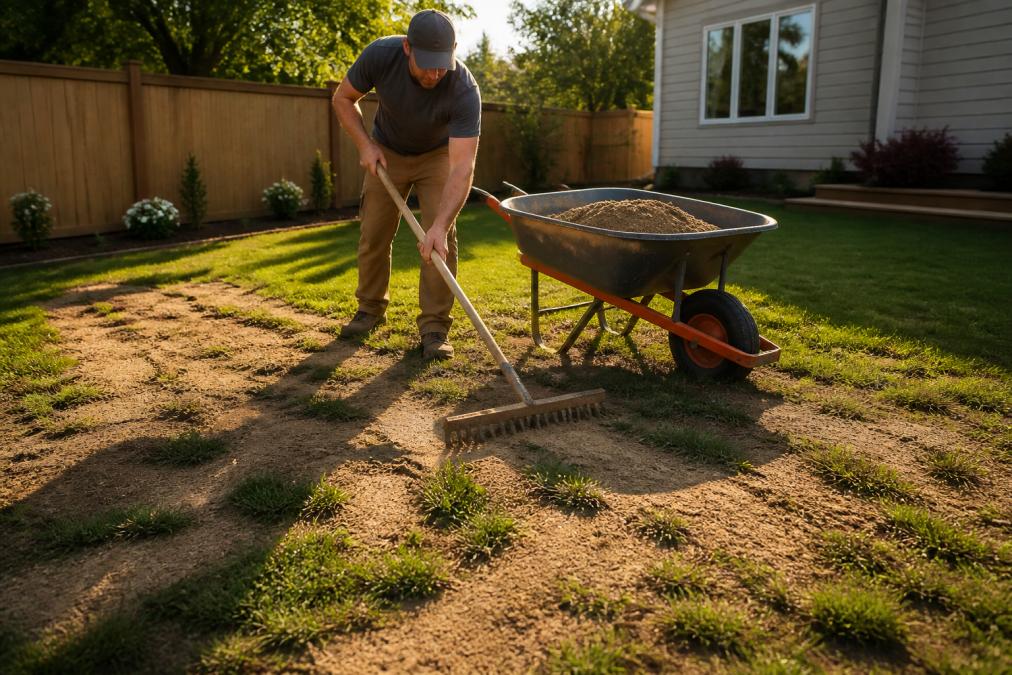
Essential tools include:
- Garden rake or leveling rake: For spreading top-dressing and leveling mix. A wide leveling rake covers more ground than a standard rake.
- Wheelbarrow: For transporting leveling mix and topsoil.
- Lawn roller: A water-filled roller compacts leveling mix into depressions.
- Core aerator: Manual or walk-behind machine. Aeration before top-dressing dramatically improves results.
- Sod cutter or flat spade: For peeling back turf before regrading deep ruts.
- Tiller: For severe cases requiring soil amendment across larger areas.
Equipment Rental vs. Buying
For most homeowners, renting makes more sense than buying for a one-time project. Core aerators, lawn rollers, and power rakes are available at equipment rental centers. A quality leveling rake is worth buying outright, it's inexpensive, stores easily, and you'll use it repeatedly.
Lawn Aeration Before Leveling: Why It Matters
Lawn aeration before leveling is essential. Core aeration removes soil plugs, breaking up compaction and creating channels for leveling mix, water, and nutrients to penetrate the root zone. Without aeration, top-dressing material washes away in heavy rain. With aeration, it migrates into the soil profile, filling voids and improving turf structure.
Aeration also stimulates grass growth by relieving compaction stress. For clay-heavy lawns, aeration may need to happen twice yearly to maintain adequate drainage.
Top Dressing a Lawn to Fill Depressions
Top dressing applies a thin layer of leveling mix to raise low spots and smooth minor depressions. It's most effective for depressions less than 5 centimeters deep.
Choosing the Right Leveling Mix
The best leveling mix matches your existing soil composition. A common approach uses a blend of sand and topsoil, sometimes with compost. A 70/30 or 60/40 sand-to-topsoil ratio performs better than pure sand on clay-heavy lawns, as pure sand creates a layered effect that impedes drainage. As noted in Penn State Extension's turfgrass management resources, matching amendments to existing soil prevents stratification that worsens drainage.
| Condition | Recommended Mix | Notes |
|---|---|---|
| Sandy soil base | Topsoil + compost | Improves water retention |
| Clay-heavy soil | Coarse sand + topsoil | Improves drainage |
| Loam base | Sand + topsoil + compost | Balanced amendment |
| Severe compaction | Topsoil + organic matter | Pair with aeration |
Seasonal Timing for Top Dressing
Top dressing works best when grass is actively growing. For warm-season grasses like St. Augustine, Bermuda, and Zoysia, late spring through early summer is ideal. Avoid top-dressing during dormancy or drought stress.
How to Fix Lawn Ruts and Severe Uneven Terrain
Ruts require a different approach than general surface unevenness, typically caused by vehicle or equipment traffic.
Shallow Ruts: Fill and Reseed
Shallow ruts under 5 centimeters deep can be fixed with top-dressing and reseeding. Fill the rut with leveling mix, tamp lightly, overseed with matching grass seed, and keep moist until germination. For warm-season lawns, sod installation is often faster and more reliable than reseeding.
Deep Ruts and Regrading: When to Excavate
Deep ruts require excavation: cut and peel back sod, add or remove subsoil to achieve correct grade, replace topsoil to at least 10 centimeters, then replace sod or reseed. Regrading is also necessary when lawn grade directs water toward the house foundation.
How to Fix an Uneven Lawn: Full Step-by-Step Process
Here is the complete process to fix uneven lawn problems from diagnosis through establishment.
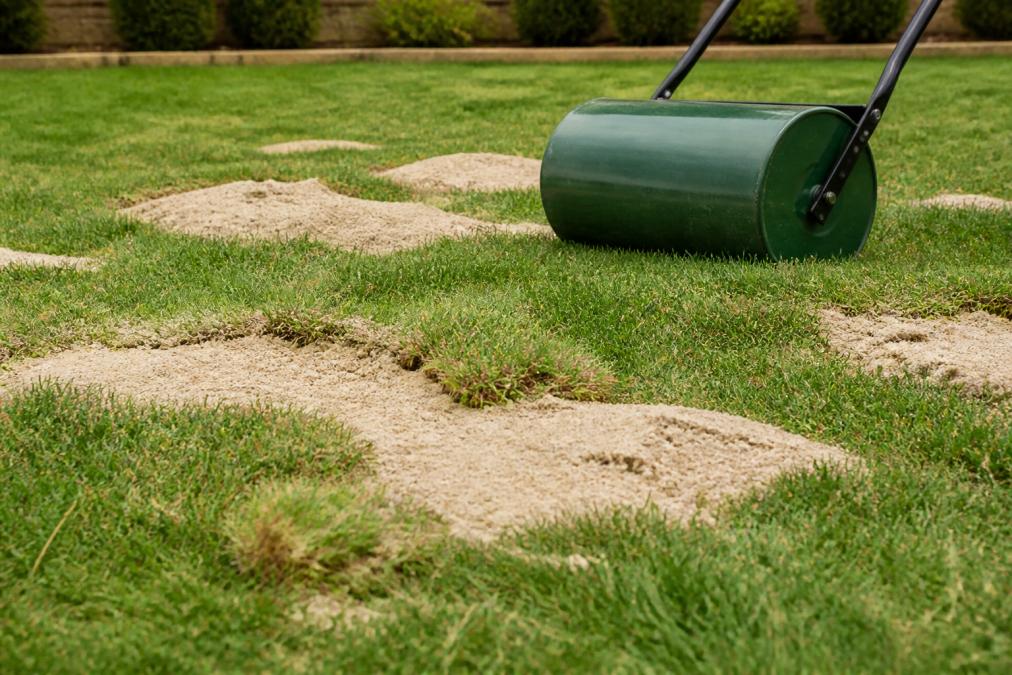
Step 1: Identify and map problem areas [Time: 30 minutes] Flag every depression, mound, and rut. Note depths, anything deeper than 5 centimeters needs the sod-lift method.
Step 2: Mow low [Time: 20-30 minutes] Cut grass to its lowest recommended height to make spreading leveling mix easier and see topography clearly.
Step 3: Aerate the entire lawn [Time: 1-2 hours] Run a core aerator across the full lawn in two perpendicular passes. Leave plugs on the surface.
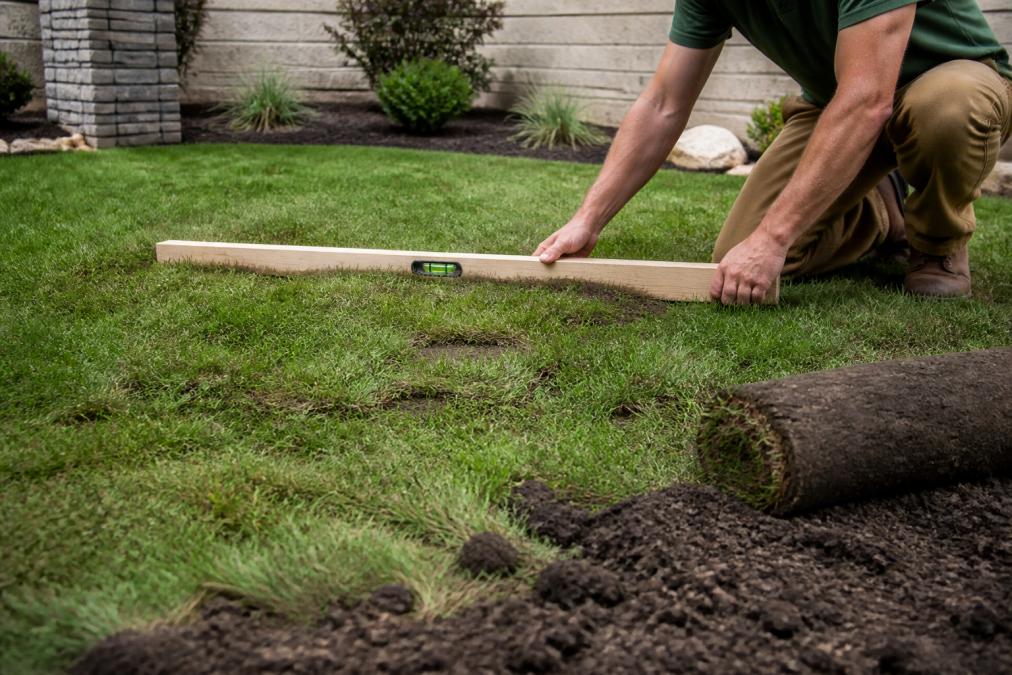
Step 4: Address deep depressions and ruts [Time: varies] For depressions deeper than 5 centimeters, cut and peel back sod, add leveling mix to raise grade, then replace sod and firm with a lawn roller.
Step 5: Apply top-dressing to shallow depressions [Time: 1-3 hours] Spread leveling material across low areas using a leveling rake, working it into aeration holes. Keep layers under 2 centimeters.
Step 6: Work the mix into the turf [Time: 30-60 minutes] Use the back of a garden rake to work leveling mix into the grass canopy without burying blades.
Step 7: Roll and firm [Time: 30 minutes] Run a water-filled lawn roller across treated areas to firm the mix and improve soil contact.
Step 8: Reseed bare areas [Time: 30 minutes] Overseed thin or bare patches with matching grass seed and apply light straw or compost to retain moisture.
Step 9: Water and monitor [Ongoing: 2-4 weeks] Keep treated areas consistently moist for at least two weeks. Avoid heavy foot traffic until turf re-establishes.
DIY vs. Professional Lawn Leveling: Cost-Benefit Breakdown
Most minor to moderate lawn leveling projects are within reach of motivated homeowners. Tools are rentable, materials are widely available, and the process is straightforward. Where DIY breaks down is in diagnosis and severe cases involving regrading.
A common mistake is treating drainage problems as leveling problems. Top-dressing over a lawn uneven due to poor grade shows temporary improvement, then the same depressions return after rain. Getting the diagnosis right matters more than technique.
Professional lawn leveling makes sense when the lawn has significant grade problems directing water toward structures, unevenness covers large areas requiring machinery, underlying drainage issues need engineering, or heavy tree root intrusion requires root management. For properties with complex drainage challenges, the University of Florida IFAS Extension guide on residential drainage provides a useful framework for evaluating whether surface grading or subsurface drainage solutions are appropriate.
Uneven lawns rarely fix themselves, and unaddressed drainage problems compound soil erosion. If your project scope goes beyond surface top-dressing, Gorilla Treescape LLC offers comprehensive landscaping and property maintenance services including drainage assessment, grading, sod installation, and full lawn renovation. We handle projects from concept through completion with permit management and consistent communication. Get a quote from Gorilla Treescape LLC and get your outdoor space back on level ground.
Frequently Asked Questions
Q: Can you level a lawn without killing the grass?
A: Yes, as long as you apply leveling mix in thin layers of no more than half an inch at a time. Burying grass blades under too much material at once will suffocate them. For depressions deeper than 2 inches, cut and fold back the sod, add subsoil or topsoil beneath it, then replace the sod. This approach keeps existing turf alive while correcting the grade.
Q: What is the best time of year to fix an uneven lawn?
A: The best time depends on your grass type. Cool-season grasses should be leveled in early fall or spring when they are actively growing. Warm-season grasses, including St. Augustine and Bermuda common in warmer climates, respond best to leveling in late spring through early summer. Avoid working on dormant or heat-stressed turf, since recovery is much slower and reseeding results are poor.
Q: How deep of a depression can you fill without killing grass?
A: Shallow depressions up to about half an inch deep can be filled directly with a leveling mix applied over existing grass. For depressions between half an inch and 2 inches, apply the mix in multiple thin passes spaced a few weeks apart. Anything deeper than 2 inches requires cutting back the sod, correcting the subsoil underneath, then replacing or reseeding. Attempting to fill deep holes in one pass will kill the turf.
Q: When should I hire a professional instead of leveling my lawn myself?
A: DIY leveling works well for minor mounds, shallow depressions, and small ruts. Call a professional when the problem involves poor drainage across a large area, significant grade changes that affect water runoff toward your home's foundation, or compacted subsoil that requires heavy equipment to correct. Persistent drainage issues, in particular, often signal a grading problem that top dressing alone will not solve long term.
This article was written using GrandRanker