 how-to
Infinity Pool Design Cost Breakdown: What to Budget
Table of Contents
- What Infinity Pool Design Costs Actually Include
- Infinity Pool Cost vs. Traditional Pool: What's the Real Difference
- Pool Construction Cost Factors That Drive Your Final Price
- Infinity Pool Cost Breakdown by Project Size and Complexity
- Using a Custom Pool Cost Calculator to Estimate Your Budget
- Hidden Costs and Contingency Planning
- Permitting, Engineering, and Site Assessment Costs
- Site-Specific Structural and Drainage Costs
- Utility Relocation and Access Challenges
- Material Price Volatility and Supply Chain Delays
- Design Changes and Change Orders During Construction
- Realistic Contingency Planning
- How Site Assessment Prevents Cost Overruns
- Getting an Accurate Quote and Next Steps
- Frequently Asked Questions
Last Updated: October 10, 2026
What Infinity Pool Design Costs Actually Include
An infinity pool design cost breaks down into site preparation, materials, construction labor, and specialized systems. Understanding these components helps you budget accurately and avoid surprises during construction.
Here's what actually goes into your project budget:
- Site assessment and engineering - Structural evaluation, slope analysis, soil testing
- Permits and approvals - Local building permits, engineering certifications
- Excavation and site prep - Digging, grading, drainage setup
- Pool structure - Gunite or fiberglass shell, reinforcement, waterproofing
- Catch basin or surge tank - Recirculation system infrastructure
- Interior finish - Tile, plaster, aggregate, or coating selection
- Pump and filtration - Circulation equipment, motors, controls
- Electrical and automation - Lighting, jets, heating, smart controls
- Landscaping and hardscape - Surrounding deck, retaining walls, plants
Each element contributes to your final infinity pool design cost. The catch basin alone represents a significant investment because it handles water displacement and recirculation for the vanishing edge effect.
Infinity Pool Cost vs. Traditional Pool: What's the Real Difference
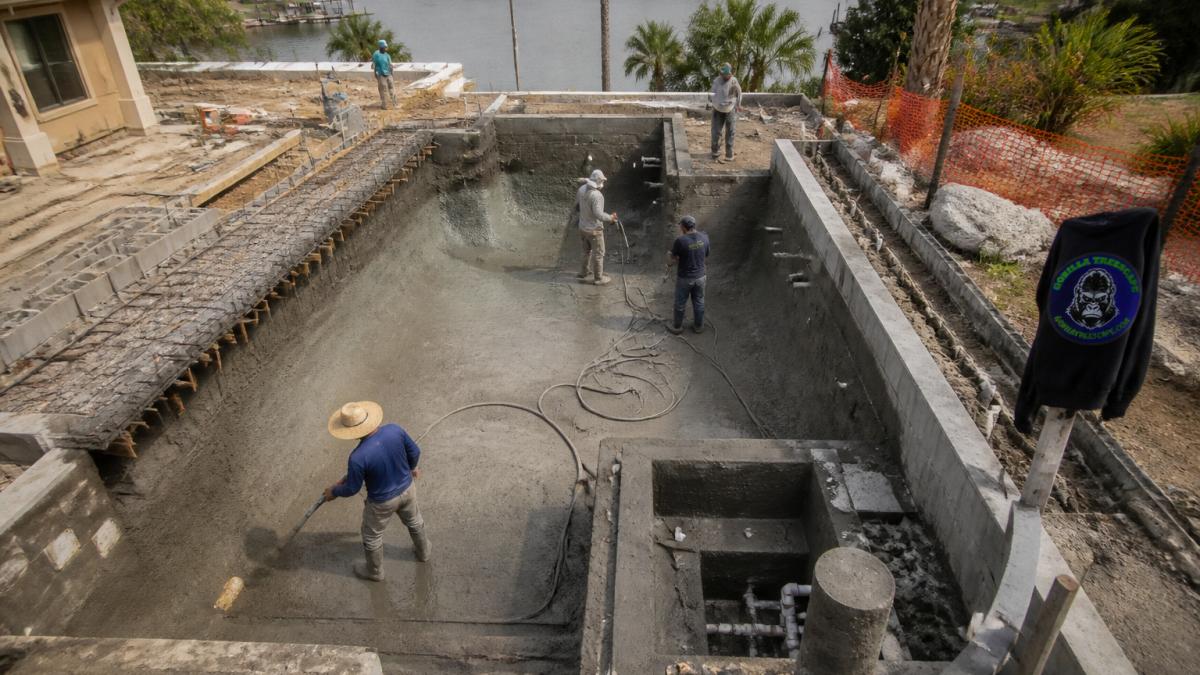
Infinity pools cost more than traditional pools because the vanishing edge requires a catch basin or surge tank to manage water displacement and recirculation, adding complexity and specialized engineering.
Key cost differences include structural engineering (precise slope and reinforced edges), catch basin installation, advanced circulation systems, perfectly level edge transitions, and automation.
Pool Construction Cost Factors That Drive Your Final Price
Your final infinity pool design cost depends on six major factors. Understanding each one helps you anticipate where your budget will stretch.
Site Conditions and Excavation
Site conditions dramatically affect budget. Flat, accessible yards cost less to excavate than sloped properties or those with poor soil. Slope, soil type (rock or clay), access constraints, existing structures, and drainage all increase labor and material costs. Steep properties require retaining walls and engineering for water runoff and structural stability.
Materials and Interior Finish Selection
Interior finish options range from plaster (most affordable, requires resurfacing every 5-7 years) to tile (premium, superior durability, resists staining and algae). Aggregate and pebble finishes offer mid-range durability and appearance. Tile installation requires skilled labor and represents a significant portion of your infinity pool design cost. Gunite (sprayed concrete) is standard for custom pools; fiberglass is less common due to size limitations.
Catch Basin and Recirculation System Requirements
The catch basin captures water flowing over the vanishing edge and recirculates it back to the pool. It must hold 5-7% of total pool volume and is typically built below the infinity edge. The recirculation system includes pumps, motors, filters, and piping. Quality equipment operates efficiently and requires less maintenance; professional system design ensures proper water flow and prevents algae growth.
Infinity Pool Cost Breakdown by Project Size and Complexity
Your project size and complexity directly determine your infinity pool design cost. Rather than a single headline figure, a realistic budget separates design, permits, excavation, structure, edge system, equipment, finishes, landscaping, and contingency. Here's how a typical custom infinity pool budget breaks down across three scenarios:
Sample Budget: 400-Square-Foot Infinity Pool with Tile Finish
Low Estimate (Favorable Site, Standard Materials)
| Line Item | Estimated Cost |
|---|---|
| Site assessment, engineering, and geotechnical testing | $2,500-$3,500 |
| Permits, inspections, and engineering certifications | $1,500-$2,500 |
| Excavation, grading, and site preparation | $4,000-$6,000 |
| Gunite pool shell, reinforcement, and waterproofing | $12,000-$15,000 |
| Catch basin/surge tank construction and plumbing | $6,000-$8,000 |
| Tile interior finish (mid-range porcelain or glass) | $8,000-$10,000 |
| Pump, filter, circulation equipment, and controls | $4,500-$6,000 |
| Electrical, lighting, and automation systems | $3,500-$5,000 |
| Hardscape, decking, and basic landscaping | $5,000-$7,000 |
| Subtotal | $47,000-$63,000 |
| Contingency (10%) | $4,700-$6,300 |
| Total Estimated Cost | $51,700-$69,300 |
Typical Estimate (Moderate Site Challenges, Premium Materials)
| Line Item | Estimated Cost |
|---|---|
| Site assessment, engineering, and geotechnical testing | $3,500-$4,500 |
| Permits, inspections, and engineering certifications | $2,000-$3,500 |
| Excavation, grading, drainage, and site preparation | $7,000-$10,000 |
| Gunite pool shell, reinforcement, and waterproofing | $15,000-$18,000 |
| Catch basin/surge tank construction and plumbing | $8,000-$11,000 |
| Tile interior finish (premium glass or natural stone) | $11,000-$14,000 |
| Pump, filter, circulation equipment, and advanced controls | $6,000-$8,000 |
| Electrical, lighting, heating, and smart automation | $5,000-$7,000 |
| Hardscape, decking, retaining walls, and landscaping | $8,000-$12,000 |
| Subtotal | $65,500-$87,500 |
| Contingency (12%) | $7,860-$10,500 |
| Total Estimated Cost | $73,360-$98,000 |
High Estimate (Challenging Site, Luxury Finishes, Integrated Features)
| Line Item | Estimated Cost |
|---|---|
| Site assessment, engineering, geotechnical, and structural analysis | $5,000-$7,000 |
| Permits, engineering certifications, and expedited inspections | $3,000-$5,000 |
| Excavation, rock removal, retaining walls, and drainage systems | $12,000-$18,000 |
| Gunite pool shell, reinforcement, waterproofing, and finishing | $18,000-$22,000 |
| Catch basin/surge tank with advanced recirculation | $11,000-$15,000 |
| Premium tile or natural stone finish (imported or specialty) | $14,000-$18,000 |
| High-capacity pump, multi-stage filtration, and controls | $8,000-$11,000 |
| Electrical, LED lighting, heating, spa jets, and full automation | $7,000-$10,000 |
| Hardscape, premium decking, extensive landscaping, water features | $12,000-$18,000 |
| Subtotal | $90,000-$124,000 |
| Contingency (15%) | $13,500-$18,600 |
| Total Estimated Cost | $103,500-$142,600 |
How Design Choices Drive Cost Changes
Within each scenario, specific decisions shift the budget:
Pool Dimensions & Edge Length
- A 300-square-foot pool with a 60-foot infinity edge costs less than a 500-square-foot pool with a 90-foot edge. Edge length drives catch basin size, pump capacity, and tile material.
- Adding 100 square feet typically adds $8,000-$12,000 in structure and finish costs, plus $2,000-$4,000 in additional equipment.
Depth Variation
- Standard depth (3.5-4.5 feet) is baseline. Each additional foot of depth increases excavation labor by 15-20% and gunite material by 10-15%.
- Variable-depth pools (shallow end 2.5 feet, deep end 5+ feet) add complexity to the catch basin design and require additional engineering, typically $2,000-$4,000 more.
Interior Finish Selection
- Plaster finish: $4,000-$6,000 for 400 sq ft (lowest cost, requires resurfacing every 5-7 years)
- Aggregate (pebble or crushed stone): $7,000-$10,000 (mid-range, 10-15 year lifespan)
- Tile (porcelain or glass): $10,000-$16,000 (premium, 20+ year lifespan, minimal maintenance)
- Natural stone or specialty finishes: $16,000-$22,000+ (luxury, custom appearance, highest durability)
Integrated Features
- Built-in spa or hot tub: Add $8,000-$15,000 (separate plumbing, heating, jets)
- Waterfall or water feature: Add $3,000-$7,000 (structural support, plumbing, circulation)
- Underwater lighting (LED): Add $2,000-$4,000 (wiring, fixtures, controls)
- Smart automation (app-based water level, temperature, chemical monitoring): Add $3,000-$6,000
Key Assumptions Behind These Estimates
These budgets assume:
- A rectangular or simple curved pool design (complex custom shapes add 10-20% to structure costs)
- Standard residential lot with moderate slope (steep slopes or rock layers increase excavation 20-50%)
- Local permitting without major delays (expedited or complex permits add $1,000-$3,000)
- Contractor labor rates typical for most regions (rates vary 15-30% by location)
- No major utility relocation (moving gas, electric, or sewer lines adds $3,000-$10,000)
- Standard equipment availability (supply chain delays or specialty equipment can add 5-15%)
Your actual cost will depend on your specific site, design, and material selections. A professional site assessment and detailed contractor bid will refine these ranges for your property.
Using a Custom Pool Cost Calculator to Estimate Your Budget
A custom pool cost calculator breaks down costs by pool dimensions, finish type, site conditions, regional labor rates, and additional features. Most provide a range reflecting variability in site conditions and material choices. Use calculators as a starting point, then get detailed quotes from contractors for accuracy. A professional site assessment reveals actual costs specific to your property.
Hidden Costs and Contingency Planning
Most homeowners encounter unexpected expenses during custom pool construction. Thorough site assessment before construction begins prevents costly overruns and helps you budget realistically.
Permitting, Engineering, and Site Assessment Costs
Structural Engineering and Design includes structural engineer evaluation ($1,500-$3,000), geotechnical soil testing ($1,000-$2,500), hydraulic and circulation design ($800-$1,500), and site survey ($500-$1,200). Permits and Inspections include building permits ($800-$2,000), engineering certification ($500-$1,500), and construction inspections ($1,200-$4,800 for 4-6 inspections). These are not optional; skipping professional engineering or attempting unpermitted work creates liability, voids insurance, and can force costly demolition if discovered.
Site-Specific Structural and Drainage Costs
Your property's actual conditions determine whether these costs are minor or major:
Slope and Retaining Walls: Flat lots have minimal cost; moderate slope (5-15%) adds $3,000-$8,000; steep slope (15%+) adds $8,000-$20,000+. Soil and Rock Conditions: Favorable soil costs standard excavation; poor soil adds $2,000-$6,000; rock or hardpan adds $5,000-$15,000+. A geotechnical report identifies these before bidding; discovering rock during excavation can double or triple removal costs. Drainage and Groundwater: Good drainage costs minimal; poor drainage or high water table adds $3,000-$10,000; groundwater seepage adds $2,000-$8,000. Inadequate drainage causes foundation cracking and catch basin flooding.
Utility Relocation and Access Challenges
Existing Utilities: Moving electrical lines costs $2,000-$8,000; gas lines $3,000-$10,000; water or sewer lines $2,000-$6,000. Utility relocation extends timeline by 2-4 weeks. Site Access and Equipment Constraints: Narrow driveways add $2,000-$5,000; tree preservation adds $1,000-$3,000; hardscape removal costs $1,500-$4,000. Difficult access can reduce productivity by 30-50%, significantly extending labor costs.
Material Price Volatility and Supply Chain Delays
- Tile and stone finishes: Prices fluctuate 5-15% annually; specialty or imported materials can shift 10-20%
- Pump and filtration equipment: Lead times of 4-12 weeks; expedited shipping adds 10-20% to cost
- Gunite and concrete: Prices vary by region and fuel costs; expect 3-8% annual variation
- Supply chain disruptions can delay project start or require material substitutions, adding $1,000-$5,000
Design Changes and Change Orders During Construction
Once excavation begins, unforeseen conditions often prompt design adjustments:
- Adjusting pool depth due to rock: $1,000-$3,000 in additional excavation and gunite
- Relocating catch basin due to drainage issues: $2,000-$6,000 in rework
- Adding or enlarging retaining walls: $3,000-$8,000 per wall
- Changing finish mid-project: Material cost difference plus labor to remove and reinstall
- Each change order typically adds 5-10% to labor costs and extends timeline by 1-2 weeks
Change orders are common in custom construction. Contractors who provide detailed scope documents and clear change-order procedures help you control costs.
Realistic Contingency Planning
Contingency Budget by Risk Profile: Low-risk projects (flat lot, good soil, simple design) require 8-10% contingency; moderate-risk projects (some slope, standard soil, typical access) require 12-15%; high-risk projects (steep slope, poor soil, complex design, difficult access) require 15-20%. A professional site assessment before construction begins identifies most risk factors and allows you to set contingency appropriately.
How Site Assessment Prevents Cost Overruns
A thorough pre-construction site assessment includes:
- Visual inspection - Slope, drainage patterns, existing structures, tree locations
- Soil boring and testing - Identifies soil type, compaction, bearing capacity, and water table depth
- Utility location - Marks gas, electric, water, sewer, and telecom lines
- Drainage evaluation - Determines if French drains or dewatering will be needed
- Structural assessment - Identifies retaining wall needs, foundation requirements, and access constraints
- Engineering review - Structural engineer evaluates findings and recommends design adjustments
This assessment typically costs $3,500-$7,000 but prevents $10,000-$30,000+ in surprises during construction. Contractors who insist on thorough site assessment before providing a bid are protecting both your budget and their reputation.
Getting an Accurate Quote and Next Steps
An accurate quote requires detailed information: property measurements, site photos, design preferences, budget range, timeline, and existing utilities.
When planning your pool project, consider how the surrounding landscape and hardscape will integrate with your new infinity pool.
Budgeting for a custom infinity pool requires understanding multiple cost factors and planning for contingencies. The vanishing edge effect demands specialized engineering and recirculation systems that traditional pools don't need.
Frequently Asked Questions
What is the typical cost to build an infinity pool?
Infinity pool design costs vary significantly based on size, materials, site conditions, and regional labor rates. Most custom infinity pools range from mid-five figures to six figures or more. The cost depends on whether you're building a small residential infinity edge pool or a larger custom-built vanishing edge design with advanced recirculation systems. Get a personalized quote based on your specific site conditions and design preferences.
Does an infinity pool cost more than a traditional pool?
Yes, infinity pools typically cost 15-30% more than conventional pools due to the specialized catch basin, surge tank, and recirculation system required to maintain the vanishing edge effect. The structural engineering, waterproofing, and precision grading also add expense. However, the visual impact and luxury appeal often justify the premium for homeowners prioritizing high-end outdoor living.
What factors make a custom infinity pool more expensive?
Key cost drivers include pool size and depth, interior finish options (tile versus gunite), site slope and excavation complexity, catch basin capacity, pump and filtration system specifications, structural engineering requirements, permits and inspections, and labor intensity. Difficult terrain, poor drainage, or retaining wall needs can significantly increase costs. Each design choice directly impacts your final budget.
How do I estimate my custom pool cost without hiring a contractor yet?
Start by defining your pool's length, width, depth, and shape. Research average cost-per-square-foot ranges for your region and finish type. Account for site-specific factors like slope, soil conditions, and accessibility. Use these rough estimates to create a preliminary budget range, then request detailed quotes from contractors who can assess your actual site conditions, drainage needs, and engineering requirements for a precise figure.