 how-to
Concrete Driveway: A 2026 Installation Guide
Table of Contents
- What Makes a Quality Concrete Driveway
- Concrete Driveway Preparation: The Foundation Step
- Stamped Concrete Driveway Options and Design
- Concrete Driveway Curing Time and Weather Considerations
- Selecting a Concrete Driveway Contractor
- Maintenance and Long-Term Care
- Common Installation Mistakes to Avoid
- Frequently Asked Questions
Last Updated: October 8, 2026
What Makes a Quality Concrete Driveway
A quality concrete driveway combines proper material composition, expert installation, and thoughtful design to create a surface that lasts decades. The foundation of any durable concrete driveway begins long before the concrete is poured, it starts with site assessment, permit compliance, and correct sub-base preparation.
At Gorilla Treescape LLC, we've helped homeowners throughout South Florida understand that the difference between a driveway that cracks within five years and one that performs flawlessly comes down to execution. A well-installed concrete driveway resists the region's intense UV exposure, heavy rainfall, and temperature swings that plague poorly constructed surfaces.
The strength of your concrete driveway depends on several factors working together. The concrete mix design matters, the water-to-cement ratio, aggregate quality, and reinforcement all influence how the surface performs. But even premium concrete fails if the base isn't prepared correctly or if drainage isn't addressed from day one.
Concrete Driveway Preparation: The Foundation Step
The preparation phase determines whether your concrete driveway investment lasts 15 years or 40 years. This is where most DIY projects fail and where professional contractors earn their value. Proper concrete driveway preparation requires site assessment, permit verification, and meticulous sub-base work.
Assessing Your Site and Permits
Before any concrete driveway work begins, you need to understand your site's specific conditions and local code requirements. South Florida's building codes, administered through Miami-Dade County and Broward County regulations, require permits for driveway work in most cases, and inspections are mandatory at specific stages.
Start by identifying what's already there. Existing drainage patterns, soil composition, and proximity to utilities all influence how your concrete driveway should be constructed. Some properties have clay-heavy soil that shifts seasonally; others sit on sandy substrate that compacts differently. A concrete driveway built without accounting for your soil type will develop cracks as the ground moves beneath it.
Permit requirements aren't optional bureaucracy, they protect your investment. Local codes specify minimum concrete thickness, reinforcement requirements, and drainage standards. When you skip permits to save time, you're actually creating liability. If something goes wrong, insurance won't cover unpermitted work, and resale complications emerge later.
Sub-Base and Drainage Setup
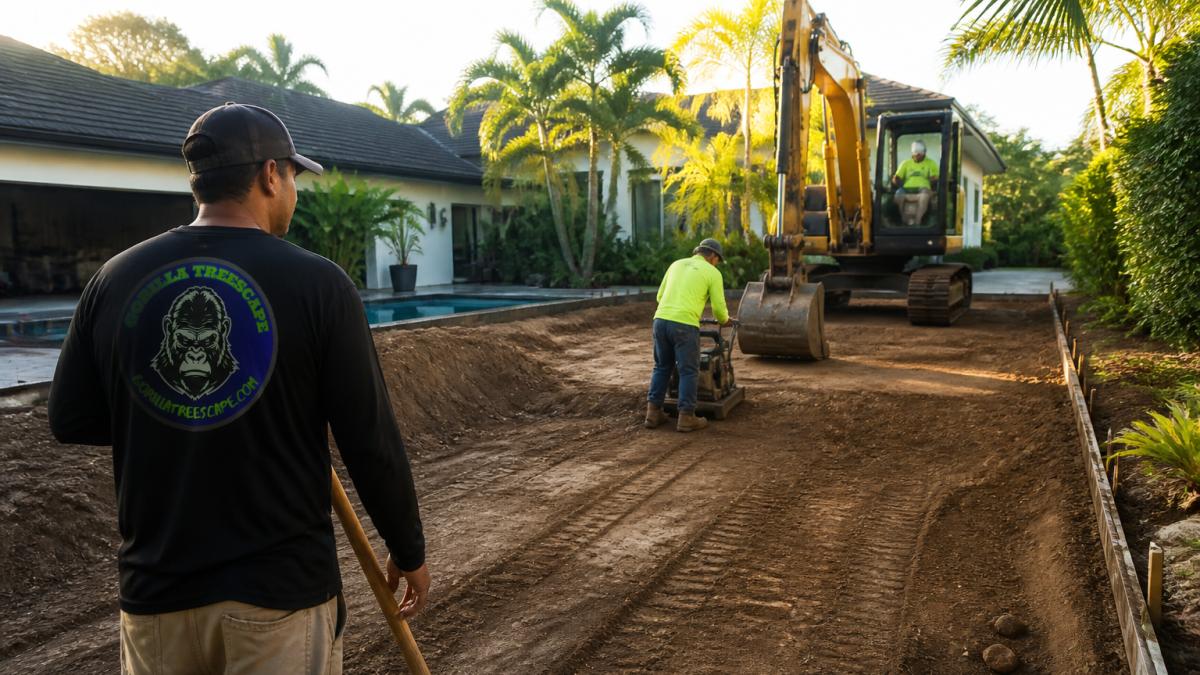
The sub-base is the layer of compacted material beneath your concrete driveway. This layer prevents water from pooling underneath, which causes concrete to crack and settle unevenly. In South Florida's climate, where heavy rain is routine, proper drainage through the sub-base is non-negotiable.
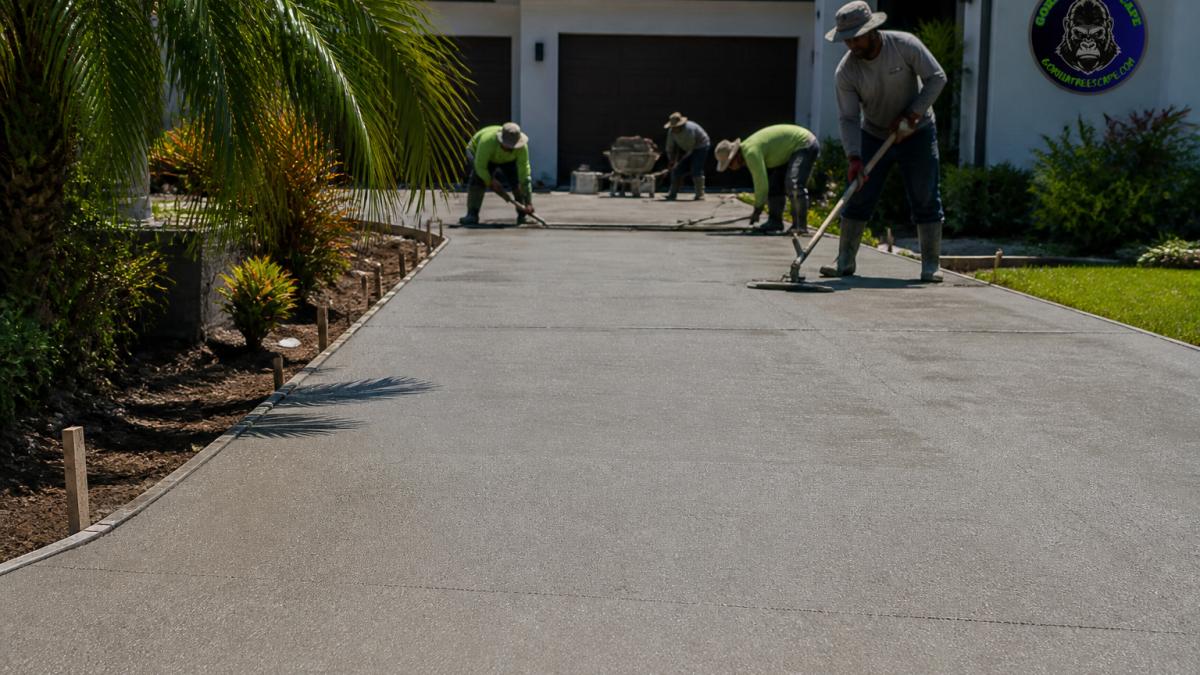
Proper concrete driveway sub-base preparation involves several steps. First, excavate to the correct depth, typically 4 to 6 inches for residential driveways, depending on soil conditions and expected traffic. Remove all organic material, roots, and debris. Then add a base layer of crushed stone or gravel, usually 4 inches of compacted material.
Compaction is where most amateur installations go wrong. The sub-base must be compacted in layers using mechanical equipment, not just tamped by hand. Inadequate compaction means the ground shifts over time, and your concrete driveway develops settlement cracks. Proper compaction creates a stable platform that won't move.
Drainage solutions depend on your site's slope and existing water patterns. If water naturally pools in your driveway area, you may need to install perimeter drainage or a slight crown in the surface to direct water away. Some properties benefit from a permeable sub-base layer that allows water to drain through rather than around the concrete driveway.
Stamped Concrete Driveway Options and Design
Stamped concrete driveways combine durability with aesthetic appeal. This decorative concrete finish uses patterns and colors to mimic brick pavers, stone, or tile while maintaining the strength of a solid concrete surface. A stamped concrete driveway can enhance your property's curb appeal without the maintenance demands of traditional pavers.
Design options for stamped concrete driveways fall into several categories. Ashlar slate patterns create a formal, upscale appearance. Brick patterns offer a classic look that complements traditional homes. Slate and stone patterns provide texture and visual depth. Each pattern affects how light plays across your driveway and how it integrates with your landscaping and outdoor living spaces.
Color selection matters as much as pattern. Lighter colors reflect heat and resist fading better in South Florida's intense sun. Darker colors show dirt and debris more readily but create dramatic contrast with surrounding plantings. Many homeowners choose neutral tones that complement their home's exterior while hiding typical driveway wear.
The concrete overlay approach works well for existing driveways that are structurally sound but visually dated. Rather than removing and replacing the entire concrete driveway, an overlay, typically 1 to 2 inches of new concrete with stamped or decorative finish, creates a fresh surface.
Concrete sealing protects stamped finishes from staining, UV damage, and water penetration. A quality sealer applied immediately after curing and reapplied every 2 to 3 years keeps your stamped concrete driveway looking vibrant and extends its lifespan significantly.
Concrete Driveway Curing Time and Weather Considerations
Concrete driveway curing is not an instant process. The concrete reaches initial set within 24 to 48 hours, but full curing, where the concrete achieves its design strength, takes 28 days. During this curing period, weather conditions dramatically affect the final result.
Temperature and humidity during the concrete driveway curing process influence how the concrete hardens. Ideal conditions are moderate temperatures (50 to 85 degrees Fahrenheit) with moderate humidity. South Florida's heat and humidity accelerate curing but can also cause surface cracking if moisture evaporates too quickly. Conversely, heavy rain during curing can weaken the surface and create discoloration.
The first week is critical. Your concrete driveway should not bear vehicle weight during this period. Walking on it after 24 to 48 hours is generally safe, but heavy traffic should wait until at least 7 days have passed. Some contractors recommend waiting the full 28 days before exposing the surface to significant load.
Weather protection during curing prevents problems. If rain is forecast within 48 hours of pouring, tarping the concrete driveway protects it from water damage. Extreme heat requires misting the surface to slow evaporation and prevent surface cracks. Cold weather, while less common in South Florida, slows curing and requires protective measures if temperatures drop below 50 degrees.
Selecting a Concrete Driveway Contractor
The contractor you choose determines the quality of your concrete driveway installation. This decision matters more than material selection or design choices because execution is everything.
Evaluate contractors based on several criteria. Experience with concrete driveway projects in South Florida is essential, contractors familiar with local soil conditions, building codes, and climate challenges deliver better results. Ask for references from homeowners whose driveways are at least 5 years old. A contractor willing to provide contact information for long-term clients has confidence in their work.
Verify licensing and insurance. A licensed concrete contractor has met state requirements and carries liability insurance. This protects you if something goes wrong during the project. Uninsured contractors may offer lower bids, but the savings disappear if damage occurs and you're liable.
Communication style matters. A contractor who explains the process, answers questions clearly, and provides written estimates and timelines is more likely to deliver a smooth project. Vague estimates, unclear timelines, or reluctance to discuss details are red flags.
At Gorilla Treescape LLC, we handle concrete driveway projects as part of our comprehensive hardscaping services through Driveways & Decks. Our team manages permits, coordinates inspections, and oversees every phase from sub-base preparation through final sealing.
Maintenance and Long-Term Care
Your concrete driveway requires ongoing maintenance to preserve its appearance and structural integrity. Regular care prevents small problems from becoming expensive repairs.
Seal your concrete driveway every 2 to 3 years to protect against staining, water penetration, and UV damage. Sealing fills microscopic pores in the concrete surface, preventing dirt and water from embedding themselves. A sealed concrete driveway is easier to clean and resists the wear that comes from South Florida's intense sun and frequent rain.
Clean your concrete driveway regularly to remove dirt, leaves, and debris. A garden hose and broom handle routine maintenance. For stubborn stains, pressure washing works well, but keep pressure below 3,000 PSI to avoid damaging the surface. Oil stains require specialized cleaners; addressing them quickly prevents permanent discoloration.
Watch for cracks and address them promptly. Small cracks can be sealed with concrete crack filler, preventing water from penetrating deeper. Larger cracks or spalling (surface flaking) may indicate structural problems that require professional repair. Early intervention prevents minor issues from becoming major damage.
Salt exposure from ocean proximity or winter salt application affects concrete durability. While South Florida's coastal properties don't experience road salt, the salt air itself can degrade concrete over time. Sealing becomes even more important in coastal areas.
Common Installation Mistakes to Avoid
Understanding what goes wrong helps you make better decisions and ask the right questions when hiring a contractor.
Inadequate sub-base preparation is the most common mistake. Contractors rushing to finish may skip proper compaction or use insufficient base material. The result is a concrete driveway that settles unevenly and develops cracks within a few years.
Poor drainage planning causes water to pool beneath the concrete driveway surface. Over time, this water weakens the concrete and creates soft spots. Proper slope and sub-base drainage prevent this problem entirely.
Incorrect concrete mix design produces concrete that cracks prematurely or lacks sufficient strength. Using too much water in the mix makes concrete weaker. Using the wrong aggregate composition creates surface durability problems.
Insufficient reinforcement leaves the concrete driveway vulnerable to cracking. Wire mesh or rebar distributed throughout the concrete slab prevents cracks from spreading. Skipping reinforcement is a cost-cutting measure that creates long-term problems.
Rushing the curing process causes surface damage. Allowing vehicle traffic too early, exposing the concrete to heavy rain before it sets, or failing to protect it from extreme temperature swings all compromise the finished surface.
Neglecting permits and inspections creates legal and financial exposure. Unpermitted work complicates property sales, voids insurance coverage, and may require removal and replacement if discovered.
A concrete driveway represents a significant investment in your property's functionality and appearance.
Frequently Asked Questions
How long should a new concrete driveway cure before it is used?
A concrete driveway typically requires 7 days of curing before light foot traffic and 28 days before heavy vehicle use. During the curing process, the concrete gains strength gradually. Climate conditions affect curing time, warmer temperatures speed it up, while cooler weather slows it down. Proper moisture management during curing is critical for achieving full structural integrity.
What should I consider before installing a concrete driveway?
Evaluate your site's drainage patterns, soil stability, and local permitting requirements. Consider the climate's impact on freeze-thaw cycles and UV exposure. Assess whether decorative finishes like stamped concrete or brush finishes suit your home's style. Determine if you need professional installation or can handle preparation work yourself. Budget for proper sub-base preparation, which directly affects longevity.
How do I choose a concrete driveway contractor?
Look for contractors with proven experience in residential hardscaping and a portfolio of completed driveways. Verify they handle permitting and understand local building codes. Request references and check reviews from recent projects. Ensure they explain their sub-base preparation process and offer a clear timeline. A reliable contractor communicates throughout the project and stands behind their work with warranties.
What maintenance helps a concrete driveway last longer?
Seal your concrete driveway every 2-3 years to protect against moisture and UV damage. Clean debris regularly and address cracks promptly before they expand. Avoid using harsh de-icing chemicals in winter; use sand or calcium chloride alternatives instead. Ensure proper drainage around the edges to prevent water pooling. Regular maintenance prevents small issues from becoming costly repairs.