 ultimate-guide
Outdoor Kitchen Construction Cost Breakdown 2026
Table of Contents
- What Drives Outdoor Kitchen Construction Cost
- Material Costs: Stone, Countertops, and Hardscaping
- Outdoor Kitchen Appliance Packages Cost and Equipment Pricing
- Labor, Installation Fees, and Project Management
- Outdoor Kitchen Permit Requirements and Regulatory Costs
- Utility Infrastructure: Electrical Wiring, Gas Lines, and Plumbing
- DIY vs Professional Outdoor Kitchen Installation: Cost and Complexity
- Hidden Costs and Budget Protection Strategies
- Frequently Asked Questions
Last Updated: September 1, 2026
What Drives Outdoor Kitchen Construction Cost
Understanding what moves the budget needle is essential for realistic planning. Most homeowners focus on appliances and miss the structural foundation, utility infrastructure, and permitting work that often determines whether a project stays on budget.
The outdoor kitchen construction cost breaks down into five major categories: materials (stone, countertops, hardscaping), appliances and equipment, labor and installation, permits and regulatory compliance, and utility infrastructure. A built-in grill might cost the same whether you're in Miami or Phoenix, but labor rates, permitting timelines, and electrical code requirements shift dramatically by region.
At Gorilla Treescape LLC, we've managed hundreds of outdoor living projects across South Florida. The pattern is consistent: homeowners who budget for all five categories finish on time and within range. Those who focus only on appliances face surprises in months two and three.
The biggest cost driver isn't the grill or countertop material, it's the scope of site preparation and utility work required before anything visible gets installed. A backyard with good drainage, level ground, and existing electrical service nearby costs far less than one needing grading, French drains, trenching for gas lines, and new electrical circuits from the main panel.
Material Costs: Stone, Countertops, and Hardscaping
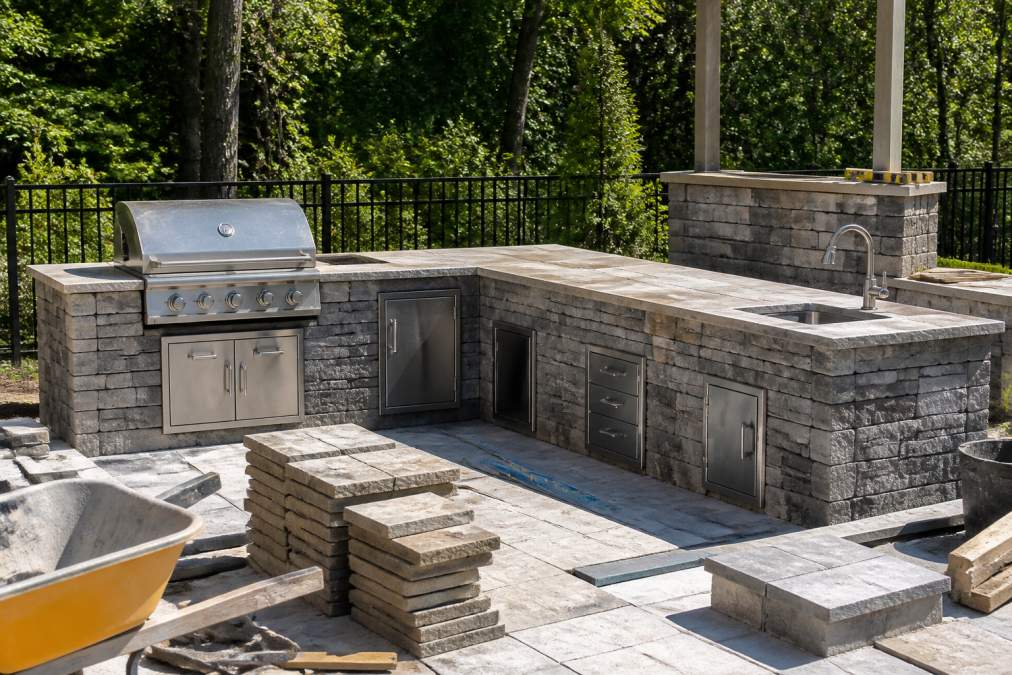
The visible materials, stone countertops, pavers, backsplash, and cabinetry, represent roughly 25-35% of total outdoor kitchen construction cost.
Countertop materials vary in durability and maintenance. Granite and natural stone handle heat and weather without degradation. Concrete offers flexibility and custom aesthetics but requires sealing every 1-2 years (peer-reviewed research). Stainless steel looks professional but shows fingerprints and reflects heat. Your choice depends on climate, usage frequency, and maintenance tolerance.
Hardscaping materials, pavers, retaining walls, and foundation work, carry substantial costs. Quality porcelain pavers resist staining and frost damage better than standard concrete. Natural stone pavers add character but require careful installation and ongoing maintenance.
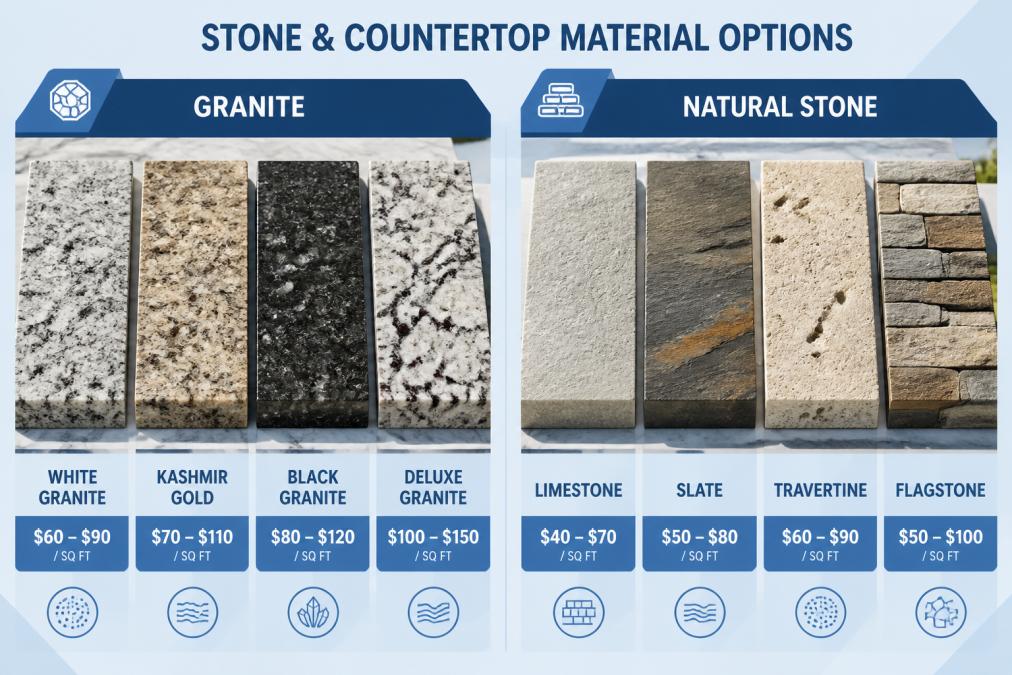
Backsplash materials protect the wall behind the cooking area from grease and water splash. Tile, stone veneer, and stainless steel each offer different aesthetic and maintenance profiles. Poor installation leads to water intrusion and structural damage.
A common mistake is selecting materials based purely on appearance without considering regional climate. South Florida's humidity and salt air accelerate corrosion on some finishes. Materials that perform beautifully in Arizona might fail within three years in a coastal environment. Local expertise matters when choosing materials that survive your specific conditions.
Outdoor Kitchen Appliance Packages Cost and Equipment Pricing
Appliances and equipment typically account for 20-30% of the total outdoor kitchen construction cost, including the built-in grill, refrigerator, ice maker, sink, and specialty equipment like a pizza oven.
A quality built-in grill ranges from mid-range to premium, with features like dual fuel capability, side burners, and rotisserie attachments adding cost. You'll also need a hood or ventilation system, which adds both material and installation expense.
Outdoor refrigeration requires a unit rated for exterior use, which costs more than an indoor equivalent because it handles temperature swings and humidity. An outdoor ice maker adds complexity and cost. These appliances need proper electrical supply and drainage, which ties into utility infrastructure costs.

Modular pre-fabricated units install faster and cost less upfront but offer less flexibility. Custom builds take longer and cost more but match your exact layout and aesthetic.
Mid-range appliances often deliver better value than the cheapest options. Budget models fail faster in outdoor conditions. Most experienced installers recommend the middle tier for proven durability without paying for unnecessary features.
Labor, Installation Fees, and Project Management
Labor and installation represent 25-40% of the outdoor kitchen construction cost, depending on project complexity and local rates. This includes the general contractor, masonry work, plumbing rough-in, electrical wiring, appliance installation, and project management oversight.
Labor rates vary by region and contractor experience. Project management fees, typically 10-15% of total project cost, coordinate scheduling and ensure all trades integrate properly.
Masonry labor for building the structure, setting stone, and finishing surfaces is typically billed hourly or by square footage. Design complexity directly impacts labor hours. A simple rectangular kitchen takes less time than one with curved counters, multiple levels, or intricate stone patterns.
Appliance installation includes uncrating, positioning, and connecting utilities. Built-in grills need secure mounting and proper ventilation clearance. Refrigerators and ice makers require electrical and water connections. A sink needs both supply and drain lines routed correctly.
The biggest labor cost variable is site preparation. If your backyard needs significant grading, excavation, or leveling before construction begins, labor costs spike. A flat, accessible site with existing utilities nearby costs far less than one requiring extensive excavation and utility infrastructure work.
Outdoor Kitchen Permit Requirements and Regulatory Costs
Permitting and regulatory compliance are invisible costs that don't show up in the finished product but are essential and legally required.
Most jurisdictions require permits for outdoor kitchen construction involving permanent structures, electrical work, gas lines, or plumbing. Permit costs typically range from a percentage of project value or a flat fee. The permit process usually takes 2-6 weeks for approval, sometimes longer if revisions are needed (iccsafe.org).
Gorilla Treescape LLC handles the permit process for clients, which simplifies approvals in South Florida. The permitting phase requires detailed plans showing electrical layout, gas line routing, plumbing connections, and structural foundation design.
Building codes govern electrical circuits, gas line safety, ventilation requirements, and structural load capacity. These exist because outdoor kitchens have failed when built without proper code compliance. A gas line installed incorrectly can leak. Electrical circuits undersized for the load can overheat. Inadequate ventilation creates carbon monoxide risk.
Inspection fees are separate from permit fees. You'll typically have inspections at the foundation stage, after electrical rough-in, after plumbing rough-in, and a final inspection once everything is complete.
The outdoor kitchen permit requirements also include setback distances from property lines and neighbor structures. Setback violations can force you to remove completed work. Checking setbacks and easements before design prevents costly rework.
Utility Infrastructure: Electrical Wiring, Gas Lines, and Plumbing
Utility infrastructure is where the outdoor kitchen construction cost often exceeds expectations. This includes electrical circuits for appliances, gas line installation for the grill, water supply and drain lines for the sink, and ventilation ducting for the hood.
Electrical wiring for outdoor appliances requires GFCI-protected circuits, proper gauge wire sized for the load, and conduit protection (nfpa.org). If your main electrical panel is far from the kitchen location, trenching and running new circuits costs significantly more. Outdoor circuits need weatherproof outlets and proper grounding.
Gas line installation requires certified professionals and inspection. If natural gas isn't available at your property, you'll use a propane tank. If you want natural gas, a licensed plumber connects it to your appliances. This work is non-negotiable for safety; DIY gas line work is illegal and dangerous.
Plumbing rough-in for a sink requires both supply and drain lines. Supply lines run from your main water line; drain lines tie into your home's sewer system or septic. If the kitchen location is far from existing plumbing, trenching and running new lines adds cost. Drain slope matters; lines must pitch toward the main drain to prevent standing water and clogs.
Ventilation ducting for the grill hood needs to vent outside, not recirculate into your home. This requires routing ductwork through or around walls and roofing, which adds complexity depending on your home's structure and the kitchen's distance from existing vents.
Utility infrastructure planning should happen during design, not after construction starts. Changing the kitchen location mid-project because utilities don't reach it costs far more than moving the design on paper beforehand.
DIY vs Professional Outdoor Kitchen Installation: Cost and Complexity
Some tasks work for DIY, most don't.
Demolition, site prep, and hardscaping (pavers, gravel base) are reasonable DIY projects if you have basic tools and physical capability. However, these tasks are physically demanding and time-consuming. A professional crew finishes in days; DIY takes weeks or months.
Appliance installation, electrical work, gas line work, and plumbing should not be DIY. These require permits, inspections, and licensed professionals. Electrical code violations create fire and shock hazards. Gas line leaks cause explosions. Plumbing mistakes lead to water damage and mold.
Many homeowners attempt a hybrid approach: hire professionals for utilities and structural work, handle finishing work themselves. This can work if you're realistic about your skills and timeline. The risk is underestimating complexity and creating delays that compound costs.
Professional installation includes the contractor's expertise, tool investment, insurance, and warranty. These are the cost of work done correctly the first time. A professional knows local code requirements, has relationships with inspectors, and carries insurance if something goes wrong.
Hidden Costs and Budget Protection Strategies
Beyond the five major categories, several line items catch homeowners off guard.
Site drainage and grading often requires more work than expected. If your yard doesn't slope away from the kitchen, water pools and damages the foundation. Proper grading and French drains prevent this but add cost. A site survey before design reveals drainage challenges early.
Utility relocation costs arise when existing lines are in the way. Moving an electrical panel, gas meter, or water line is expensive and disruptive. Knowing utility locations before design prevents this surprise.
Contingency reserves protect against unknowns. Budget 10-15% above your estimated outdoor kitchen construction cost for unforeseen conditions like buried rock requiring blasting or unexpected soil instability discovered during excavation.
Landscaping integration, the plants, turf, and greenery around the kitchen, is sometimes overlooked in budget planning. A finished outdoor kitchen surrounded by bare dirt looks incomplete. Integrating landscape design into the project plan ensures cohesive aesthetics.
Seasonal labor availability affects both timeline and cost. Building season in South Florida runs roughly October through April. Summer construction during heat and humidity is slower and more expensive.
A budget protection strategy: get detailed quotes from at least two contractors, compare line items, and understand what's included. Vague quotes hide surprises. Detailed breakdowns show where costs concentrate.
Establish clear change order procedures before work starts. Any modification to the original plan gets documented, priced, and approved before work proceeds. This prevents cost creep from small changes that accumulate.
Building an outdoor kitchen transforms your backyard into a functional living space. The outdoor kitchen construction cost depends heavily on site conditions, material choices, and utility work, factors that vary dramatically by location and existing property conditions. At Gorilla Treescape LLC, we manage the entire process from permitting through final installation, handling the complexity so you get a finished space that works beautifully and lasts. Our team brings expertise in local code requirements, utility coordination, and design that balances aesthetics with function. Get A Quote from Gorilla Treescape LLC to discuss your outdoor kitchen vision and receive a detailed cost breakdown tailored to your property.
| Cost Category | Typical Range | Variables |
|---|---|---|
| Materials (stone, countertops, hardscaping) | 25-35% | Material quality, design complexity, finish selections |
| Appliances and equipment | 20-30% | Grill type, refrigeration, specialty items, modular vs. custom |
| Labor and installation | 25-40% | Contractor experience, site accessibility, project complexity |
| Permits and regulatory | 5-10% | Local jurisdiction fees, plan revisions, inspection costs |
| Utility infrastructure | 10-20% | Distance from existing utilities, code requirements, complexity |
Frequently Asked Questions
How much does it typically cost to build an outdoor kitchen?
Outdoor kitchen construction costs range widely based on project scope and materials. A basic setup with essential appliances and hardscaping may start at one price point, while a fully custom outdoor kitchen with premium finishes, multiple appliances, and complex utility hookups costs significantly more. Budget allocation depends on your square footage, material choices, labor rates in your region, and whether you hire professionals for utility work. Contact Gorilla Treescape LLC for a detailed quote tailored to your specific project.
What are the hidden costs of outdoor kitchen installation?
Often-overlooked expenses include permitting and regulatory fees, site excavation and structural foundation preparation, electrical wiring and gas line installation beyond basic hookups, plumbing rough-in work, weatherproofing and ventilation systems, and project management fees. Regional cost-of-living variations also affect labor rates. Site preparation costs can escalate if drainage issues, utility conflicts, or soil conditions require remediation. Always budget 10-15% contingency for unexpected discoveries during construction.
Does an outdoor kitchen increase property value?
Outdoor kitchens can enhance resale value by creating an attractive outdoor living space that appeals to buyers. The ROI depends on quality of construction, material choices, and how well the kitchen integrates with your home's overall design. Premium finishes and professional installation typically yield better returns than budget options. However, resale value gain may not equal the full construction cost. Consult with a real estate professional in your area for realistic ROI expectations based on local market trends.
What is the cheapest way to build an outdoor kitchen?
The most cost-effective approach uses modular kitchen units and pre-fabricated components rather than custom fabrication. Choose durable but less expensive countertop materials like concrete or basic stone veneer instead of premium granite. Limit appliances to essentials: a built-in grill and cooktop rather than multiple specialty units. DIY installation of non-utility elements can reduce labor costs, but gas line installation, electrical wiring, and plumbing rough-in should always be handled by licensed professionals to ensure safety and code compliance.
This article was written using GrandRanker