 listicle
Low Maintenance Garden Design Ideas: 2026 Guide
Table of Contents
- 7 Low Maintenance Garden Design Ideas That Cut Your Weekend Work
- 1. Replace Lawn with Ground Cover or Gravel Paths
- 2. Use Mulch to Suppress Weeds in Garden Beds
- 3. Plant Evergreen Shrubs for Year-Round Interest
- 4. Group Plants by Water Needs
- 5. Install Raised Garden Beds for Cleaner Soil Management
- 6. Add a Weed Barrier Under Pathways and Beds
- 7. Design for Drainage First
- Drought-Tolerant Landscaping Plants Worth Knowing
- Hardscaping vs Softscaping for Maintenance: What to Prioritize
- Automated Irrigation System Benefits for a Low Maintenance Garden
- Your Low Maintenance Garden Maintenance Calendar
- Smart Garden Technology That Does the Work for You
- Budget Planning for a Low Maintenance Landscape
- Frequently Asked Questions
Last Updated: August 28, 2026
7 Low Maintenance Garden Design Ideas That Cut Your Weekend Work
Most homeowners spend far more time maintaining their yard than planned. A low maintenance garden design isn't about sacrificing beauty, it's about making smarter structural decisions upfront so the landscape works with you. At Gorilla Treescape LLC, we've helped homeowners across South Florida transform high-effort yards into elegant, self-sustaining outdoor spaces.
Quick Picks:
- Biggest time saver: Replace lawn with ground cover or gravel paths
- Best for weed control: Mulch layered over landscape fabric
- Best for year-round structure: Evergreen shrubs grouped by water need
- Best long-term investment: Automated drip irrigation
1. Replace Lawn with Ground Cover or Gravel Paths
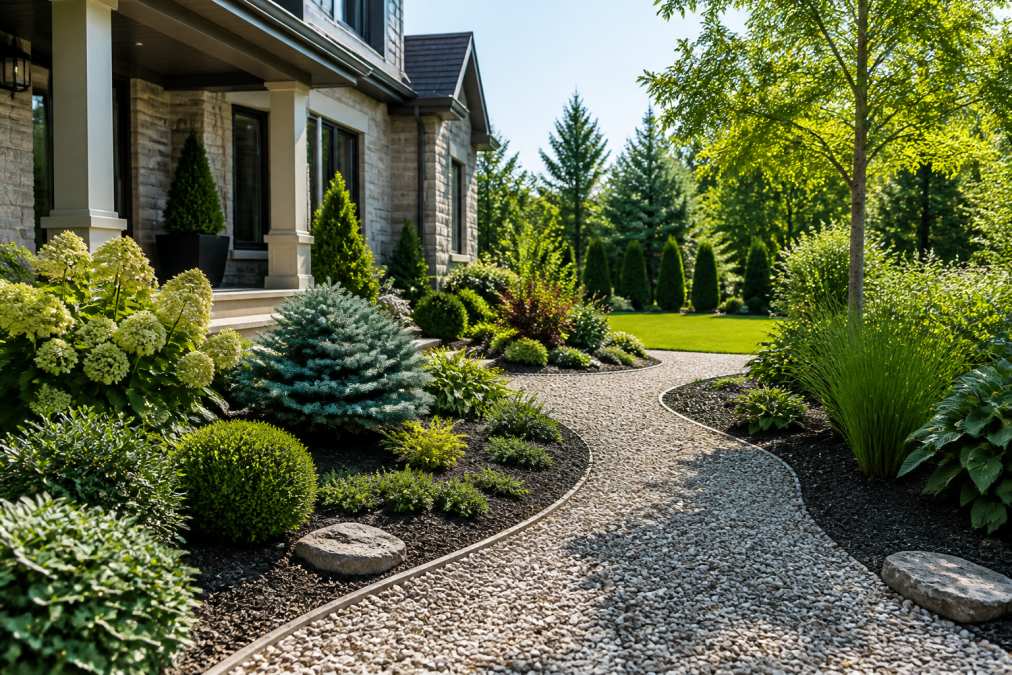
Lawn is the single most labor-intensive element in any residential landscape. Mowing, edging, fertilizing, aerating, and reseeding consume more weekend hours than every other garden task combined. Replacing turf with ground cover plants or gravel paths eliminates most of that work permanently.
Ground cover options like liriope, mondo grass, or creeping juniper spread naturally to fill gaps, suppress weeds through shading, and require minimal trimming once established. Always install landscape fabric under gravel to prevent weeds from pushing through within one growing season.
2. Use Mulch to Suppress Weeds in Garden Beds
A 3-inch layer of organic mulch across garden beds suppresses weed germination, retains soil moisture, moderates soil temperature, and improves soil health over time (peer-reviewed research). Shredded hardwood and pine bark are popular choices for their natural appearance and longevity.
Refresh mulch annually. The layer compresses and decomposes over 12-18 months, losing its weed-blocking density (extension.oregonstate.edu). Set a spring reminder and treat it as a 2-hour task.
3. Plant Evergreen Shrubs for Year-Round Interest
Evergreen shrubs provide structure and curb appeal through every season without the leaf cleanup that deciduous plants demand. Varieties like viburnum, holly, boxwood, and in warmer climates, clusia or podocarpus, require only light seasonal pruning.
Spacing them correctly at planting means they naturally crowd out weeds as they mature, reducing ground-level maintenance. Planting too close together creates overcrowding and disease problems within three to five years (peer-reviewed research).
4. Group Plants by Water Needs
Hydrozoning, grouping plants by water needs, is the design principle that makes automated irrigation practical. Organize garden beds into distinct zones: high-water areas near the house or in low-lying spots, and low-water or drought-tolerant zones in raised or sunny areas. This structure allows drip irrigation to deliver precisely what each zone needs without manual adjustment.
5. Install Raised Garden Beds for Cleaner Soil Management
Raised garden beds give you direct control over soil quality, drainage, and weed pressure. Because you fill them with custom soil mix, you start without the weed seed bank that exists in native ground soil, cutting weeding time dramatically in the first few seasons.
Metal raised beds from brands like Vego Garden offer modular layouts and corrosion-resistant construction. Heights of 17 to 32 inches also reduce bending and kneeling, making maintenance physically easier over time.
6. Add a Weed Barrier Under Pathways and Beds
Landscape fabric, used correctly under gravel pathways, around established shrubs, and beneath mulch in ornamental beds, dramatically reduces long-term weed pressure. Products like the DeWitt Pro-5 Weed-Barrier are UV-resistant, allow air and water to pass through to plant roots, and carry extended warranties.
Match the fabric weight to the application: heavy-duty fabric under gravel paths, lighter permeable fabric under mulch beds. Cut fabric precisely around existing plants to prevent weeds from finding gaps at the base of shrubs.
7. Design for Drainage First
Poor drainage is the root cause of more landscape failures than any other factor. Standing water kills plants, creates mosquito habitat, and destabilizes hardscaping over time. Before selecting plants or materials, map where water pools after heavy rain. Grade soil away from structures, install French drains where needed, and choose permeable surfaces like gravel or porous pavers for pathways.
Drought-Tolerant Landscaping Plants Worth Knowing
Drought-tolerant landscaping plants require minimal supplemental irrigation once established, surviving on natural rainfall and existing soil moisture. Choosing the right plants is the fastest way to reduce watering time and cost.
Native Perennials That Thrive Without Extra Water
Native plants are adapted to local climate, soil, and rainfall patterns, requiring less water, fewer amendments, and less intervention than introduced species. For South Florida landscapes, native perennials like firebush, coontie, beautyberry, and saw palmetto provide year-round interest with minimal care.
Once established, these plants largely take care of themselves. The establishment period, typically the first one to two growing seasons, does require consistent watering, but the long-term payoff is a landscape that needs little input. Native perennials also reduce the need for pesticides and fertilizers because they've co-evolved with local pest and soil conditions.
Xeriscaping: More Than Just Rocks and Cacti
Xeriscaping is a landscaping approach that reduces or eliminates the need for supplemental irrigation by selecting drought-tolerant plants, improving soil health, and designing for efficient water use. The common misconception is that xeriscaping means a yard full of rocks and cacti. In practice, a well-designed xeriscape can include lush ground cover, flowering perennials, ornamental grasses, and dense shrub borders.
Xeriscaping works especially well in climates with distinct wet and dry seasons. Grouping drought-tolerant plants in zones that receive the least irrigation, paired with mulch and landscape fabric, creates a self-sustaining system that looks intentional rather than neglected.
Hardscaping vs Softscaping for Maintenance: What to Prioritize
Hardscaping refers to non-living structural elements: patios, pathways, retaining walls, and edging. Softscaping refers to living elements: plants, lawn, mulch, and soil. The balance between the two directly determines how much ongoing maintenance a property requires.
Where Hardscaping Saves the Most Time
Hardscaping is the most permanent reduction in maintenance you can make. A well-designed patio or gravel pathway requires almost no ongoing care beyond occasional cleaning. Prioritize hardscaping in the highest-traffic areas and around the perimeter of the home. Concrete edging along garden beds eliminates the weekly chore of re-edging grass borders.
The upfront cost of quality hardscaping is higher than planting, but the maintenance cost over a 10-year horizon is dramatically lower.
Balancing Softscaping Without Adding Chores
The biggest mistake in softscaping is variety for its own sake. A garden with 20 different plant species, each with different water, pruning, and fertilization needs, demands constant attention. Stick to three to five core species that share similar water and light requirements. Fill gaps with ground cover rather than annual flowers that need seasonal replanting.
| Design Element | Maintenance Effort | Best Application |
|---|---|---|
| Gravel paths | Very low | High-traffic areas, side yards |
| Evergreen shrubs | Low (seasonal pruning) | Borders, foundation planting |
| Native perennials | Low once established | Beds, naturalized areas |
| Annual flowers | High (seasonal replanting) | Accent pots only |
| Lawn turf | Very high | Minimize or eliminate |
| Hardscape patio | Minimal | Outdoor living space, entertaining |
| Mulched garden beds | Low (annual refresh) | Around trees, shrubs |
Automated Irrigation System Benefits for a Low Maintenance Garden
An automated irrigation system is the single biggest operational upgrade a low maintenance garden can have. It removes the most time-consuming daily task, watering, and replaces it with a set-and-monitor routine.
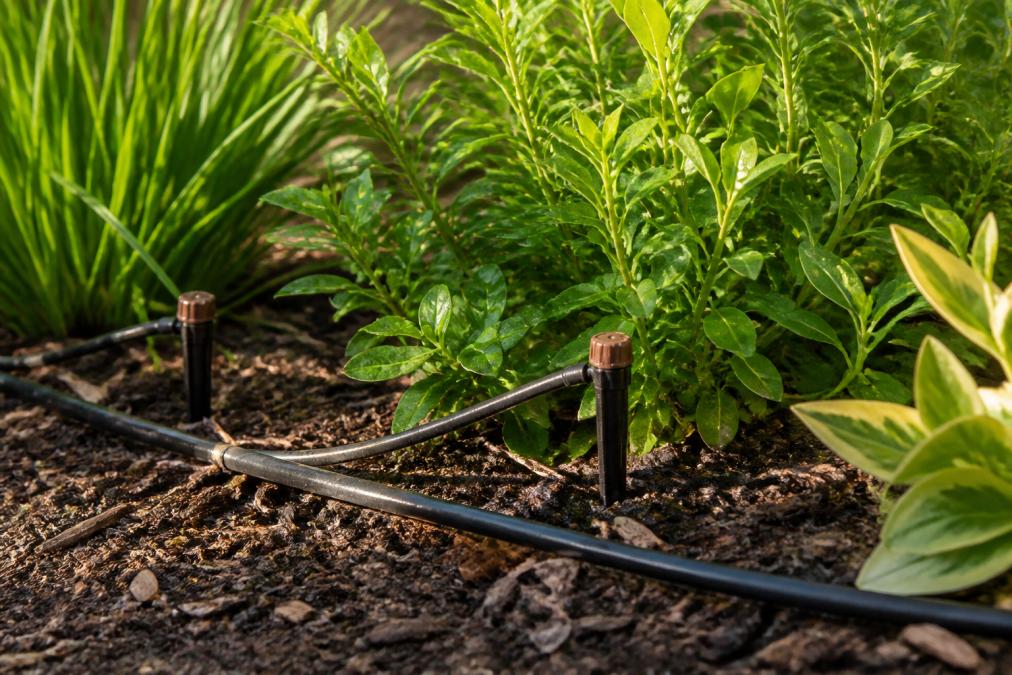
Drip irrigation delivers water directly to plant roots, reducing evaporation and runoff compared to overhead sprinklers. Smart controllers like the Hunter Hydrawise use real-time local weather data to adjust watering schedules automatically, preventing overwatering after rain and compensating during heat spikes. Remote management through a mobile app means you can monitor and adjust zones without being on-site.
Automated irrigation also reduces weed pressure. Overhead watering distributes moisture broadly, encouraging weed germination between plants. Drip irrigation keeps the soil surface drier, discouraging weed seeds from germinating in the first place.
Your Low Maintenance Garden Maintenance Calendar
A low maintenance garden still requires maintenance. The difference is that tasks are scheduled, predictable, and brief rather than reactive and open-ended.
| Season | Key Tasks | Time Required |
|---|---|---|
| Early Spring | Refresh mulch layer, check irrigation emitters, prune winter damage | 3-4 hours |
| Late Spring | Apply pre-emergent weed control, divide overcrowded perennials | 2-3 hours |
| Summer | Monitor irrigation schedule, spot-treat weeds, deadhead flowering shrubs | 1-2 hours/month |
| Early Fall | Plant native perennials and shrubs, inspect drainage | 3-4 hours |
| Late Fall/Winter | Cut back perennials, clean hardscape surfaces, service irrigation system | 2-3 hours |
The total annual investment for a well-designed low maintenance garden runs roughly 15-20 hours per year for a typical residential property. Compare that to a traditional lawn-heavy landscape, which can consume that much in a single month during peak growing season.
Smart Garden Technology That Does the Work for You
Smart garden technology now gives homeowners real-time data on what their landscape actually needs rather than what a fixed schedule assumes. Soil moisture sensors, weather-based irrigation controllers, and app-connected garden monitors integrate most effectively when built into the design from the start.
The Hunter Hydrawise controller offers zone-by-zone customization, flow monitoring add-ons, and automatic weather adjustments. For the design phase, apps like iScape allow homeowners to visualize landscape changes directly on photos of their own yard before committing to materials or labor.
Budget Planning for a Low Maintenance Landscape
Budget-conscious planning starts with a simple principle: spend more upfront on elements that eliminate ongoing costs. A gravel pathway costs more than sod to install, but it costs nothing to maintain. Quality landscape fabric costs more than cheap alternatives, but it lasts years longer.
A practical budget framework:
- Phase 1 (Foundation): Drainage corrections, irrigation infrastructure, hardscape pathways. This is the highest-return investment.
- Phase 2 (Structure): Evergreen shrubs, native perennials, raised beds. Plant selection drives long-term maintenance levels.
- Phase 3 (Finish): Mulch, ground cover, accent plants, smart controllers.
Gorilla Treescape LLC handles the full project lifecycle, from initial drainage assessment through design, permitting, and installation. Our team specializes in Miami-inspired modern garden designs that balance visual impact with genuine low-maintenance performance.
Frequently Asked Questions
What is the cheapest way to make my garden low maintenance?
The most cost-effective starting point is mulching your garden beds with 2 to 3 inches of organic mulch. Mulch suppresses weeds, retains soil moisture, and reduces how often you need to water. Pair that with replacing high-maintenance lawn sections with gravel paths or ground cover plants, and you remove the two biggest time drains, mowing and weeding, without a large upfront investment. Native plants, once established, also cut watering and fertilizing costs significantly.
What is the 70/30 rule in landscaping design?
The 70/30 rule suggests that 70% of your outdoor space should consist of low-maintenance, established elements, hardscaping, ground cover, mulched beds, or drought-tolerant plants, while the remaining 30% can include higher-care features like seasonal flowers or a small lawn area. This ratio keeps curb appeal high without turning weekend gardening into a second job. It also helps with budget planning, since the 70% hardscape and perennial portion requires less ongoing spend.
What are the best drought-tolerant plants for low maintenance gardens?
For most climates, top choices include ornamental grasses like muhly grass, native perennials such as black-eyed Susan and coneflower, and evergreen shrubs like juniper and yaupon holly. In warmer, humid climates, bougainvillea, coontie palm, and firebush perform well with minimal watering once established. The key is matching plants to your regional conditions rather than choosing generic drought-tolerant labels. A local landscaping professional can identify which species will genuinely thrive without extra irrigation in your specific area.
How can I reduce weeding in my garden design?
Three methods work best together. First, lay a UV-resistant landscape fabric or weed barrier beneath mulch or gravel before planting. Second, apply 2 to 3 inches of mulch over garden beds to block light from reaching weed seeds. Third, increase plant density so desirable ground cover crowds out weeds naturally. Drip irrigation also helps because it delivers water directly to plant roots rather than broadcasting moisture across the soil surface, which is what most weed seeds need to germinate.
Does hardscaping increase the value of a home?
Yes. Hardscaping elements like stone pathways, patios, and retaining walls consistently improve curb appeal and are factored into property appraisals. Permeable surfaces such as gravel or pavers also address drainage issues, which can be a significant liability in properties with poor soil drainage. Beyond resale value, hardscaping reduces ongoing landscape maintenance costs, which appeals to buyers. A well-designed outdoor living space with durable hardscaping typically returns a meaningful portion of its installation cost at resale.
The challenge most homeowners face isn't a lack of ideas, it's knowing which structural changes will actually reduce their workload long-term. Gorilla Treescape LLC brings seamless project management from concept to completion, handling permit processing, drainage planning, exotic plant installation, and ongoing commercial or residential maintenance under one roof. Get a quote from Gorilla Treescape LLC and build the outdoor space that finally works for you instead of the other way around.
This article was written using GrandRanker