 listicle
Small Backyard Landscaping Ideas That Pass HOA Review
Table of Contents
- Start With Your HOA Rulebook, Not Pinterest
- HOA Landscaping Approval Process: A Step-by-Step Workflow
- Low Maintenance Garden Design Ideas That Fit Tight Lots
- Small Backyard Patio Ideas Built Around HOA Rules
- Hardscaping and Softscaping on a Compact Footprint
- Privacy, Lighting, and Vertical Solutions That Stay Compliant
- Budget-Friendly HOA Compliance and Climate-Specific Choices
- Frequently Asked Questions
Last Updated: September 13, 2026
Start With Your HOA Rulebook, Not Pinterest
Before you save a single inspiration photo, read your community's covenants, conditions and restrictions. That document, not a design trend, decides what you can actually build. This guide from Gorilla Treescape LLC walks through backyard landscaping HOA ideas that boards approve, from the first submission to the final walkthrough, and it starts with the paperwork most homeowners skip.
The architectural review committee is the group that enforces those rules. Most boards care about four things: visibility from the street, drainage impact, maintenance burden, and uniformity with neighboring lots. Design around those four concerns and you clear the biggest hurdle before you file anything.
HOA Landscaping Approval Process: A Step-by-Step Workflow
The HOA landscaping approval process is the sequence a homeowner follows to get written permission for yard changes, from reading the governing documents to receiving a final decision from the architectural review committee. Most articles stop at "check with your HOA." This workflow goes further: it covers what a complete architectural request actually contains, how long review typically takes, and what to do when a submission is tabled or denied.
Here is a workflow that keeps most submissions moving:
- Pull your CC&Rs and the current architectural guidelines from your management portal or board contact. Ask for the most recent version in writing, since guidelines are often amended without a full CC&R rewrite.
- Photograph the existing yard from the street and from each property line. Reviewers care most about street-facing visibility.
- Draft a simple plan showing plant types, hardscape materials, dimensions, and setbacks. Mark the property lines and the nearest neighbor's structure.
- Submit the application with your photos, plan, and material samples if required. Keep a dated copy of everything you send.
- Respond to committee questions within the stated window, usually a set number of days. Missing the window can push your file to the next meeting cycle.
- Get written approval before buying materials or scheduling any work.
What to Submit to the Architectural Review Committee
A complete packet is the fastest packet. Most committees want a site sketch with measurements, a plant list with botanical names, hardscape material and color samples, a drainage note, and a maintenance plan. Label everything. Reviewers approve what they can understand at a glance, and vague submissions get tabled until the next meeting.
A common pattern is that the packet is judged on four things: visibility from the street, drainage impact, maintenance burden, and uniformity with neighboring lots. If your plan addresses all four in writing, you remove the most common reasons for a tabling motion.
How Long Review Usually Takes
Timelines vary by community, but a common pattern is that a complete application is reviewed at the next scheduled architectural committee meeting, which may be monthly or quarterly. If your board meets quarterly, a missing document can cost you three months. That is why the packet matters more than the plan's creativity.
If your community uses a management company, ask whether the manager screens packets before they reach the committee. A screened packet that is missing a drainage note may be returned before it ever reaches a vote, which is faster than a tabling at the meeting.
What to Do If Your Application Is Denied or Tabled
A denial is not always final. Most governing documents include an appeal or reconsideration path, and the specific steps are usually written into the CC&Rs or architectural guidelines. Ask the board for the denial in writing with the specific rule cited. Then revise the plan to address that rule and resubmit.
If the rule cited is vague, ask for a written interpretation. Many boards will clarify in writing rather than risk a dispute, and a written interpretation becomes part of your file if you resubmit.
How to Speed Up Approval Without Cutting Corners
Attend the meeting where your application is reviewed, even if attendance is optional. Bring photos of similar approved projects in the community. Answer questions on the spot instead of trading emails for three weeks. Homeowners who show up prepared routinely move through review faster than those who submit and wait.
If your community allows it, submit a phased plan in one packet: the full design up front, with installation staged over time. The committee sees the complete picture, and you avoid reapplying for each phase.
Low Maintenance Garden Design Ideas That Fit Tight Lots
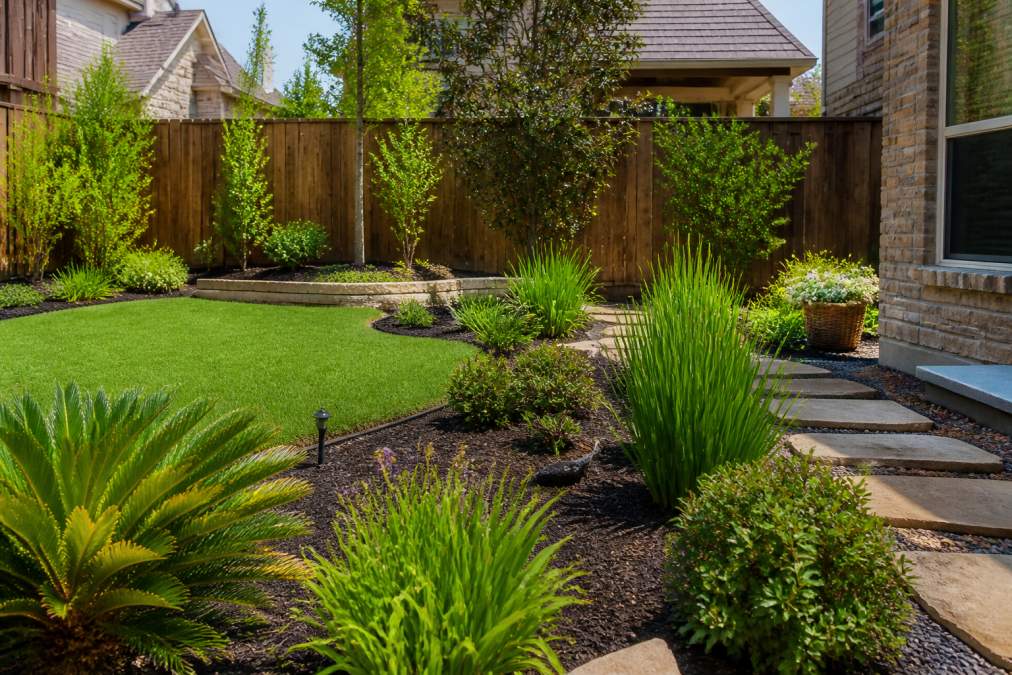
Backyard landscaping HOA plans work best when they reduce three things at once: watering, pruning, and replanting. Choose perennials and ground cover that suit your climate, group plants by water need, and mulch heavily to suppress weeds. A yard that mostly takes care of itself is also a yard that stays compliant, because overgrown beds are a common source of violation letters.
For compact lots, these choices do the most work:
- Native plants that thrive on local rainfall once established
- Ground cover instead of turf in narrow side yards
- Perennials that return each year instead of annuals you replant every season
- Drip irrigation on a timer rather than hand watering
U.S. EPA WaterSense landscaping guidance notes that water-smart landscape choices cut outdoor water use significantly, which matters in communities that restrict irrigation during dry months.
Small Backyard Patio Ideas Built Around HOA Rules
Small backyard patio ideas pass review when they respect setbacks, drainage, and material rules. Patio pavers in a neutral tone, a modest footprint, and a plan that directs water away from neighboring lots clear most committees. Keep the structure low and avoid anything that blocks a sightline the board protects.
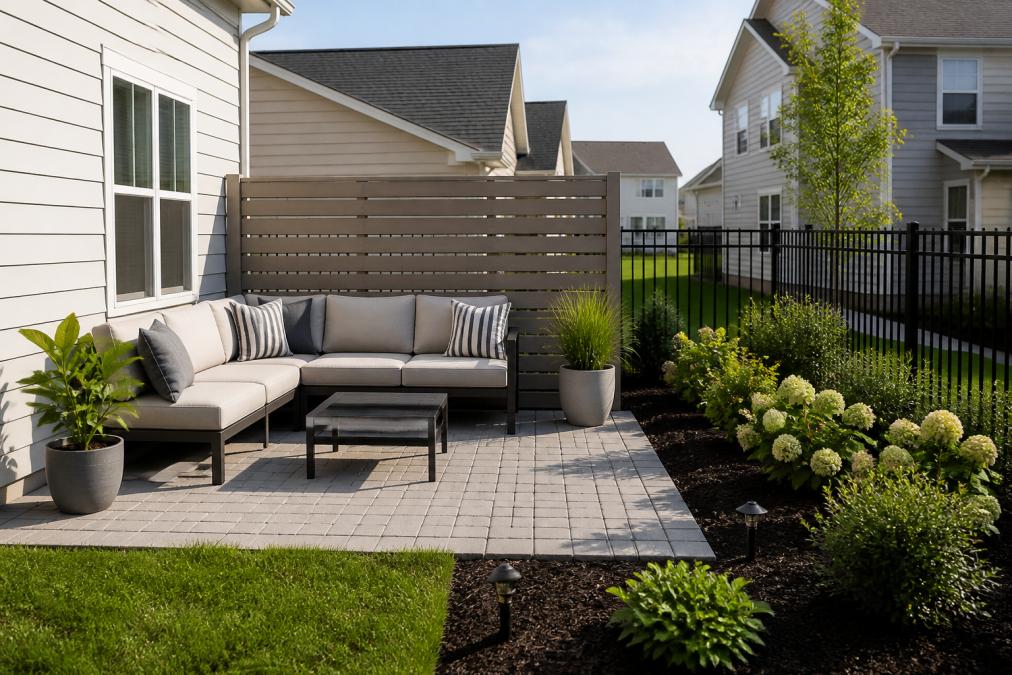
Concrete or stone pavers usually need approval for color and placement, not just size. Submit the exact product name and finish. "Gray pavers" invites questions; a specific product line and sample does not.
Hardscaping and Softscaping on a Compact Footprint
Hardscaping covers the built elements: patios, walkways, retaining walls, and edging. Softscaping covers the living elements: plants, mulch, and lawn. On a small lot, the two have to be balanced, because too much hardscape looks like a parking pad and too much softscape becomes a maintenance problem.
A workable split for a tight yard is roughly two-thirds planted area to one-third hardscape, adjusted for how you actually use the space. Retaining walls need engineering review if they exceed the height your HOA or local code allows, so check the threshold before you design around a wall.
Privacy, Lighting, and Vertical Solutions That Stay Compliant
Privacy screens, outdoor lighting, and vertical gardens solve the small-yard problem of being overlooked, but each one has a compliance edge. Fence and screen height is almost always capped. Lighting must not spill onto neighboring properties. Vertical planters attached to a wall may count as a structural change.
| Solution | Typical HOA Concern | Compliant Approach |
|---|---|---|
| Privacy screen | Height and material | Match approved fence height and finish |
| Outdoor lighting | Light spill and glare | Shielded, downward-facing fixtures |
| Vertical garden | Wall attachment and weight | Freestanding or approved mounting |
| Hedge | Mature size and setback | Choose a species that stays within limits |
A living hedge often clears review more easily than a tall fence, because it reads as landscaping rather than a structure. Confirm the mature height of any hedge species before planting, since a shrub that outgrows the cap becomes a violation later.
Budget-Friendly HOA Compliance and Climate-Specific Choices
Budget-friendly compliance starts with phasing. Instead of one large project, break the yard into stages and submit them together so the committee sees the full plan. You can build over time without reapplying for each piece.
A second lever is material choice. HOA rules often require specific materials for hardscape, but they rarely require the most expensive version of that material. Concrete pavers can often substitute for natural stone at a lower cost if the color and finish match the approved palette. Ask the board whether a sample of the substitute material can be approved before you buy.
A third lever is plant size. Buying smaller nursery stock and letting it grow in is usually cheaper than buying mature specimens, and it often clears review more easily because the mature size stays within the HOA's height and spread limits. The trade-off is time: a smaller plant takes longer to screen a view or fill a bed.
Climate-Specific HOA Solutions
Climate matters too. In hot, humid conditions, plant selection drives both survival and maintenance. Xeriscaping, which uses drought-tolerant plants and efficient irrigation, reduces water demand and replaces thirsty turf. St. Augustine grass is common in warm, humid regions but needs more water than many alternatives, so it is often the first thing to swap out in a water-conscious plan.
In desert and arid communities, HOA rules often restrict turf outright or cap the percentage of irrigated lawn. A common pattern is that these communities require a minimum percentage of the yard to be water-wise landscaping. Check whether your community has a turf cap before you design around a lawn.
In coastal communities, salt-tolerant plants and wind-resistant hardscape matter more than drought tolerance. HOA rules in these areas may also restrict fence materials that corrode or degrade in salt air.
U.S. EPA WaterSense landscaping guidance notes that water-smart landscape choices cut outdoor water use significantly, which matters in communities that restrict irrigation during dry months.
University of Florida IFAS Extension landscaping resources publishes climate-specific plant guidance for warm, humid growing zones, which helps homeowners pick species that survive without constant replacement.
For homeowners who want the design, permitting, and installation handled together, working with a landscape team that manages approvals from concept to completion removes most of the back-and-forth. For homeowners who want the design, permitting, and installation handled together, working with a landscape team that manages approvals from concept to completion removes most of the back-and-forth. Gorilla Treescape LLC builds custom patios, pool surrounds, and modern garden designs, which keeps the plan and the paperwork aligned.
Frequently Asked Questions
What are common HOA restrictions for backyard landscaping?
Most HOAs limit fence height, require approved plant lists, restrict hardscape materials to neutral tones, ban artificial turf in front yards, and require screening for sheds and equipment. Some restrict vegetable gardens to rear corners. Always check your covenants, conditions and restrictions before buying materials, because rules vary by community and violations can trigger fines or forced removal.
How do I get landscaping plans approved by my HOA?
Submit a complete package to the architectural review committee: a scaled site plan, plant list with mature sizes, material samples, and a timeline. Include photos of the current yard. Many boards meet monthly, so missing a deadline adds 30 days. If your project involves drainage changes, add a simple water flow sketch.
Can I install a patio in my backyard if I live in an HOA?
Yes, with prior approval. Patios are usually allowed if they meet setback rules, use approved materials like concrete pavers or natural stone, and do not increase impervious surface beyond the limit in your covenants. Submit a site plan showing the patio's position relative to property lines and easements. Unapproved patios can be ordered removed at your expense, so get written approval first.
What is the cheapest way to landscape a small backyard under HOA rules?
Focus on mulch beds, native ground cover, and container plants instead of full turf replacement. Keep existing approved trees and add perennials that return each year. For patios, gravel or decomposed granite costs less than pavers but check your HOA's material list, since some ban loose stone.
How do I maximize space in a small backyard while following HOA rules?
Use vertical gardening on approved trellises, choose multi-function furniture, and plant upward with columnar shrubs. A small water feature can serve as a focal point without crowding the patio. Keep pathways at least 36 inches wide. If your HOA limits structures, a well-placed privacy screen or tall grass can add separation without a permit. Plan zones for dining, lounging, and greenery in proportion to your square footage.
The hard part of small backyard landscaping under HOA rules is not the design. It is proving the design fits the rules before you build. Gorilla Treescape LLC manages that entire path for homeowners, from custom patio and deck construction to permit handling that keeps projects moving in under two months. If you want a yard that looks the way you imagined and clears review the first time, get a quote from Gorilla Treescape LLC and start with a plan the board can approve.