 how-to
How to Fix Backyard Drainage Problems
Table of Contents
- Identifying Backyard Drainage Problems
- Understanding Your Drainage Challenges
- How to Regrade a Yard for Better Water Flow
- Installing a French Drain to Control Standing Water
- Yard Drainage Solutions for Heavy Clay Soil
- French Drain Installation Cost and DIY vs. Professional
- Maintaining Your Drainage System
- Conclusion
- Frequently Asked Questions
Last Updated: September 2, 2026
Identifying Backyard Drainage Problems
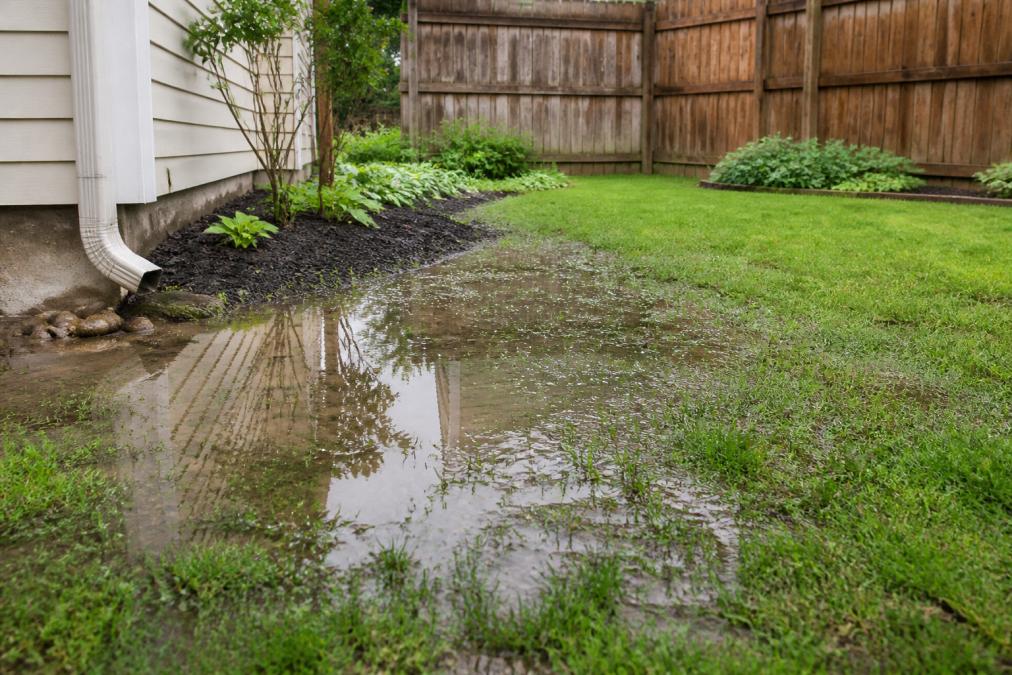
Standing water pooling in your yard after rain signals that your backyard drainage problems need immediate attention. Water that sits for more than a few hours creates conditions for mosquito breeding, foundation damage, and soil erosion (the CDC). Puddling near your foundation, soggy patches in the lawn, or areas where grass refuses to grow are red flags. Surface runoff flowing toward your home instead of away from it is another warning sign. Check your yard's topography after heavy rain, water should flow naturally downslope, away from structures.
Clay soil compounds the issue. Heavy clay doesn't absorb water quickly, so it pools in low spots. Test this by digging a small hole and filling it with water. If it takes more than 24 hours to drain, you're dealing with poor permeability. Poor grading is equally common, if your yard slopes toward your home instead of away from it, every rainstorm becomes a problem.
Understanding Your Drainage Challenges
Before picking a solution, understand what type of drainage problem you're facing. Different problems require different fixes.
Surface runoff is water that flows across your lawn's surface when rain falls faster than soil can absorb it. This type of backyard drainage problem is often easiest to fix through regrading and directing water away from problem areas.
Subsurface drainage problems occur when water sits below the surface. Your soil may be absorbing water, but it's not moving through fast enough or draining away. This is especially common in areas with high water tables or compacted soil.
Foundation-adjacent drainage happens when water pools directly against your home's foundation. This is the most serious type of backyard drainage problem because it creates hydrostatic pressure that can crack foundations and cause basement flooding.
Low-spot pooling is water that collects in naturally low areas of your yard, becoming swampy and killing grass. While less immediately dangerous than foundation-adjacent water, it still indicates your yard's grading or subsurface drainage isn't working properly.
Identifying which type of backyard drainage problem you have determines your approach. Surface runoff might need regrading. Subsurface problems often require French drains or soil aeration. Foundation issues demand professional intervention.
How to Regrade a Yard for Better Water Flow
Regrading is the foundation of most backyard drainage problem solutions. It's the process of reshaping your yard's topography to direct water away from structures and toward drainage areas.
Start by observing water flow during and immediately after rain. Your goal is to enhance that natural flow. A proper grade should slope away from your home at a minimum of 1 inch per 10 feet of horizontal distance.
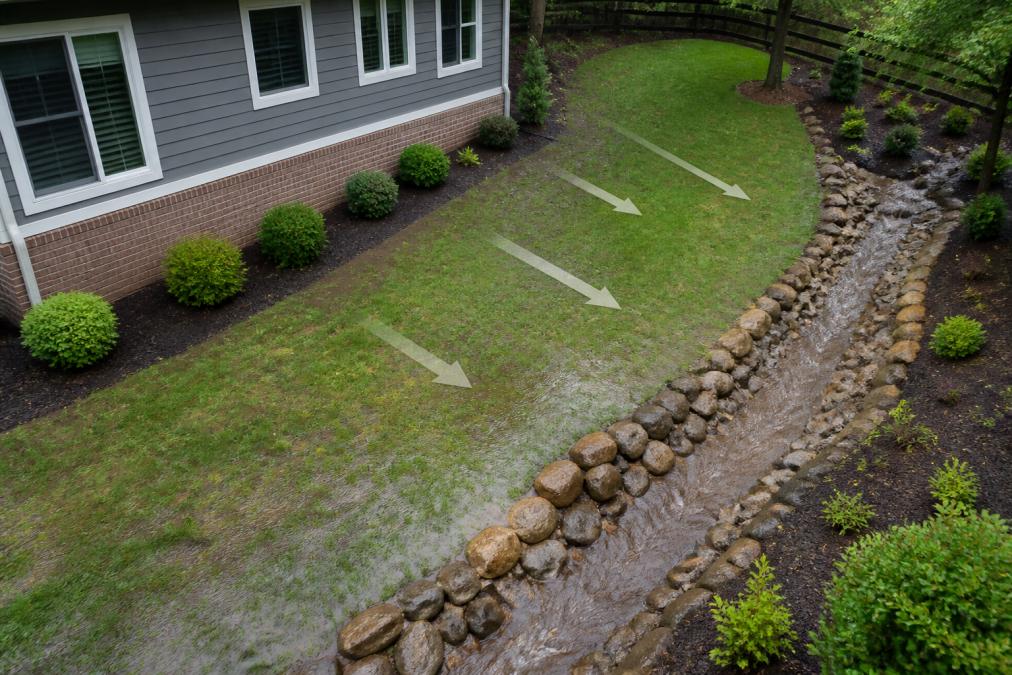
The regrading process involves adding or removing topsoil to create the desired slope. In areas where water currently pools, you'll raise the grade. Regrading works best when combined with soil quality improvement. Compacted soil resists water infiltration, so loosening and amending your soil during regrading improves both surface and subsurface drainage. Adding organic matter to heavy clay soil increases pore space that allows water to move through soil more freely.
For significant backyard drainage problems, regrading alone may not be sufficient. You might need to combine it with French drains, swales, or other subsurface solutions. But regrading is always the starting point because it works with gravity.
Installing a French Drain to Control Standing Water
A French drain is one of the most effective solutions for persistent backyard drainage problems, especially when standing water won't disappear despite regrading efforts. It works by collecting subsurface water and directing it away from problem areas.
A French drain consists of a trench filled with landscape fabric, perforated pipe, and washed stone. Water infiltrates the stone, enters the perforated pipe, and flows away from your property.
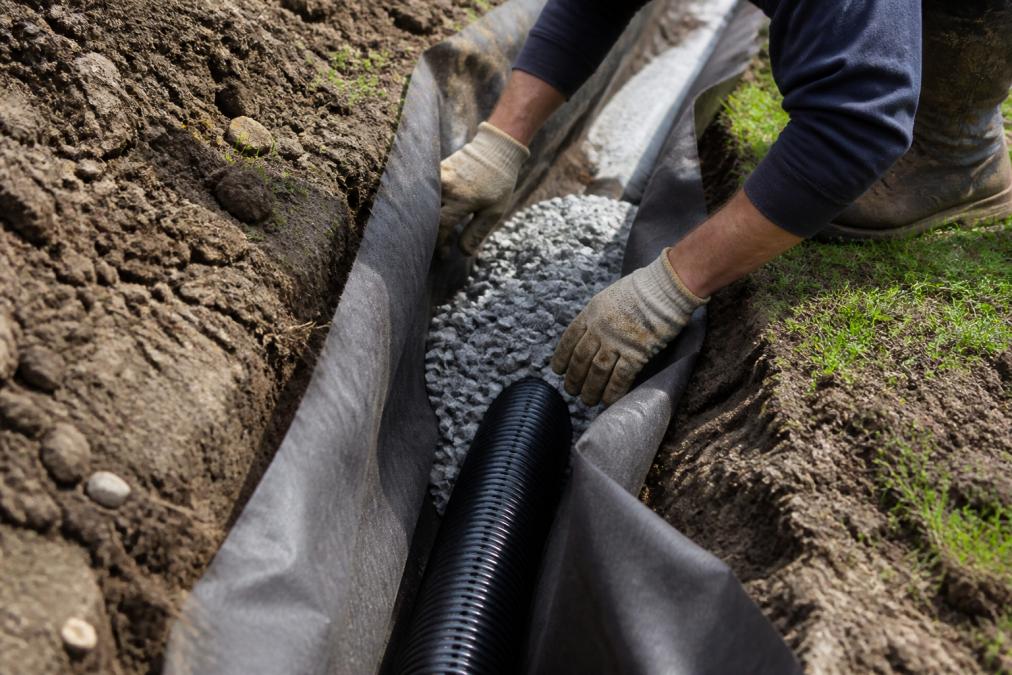
Dig your trench at least 12 inches deep, though 18-24 inches is better for significant backyard drainage problems (extension.oregonstate.edu). The trench should slope gently, even 1-2 inches of drop over 100 feet works. Lay landscape fabric along the bottom and sides to prevent soil from clogging the stone and pipe. Place the perforated pipe in the center, then surround it with washed stone. Cover the stone with more landscape fabric before replacing topsoil.
The French drain outlet matters. Water must flow to a location where it won't create problems, ideally toward a street drain, a swale, or a low area far from structures. For many properties with serious backyard drainage problems, professional installation ensures the drain slopes correctly and outlets properly.
Maintenance is straightforward. Clear debris from the drain opening annually. If water stops flowing after several years, the drain may have become clogged and might need professional cleaning or replacement.
Yard Drainage Solutions for Heavy Clay Soil
Clay soil is the nemesis of drainage. Its particles are tiny and tightly packed, creating minimal pore space for water movement. If your yard has heavy clay and backyard drainage problems persist, you need solutions that address clay's specific characteristics.
Soil aeration breaks up compacted clay, creating space for water infiltration. A core aerator removes small plugs of soil, leaving holes that allow water and air to penetrate.
Adding topsoil and organic amendments improves clay's structure. Spreading 2-4 inches of quality topsoil mixed with compost over your yard and working it into the top 6-8 inches of existing soil increases organic matter and creates stable pore space (extension.psu.edu).
Creating swales directs water through planted channels that encourage infiltration. A swale is a shallow, vegetated ditch that slows water runoff and allows it to soak into the ground. In clay soil, swales work best when you've amended the swale bottom with better-draining soil or installed perforated pipe beneath it.
Installing subsurface drainage like French drains works around clay's limitations. Since water won't move through clay easily, you collect it and move it mechanically through pipe.
Dry creek beds combine aesthetics with function. These shallow channels filled with stone direct water away from problem areas while adding visual interest to your landscape.
The best approach for clay soil usually combines multiple solutions. Improve what you can through aeration and amendment, install French drains or swales to handle water that won't infiltrate, and ensure proper grading directs surface runoff away from structures.
French Drain Installation Cost and DIY vs. Professional
The decision between DIY and professional installation depends on the complexity of your backyard drainage problems, project size, and your comfort with excavation and grading.
DIY installation works for straightforward projects with clear drainage paths. You'll need a shovel, landscape fabric, perforated pipe, and washed stone. However, DIY projects often fail because homeowners underestimate the importance of proper slope and outlet location. A drain that doesn't slope correctly simply becomes a collection point.
Professional installation ensures correct slope, proper outlet, and compliance with local drainage or grading permits. For significant backyard drainage problems affecting your foundation or involving complex grading, professional work is worth the investment. Professionals understand soil conditions and have equipment that makes trenching faster and more precise than hand-digging.
Permit requirements vary by location. Some municipalities require permits for any subsurface drainage work. Check with your local building department before starting any backyard drainage problems solution. Gorilla Treescape LLC handles permit requirements for drainage projects in less than two months, ensuring your solution complies with local regulations.
The cost-benefit analysis for professional work becomes clear when you consider the consequences of incorrect installation. A failed DIY French drain might need to be redone professionally, doubling your total expense.
Maintaining Your Drainage System
Once you've solved your backyard drainage problems, maintenance keeps them solved.
French drains need annual inspection of the outlet to ensure water flows freely. Check after heavy rains to confirm water is moving. If water stops flowing, the drain may be clogged and need professional cleaning.
Swales and dry creek beds need vegetation management. Keep swales planted with water-tolerant plants that stabilize soil and slow water flow. Remove debris that blocks water movement. Refresh stone in dry creek beds as it settles.
Regraded areas require monitoring to ensure they maintain proper slope. Reseed or replace sod in areas that become worn. If you notice new pooling, regrading may need adjustment.
Catch basins and culverts require seasonal cleaning to remove leaves and debris before heavy rain seasons.
Soil amendments need periodic renewal. Adding compost or topsoil every 2-3 years maintains improved drainage in amended areas, especially important in clay soil.
Foundation drainage around your home should be inspected annually. Look for new cracks or water staining that might indicate drainage isn't working as intended.
Most backyard drainage problems are preventable with consistent maintenance. Spending 30 minutes annually inspecting and clearing drainage components prevents expensive failures.
Conclusion
Backyard drainage problems don't resolve themselves, and ignoring them guarantees they'll worsen. Water damage to foundations, eroded landscaping, and persistent mosquito breeding grounds are all consequences of deferred action. Whether you're dealing with standing water, foundation-adjacent pooling, or waterlogged clay soil, the solution starts with accurate diagnosis and proper grading.
Gorilla Treescape LLC specializes in comprehensive drainage solutions that address the root cause of backyard drainage problems, not just the symptoms. From custom regrading that directs water away from your home to professional French drain installation with proper permitting, we handle every aspect of transforming a problem yard into one that drains properly. Our team brings expertise in Miami-area soil conditions, local permit requirements, and drainage design that works with your landscape's natural topography.
Get a quote from Gorilla Treescape LLC today and let us design a drainage solution tailored to your property's specific conditions. We'll transform standing water problems into a functional, attractive yard that protects your home and enhances your outdoor space.
| Solution | Best For | Maintenance | Complexity |
|---|---|---|---|
| Regrading | Surface runoff, poor slope | Annual inspection | Low |
| French drain | Standing water, subsurface issues | Annual outlet check | Medium |
| Swales | Aesthetic drainage, clay soil | Seasonal vegetation care | Medium |
| Soil amendment | Clay soil improvement | Periodic topsoil addition | Low |
| Dry creek beds | Decorative runoff management | Seasonal debris removal | Low |
Frequently Asked Questions
Q: How do I know if I have a backyard drainage problem?
A: Signs of drainage issues include standing water that lingers after rain, soggy patches in your lawn, water pooling near your foundation, and persistent erosion. If your yard stays wet for more than 24 hours after rainfall, or if you notice foundation cracks or basement moisture, drainage problems are likely present. Poor drainage can damage your home's foundation over time, making early identification critical.
Q: What's the difference between a French drain and a dry creek bed?
A: A French drain is a subsurface system using a perforated pipe buried in a trench with landscape fabric and gravel to redirect groundwater away from problem areas. A dry creek bed is a visible surface feature that mimics a natural streambed, directing surface runoff while adding landscaping appeal. French drains handle groundwater and heavy rainfall; dry creek beds work best for managing visible water flow and aesthetic drainage solutions.
Q: Should I tackle backyard drainage myself or hire a professional?
A: DIY solutions work for minor grading adjustments, downspout extensions, and simple swale installation. However, French drain installation, major regrading, and solutions for heavy clay soil typically require professional equipment and expertise to ensure proper slope, compaction, and long-term effectiveness. Professional installation guarantees correct water diversion and prevents costly mistakes. Contact Gorilla Treescape LLC for a consultation to evaluate your specific situation and get a quote.
Q: How much does it cost to fix backyard drainage?
A: Drainage solutions range from affordable to significant depending on the problem's scope. Simple fixes like extending downspouts cost less than French drain installation or major regrading projects. Pricing depends on your yard's size, soil type, water volume, and the solution required. Get a quote from Gorilla Treescape LLC for an accurate estimate tailored to your backyard's specific drainage challenges.
This article was written using GrandRanker