 ultimate-guide
Professional Garden Design for Estates: 2026 Guide
Table of Contents
- What Professional Garden Design for Estates Actually Involves
- Luxury Landscape Architecture Services: What You Get at Estate Scale
- Hiring a Landscape Designer for Residential Estates: 6 Questions That Expose the Right Fit
- Estate Landscape Maintenance Costs: What Drives the Number
- Budgeting and Zoning: The Two Hurdles Most Estate Owners Underestimate
- Technology and Long-Term Logistics in Estate Management
- Conclusion
- Frequently Asked Questions
Last Updated: September 15, 2026
What Professional Garden Design for Estates Actually Involves
Professional garden design for estates is the practice of planning and building a landscape across a large property, from initial site analysis through construction oversight and long-term care. It differs from standard residential landscaping in scale, cost, and complexity. Gorilla Treescape LLC provides comprehensive landscaping, design, and property maintenance services for both residential and commercial clients. From custom pool and patio construction to expert tree care and modern garden design, we bring your outdoor vision to life with professional craftsmanship and attention to detail.
From Site Analysis to Master Plan
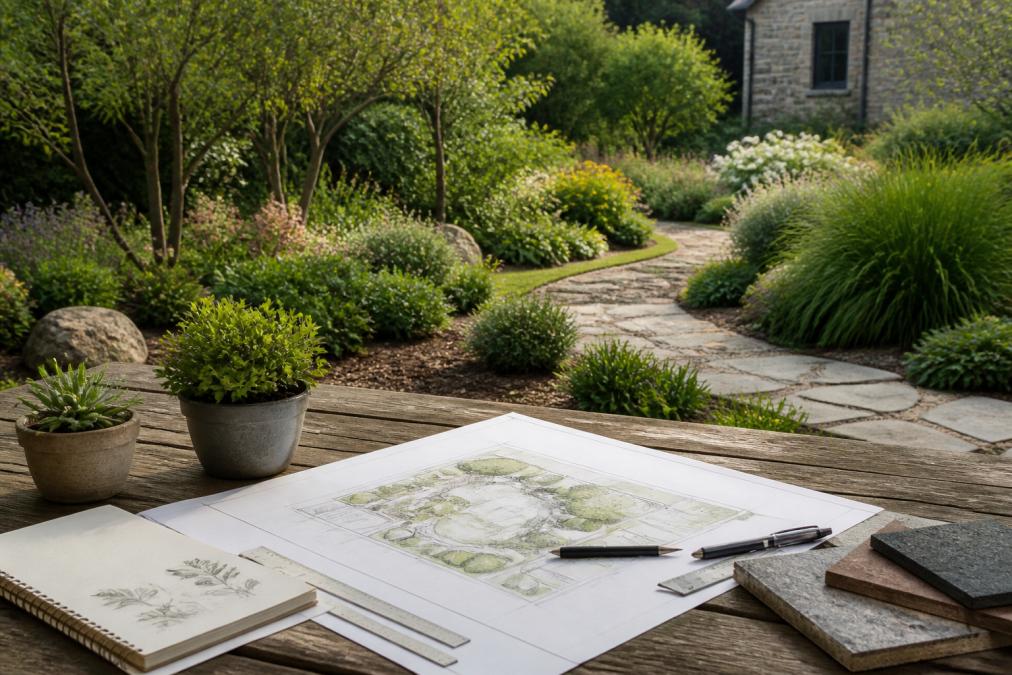
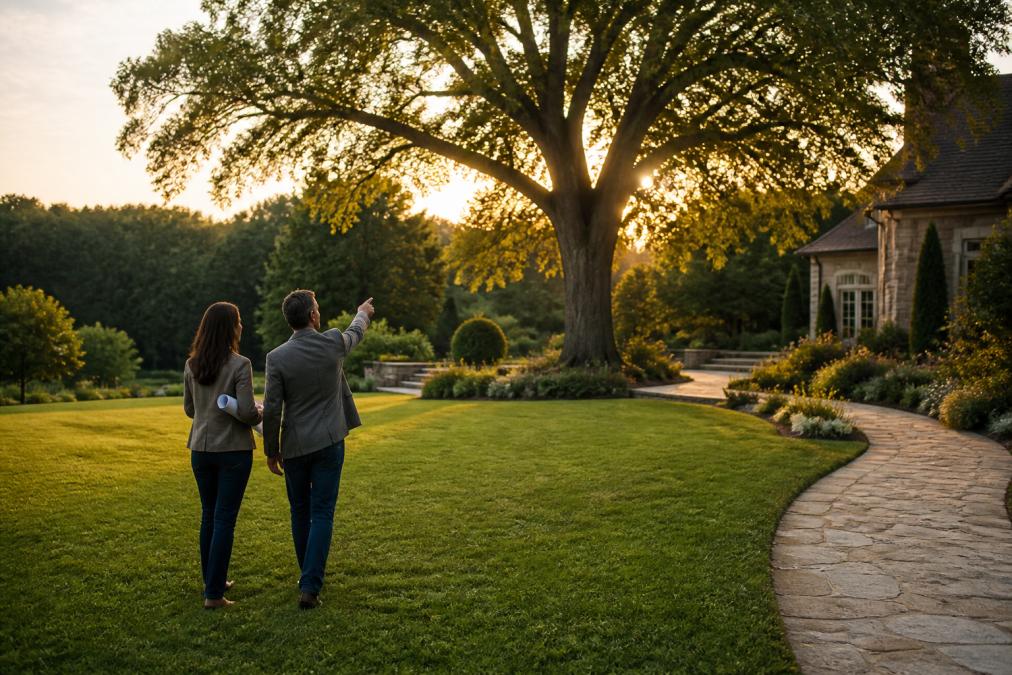
The process starts with site analysis: topography, soil health, sun exposure, existing trees, and grading and drainage. That data becomes a master plan, a single document mapping hardscape, softscape, planting design, and irrigation systems across the whole property. Without it, projects drift.
How Estate Projects Differ From Standard Residential Work
A typical yard project finishes in weeks. Estate work runs through a full project lifecycle: permits, phased construction, and seasonal maintenance planning.
- Scope: acres instead of a single lawn
- Coordination: horticulturist, architect, and contractor on one schedule
- Longevity: plantings must survive decades, not one season
Luxury Landscape Architecture Services: What You Get at Estate Scale
Luxury landscape architecture services cover landscape architecture and master planning, planting design and horticultural selection, construction management and project oversight, plus custom landscape design services. You are buying spatial planning, not just planting.
Hardscape and Softscape Integration
Hardscape materials (stone, pavers, timber) and softscape (trees, shrubs, groundcover) have to be designed together. Get the order wrong and roots crack patios within a few seasons.
| Element | What It Covers | Why It Matters |
|---|---|---|
| Master plan | Site analysis, zoning, phasing | Prevents mid-project redesigns |
| Hardscape | Patios, paths, walls, outdoor living areas | Sets the property's permanent structure |
| Softscape | Planting design, native plant palettes | Delivers color, shade, and seasonal interest |
| Systems | Irrigation, landscape lighting, drainage | Keeps everything alive and usable |
Hiring a Landscape Designer for Residential Estates: 6 Questions That Expose the Right Fit
Hiring a landscape designer for residential estates comes down to six questions that separate real estate-scale experience from standard residential work.
- Can you show a master plan you built for a property this size?
- Who handles permits and zoning review?
- How do you approach grading and drainage on sloped ground?
- What is your construction administration process?
- How do you select plants for this climate and soil?
- What does the first year of maintenance look like?
Ask for references from projects completed at least two years ago. Anyone can install a garden. Fewer can keep it thriving.
Estate Landscape Maintenance Costs: What Drives the Number
Estate landscape maintenance costs depend on acreage, plant density, irrigation complexity, and how often the property needs attention. There is no universal figure, and any company quoting one before seeing the site is guessing. Request a walkthrough and a written scope instead.
The Cost Drivers Nobody Warns You About
- Mature tree care and pruning cycles
- Irrigation system repairs and seasonal adjustments
- Replanting after storm damage
- Turf and sod replacement in high-traffic zones
- Landscape lighting maintenance
Budgeting and Zoning: The Two Hurdles Most Estate Owners Underestimate
Budgeting and zoning compliance sink more estate projects than design disagreements ever do. Most owners plan for installation and forget permitting, engineering, and the first two years of establishment care. This is the part of the process the glossy portfolios never show, and it is where estate-scale projects separate from ordinary yard work.
A Realistic Budget Framework
Estate landscape budgets are not a single number. They are four buckets, and each one behaves differently:
- Design and documentation (roughly 8-15% of total project cost). (ASLA Membership) This covers site survey, topographic and boundary mapping, soil testing, master planning, construction drawings, and planting plans. Owners who try to skip or compress this stage almost always pay it back later in change orders.
- Permitting, engineering, and approvals. Civil engineering for grading and drainage, arborist reports for protected trees, stormwater calculations, and municipal review fees. On sloped or waterfront parcels this bucket can rival the design fee.
- Installation. Hardscape, softscape, irrigation, lighting, and drainage. This is the largest bucket and the one most sensitive to phasing decisions.
- Establishment and maintenance (years one and two). A newly installed estate landscape is not self-sustaining. Expect a higher-than-steady-state maintenance load for the first 18-24 months while plants root in, irrigation is tuned, and turf knits.
A phased budget helps. Break the project into design, permitting, installation, and maintenance, then fund each stage separately. It keeps decisions honest and cash flow predictable. A common pattern is to phase installation by zone, entry and primary outdoor living areas first, secondary gardens and perimeter plantings in later years, so the property looks intentional at every stage rather than half-finished.
Two cost traps worth naming up front:
- Mature specimen trees and large plant material. A single mature specimen can cost more than an entire zone of smaller plantings, and it carries its own establishment risk. Decide early whether the design leans on instant maturity or on time.
- Hidden subsurface work. Drainage, retaining structures, irrigation mains, and utility relocation are invisible when the project is done and easy to under-budget when the plan is drawn.
Ask for a budget that separates design, permitting, installation, and first-two-year maintenance. A single lump-sum number hides the stages where projects actually go over.
Zoning, Land Use, and Environmental Compliance
Zoning rules govern setbacks, impervious surface limits, tree protection, height restrictions on walls and structures, and drainage requirements. These vary by municipality, so confirm the specifics with your local planning department before design begins. On estate parcels, several layers of regulation often stack:
- Local zoning and land development codes, setbacks, lot coverage, impervious surface caps, fence and wall heights, and buffer requirements along property lines.
- Tree protection and canopy ordinances, many jurisdictions require an arborist survey and a permit before removing or significantly pruning protected or heritage trees, and some require replacement plantings at a set ratio.
- Stormwater and grading rules, new impervious surfaces such as driveways, patios, and pool decks frequently trigger on-site retention or treatment requirements.
- Environmental and wetland overlays, parcels near waterways, wetlands, or floodplains may need additional review, and shoreline or buffer zones often restrict what can be planted or built near the water.
- Water-use and irrigation rules, some areas restrict irrigation scheduling, require rain sensors or smart controllers, or limit the amount of irrigated turf.
For water and irrigation guidance, the U.S. Environmental Protection Agency WaterSense program publishes practical standards worth reviewing early. For plant selection suited to the region, University of Florida IFAS Extension maintains research-based recommendations for Florida landscapes.
The most expensive zoning mistake is discovering a setback, tree protection, or impervious surface limit after hardscape is installed. Have a surveyor and a permit expediter review the plan before the first shovel goes in.
Where the Two Hurdles Collide
Budget and zoning are not separate problems. A tree protection ordinance can force a redesign that adds cost. An impervious surface cap can push a patio from pavers to permeable material, changing both the budget and the drainage plan. The owners who come out ahead treat permitting as a design input, not a post-design formality, they bring the survey, the code review, and the budget framework into the same conversation before anyone sketches a garden.
Technology and Long-Term Logistics in Estate Management
Technology has changed how large properties stay maintained, but the bigger shift is organizational: an estate garden is a managed asset, not a finished project.
The Three Maintenance Models
Smart Systems That Earn Their Keep
Ask your designer to hand over a maintenance calendar and an as-built irrigation and lighting plan at project close. It is the difference between a garden that matures and one that needs renovating in three years.
The Seasonal Calendar
Handover Is a Deliverable
Conclusion
Frequently Asked Questions
How much does it cost to hire a professional garden designer for an estate?
Pricing depends on property size, scope, and the complexity of the master plan. Estate-level professional garden design for estates typically involves site analysis, planting design, hardscape planning, and construction oversight, each of which affects the total. Most designers quote after a site visit. Request a detailed proposal that breaks out design fees separately from installation so you can compare bids accurately.
What is the difference between a landscape architect and a garden designer?
A landscape architect holds a state license and can stamp construction documents for grading, drainage, and structural hardscape elements, which matters on estate projects that need permits. A garden designer focuses on planting design, aesthetics, and horticultural selection. For large estates with topography changes or retaining walls, you often need both skill sets. Some firms, including full-service landscape companies, provide both under one roof.
How do I maintain the integrity of a large-scale estate landscape after installation?
Set up a seasonal maintenance schedule before the last plant goes in. Estate landscape maintenance costs stay predictable when you lock in quarterly visits for pruning, soil health checks, irrigation system audits, and pest monitoring. Keep the original planting plan and as-built drawings on file so future renovations match the design intent. Skipping maintenance for even one season can undo years of curated growth.
What should I look for when hiring a professional landscaping firm for my estate?
Ask for proof of permits handled in-house, a portfolio of comparable estate-scale projects, and references you can actually call. Confirm who manages construction administration and whether the same project manager stays from concept to completion. Look for expertise in grading and drainage, native plant palettes, and irrigation systems. A firm that communicates clearly during the bid phase usually communicates well during construction.