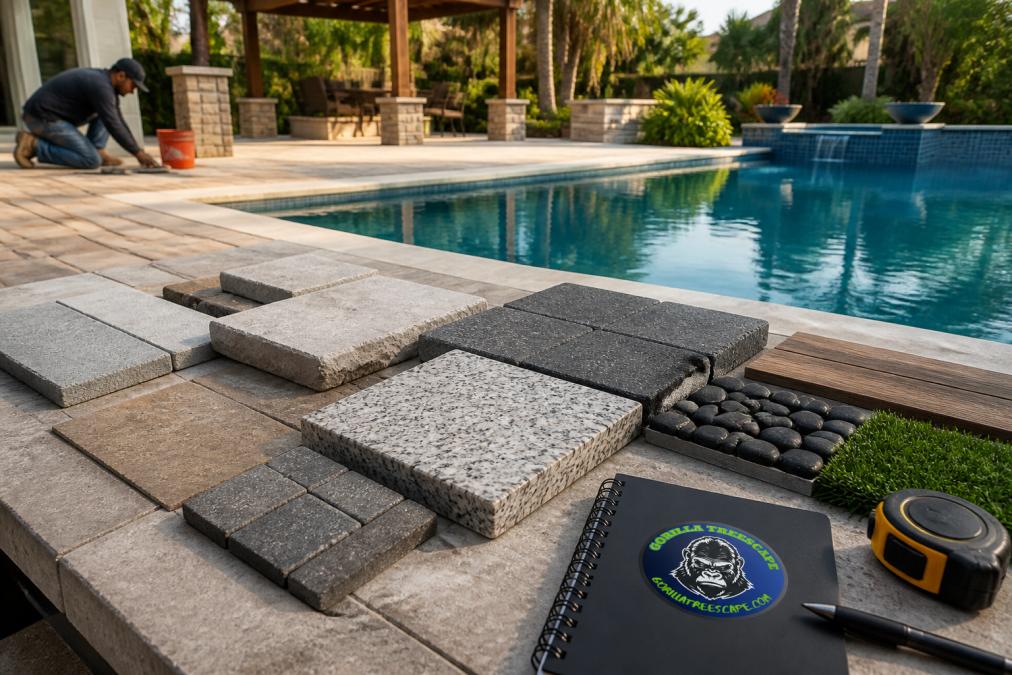
 blog
blog
Best Pool Patio Paving Materials: 2026 Comparison Guide
Table of Contents
- Comparison Table: Best Pool Patio Paving Materials at a Glance
- Porcelain Pavers and Travertine: Top Contenders for Pool Patios
- Non-Slip Pool Deck Materials: What Actually Meets the Standard
- Natural Stone vs Concrete Pavers for Pools: Which Holds Up Better?
- Heat Retention, Freeze-Thaw, and Surface Temperature
- Pool Deck Maintenance Tips for Long-Term Performance
- Installation, Sub-Base Preparation, and DIY Feasibility
- Cost Factors and Long-Term ROI on Pool Patio Paving
- Frequently Asked Questions
Last Updated: September 22, 2026
Comparison Table: Best Pool Patio Paving Materials at a Glance
Choosing the best pool patio paving materials comes down to four things: slip resistance when wet, surface temperature underfoot, how the material handles the local freeze-thaw cycle, and long-term maintenance. This guide from Gorilla Treescape LLC breaks down how the leading options compare, so you can match a surface to your climate, budget, and how you actually use the space.
| Material | Wet Slip Resistance | Surface Temp | Maintenance | Best For |
|---|---|---|---|---|
| Porcelain pavers | High (textured finish) | Moderate | Low | Low water absorption, modern look |
| Travertine | High | Cooler underfoot | Medium | Barefoot comfort, natural stone |
| Brushed concrete | Medium to high | Hot in full sun | Medium | Budget-friendly, simple shapes |
| Bluestone | Medium | Moderate | Medium | Cooler climates, natural tone |
| Granite | Medium | Hot in full sun | Low | Maximum durability |
Occupational Safety and Health Administration guidance on walking-working surfaces
Porcelain Pavers and Travertine: Top Contenders for Pool Patios
Porcelain pavers and travertine lead the pack for pool decks because they balance slip resistance, moisture resistance, and comfort better than most alternatives. Both handle splashed water well, and both hold up to sun exposure without fading quickly.
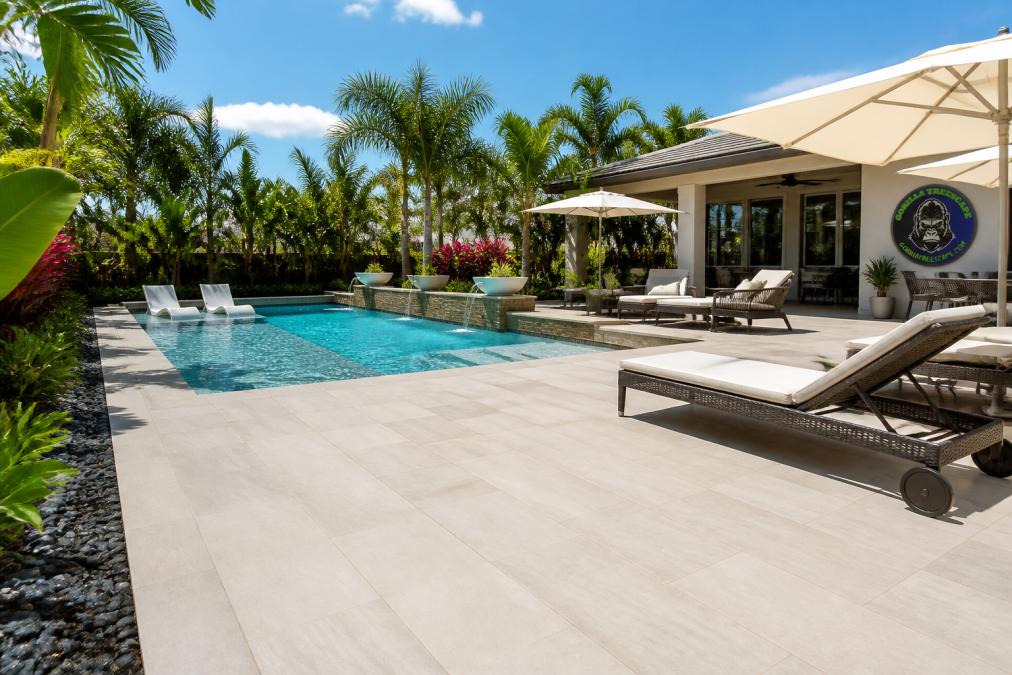
Porcelain Pavers: Low Water Absorption, High Slip Resistance
Porcelain pavers are dense, kiln-fired tiles engineered for exterior grade use. Their low water absorption means they resist staining and freeze-thaw damage better than many porous stones, and textured finishes deliver strong slip resistance when wet. In practice, this means fewer cracked tiles after a hard winter and less time scrubbing.
Travertine: A Cooler Surface Underfoot
Travertine is a natural stone formed from mineral springs, prized for staying cooler than concrete or granite under direct sun. Its natural pores and textured surface provide reliable grip when wet. A common mistake is skipping the sealer, which leaves the stone open to staining from pool chemicals and sunscreen.
Non-Slip Pool Deck Materials: What Actually Meets the Standard
Non-slip pool deck materials are surfaces engineered or finished to maintain traction when wet, typically measured by their coefficient of friction. The higher the rating, the more grip underfoot. Materials that consistently perform here include textured porcelain, tumbled travertine, brushed concrete, and certain natural stones with a honed or flamed finish.
- Textured porcelain: consistent grip, low absorption
- Tumbled travertine: natural texture, cooler surface
- Brushed concrete: affordable, variable grip
- Flamed granite: durable, but hot in full sun
Natural Stone vs Concrete Pavers for Pools: Which Holds Up Better?
Natural stone generally outlasts concrete pavers for pools, but concrete wins on upfront cost and installation speed. Natural stone such as bluestone, granite, basalt, and porphyry resists freeze-thaw cycles and holds its color for decades. Concrete pavers, by contrast, are more uniform and easier to replace piece by piece if one cracks.
Heat Retention, Freeze-Thaw, and Surface Temperature
Surface temperature and freeze-thaw resistance separate a pool deck you can walk on barefoot in July from one you avoid until dusk. Most guides stop at "dark gets hot, light stays cool." That's only half the story. What actually determines comfort and longevity is a combination of solar reflectance, thermal mass, thermal conductivity, porosity, and how the material behaves across your specific climate.
How Each Material Handles Heat
Three physical properties drive how hot a surface feels underfoot:
- Solar reflectance (albedo): How much sunlight bounces off instead of being absorbed as heat. Light travertine and white-toned porcelain reflect more; dark basalt and charcoal granite absorb more.
- Thermal mass: How much heat the material stores and releases slowly. Concrete and dense stone hold heat and radiate it back for hours after sunset.
- Thermal conductivity: How quickly heat moves from the surface into your foot. High-conductivity stone feels cooler in shade but scorching in direct sun.
Freeze-Thaw: The Real Durability Test
In colder regions, the freeze-thaw cycle is what kills pool patios. Water seeps into pores or hairline cracks, freezes, expands roughly nine percent in volume, and pries the surface apart from the inside. Repeat that cycle dozens of times per winter and even premium stone will spall if it wasn't specified correctly.
What resists freeze-thaw best:
- Low water absorption. Porcelain pavers and dense granite absorb very little water, so there's less to freeze. Porous limestone and some sandstones absorb far more and are riskier in cold climates.
- Tight, well-drained joints. Polymeric sand or permeable joint systems that shed water instead of trapping it dramatically reduce freeze damage.
- A properly compacted, free-draining sub-base. Even the best paver fails if water pools underneath it.
Climate-Specific Recommendations
Most guides give one generic answer. The honest answer depends on where you live:
| Climate | Best-Performing Materials | Why |
|---|---|---|
| Hot and arid (desert Southwest) | Light travertine, light porcelain, salt-finished concrete | High reflectance, low thermal mass, cooler underfoot at midday |
| Hot and humid (Gulf and Southeast) | Textured porcelain, tumbled travertine, shellstone | Resists algae and mildew, holds grip when wet, handles heavy splash |
| Cold and freeze-thaw (Northeast, Midwest, mountain West) | Porcelain pavers, granite, bluestone on a compacted base | Low absorption, high compressive strength, tolerates ice and salt |
| Mild and coastal (Pacific coast, mid-Atlantic) | Bluestone, travertine, textured concrete | Balances comfort, salt resistance, and moderate maintenance |
Matching Material to Climate
Matching material to climate is the difference between a deck you use all summer and one you avoid at midday. A travertine that feels perfect in Phoenix may be a maintenance headache in a humid coastal yard. A dark granite that looks stunning in a shaded courtyard can be unusable next to an unshaded pool in the Sun Belt.
Pool Deck Maintenance Tips for Long-Term Performance
Pool deck maintenance tips that actually extend surface life come down to three habits: sealing on schedule, cleaning spills quickly, and managing drainage. Sealing requirements vary by material. Porous natural stone needs resealing more often than dense porcelain, and joint sand should be topped up as it washes out.
- Rinse salt and chlorine splash weekly
- Reapply sealer per the manufacturer's interval
- Refill joint sand to keep pavers locked and level
- Clear drainage channels before rainy season
- Inspect for cracks after any freeze
Installation, Sub-Base Preparation, and DIY Feasibility
Installation feasibility depends on the material and your tolerance for heavy labor. Sub-base preparation, which involves excavating, grading, and compacting a stable base, is the step most DIYers underestimate. Get it wrong and the whole patio fails.
Cost Factors and Long-Term ROI on Pool Patio Paving
Most pool patio guides either dodge the cost question entirely or quote a single national average that doesn't reflect your site. The more useful approach is to understand what actually drives cost, and then look at the number that matters more than upfront price: long-term cost of ownership and resale impact.
What Drives the Upfront Cost
Five variables move the number more than the material label itself:
- Square footage and shape complexity. Curves, borders, and inlays add cutting time and waste. A simple rectangular layout in the same material can cost meaningfully less than a freeform design.
- Site access. If a Bobcat can't reach the backyard, everything is moved by hand. That labor premium can rival the material cost.
- Sub-base condition. A yard that already drains well and has stable soil needs less excavation and base material than one that pools water or sits on expansive clay.
- Material tier. Within any category, porcelain, travertine, concrete, there's a wide spread between builder-grade and premium. Cheap porcelain can be a false economy if it chips or fades.
- Drainage and permitting. Proper drainage design and any required permits add cost but prevent far more expensive failures later.
Long-Term Cost of Ownership
Upfront price is only part of the story. Over a 15- to 20-year horizon, the materials that cost more initially often cost less overall because they need fewer repairs, less frequent sealing, and no replacement.
A useful way to think about it:
- Low upfront, high lifetime: basic concrete that needs resealing every few years, may effloresce, and can crack under freeze-thaw.
- Mid upfront, mid lifetime: quality concrete pavers with polymeric joint sand, easy to repair piece by piece, moderate sealing needs.
- High upfront, low lifetime: porcelain pavers and dense natural stone, minimal sealing, high freeze-thaw resistance, decades of service with basic cleaning.
Resale Value and Property Impact
A well-built pool patio is one of the few outdoor improvements that reliably shows up in appraisals and buyer interest. Real estate professionals consistently note that outdoor living space, especially a finished pool deck, expands the usable square footage of a home in buyers' minds, particularly in markets where the pool season is long.
What tends to move resale value most:
- Cohesive design. A patio that matches the home's architecture and the pool's coping reads as intentional, not added-on.
- Visible durability. Buyers and inspectors notice cracked, shifting, or stained decks. A surface that still looks new after a decade signals quality throughout the property.
- Low-maintenance appeal. Materials that don't require annual sealing or constant repair are a selling point, especially to buyers who don't want a project.
- Safety and code compliance. Proper slip resistance and drainage aren't just practical, they signal a professionally built deck.
The Bottom Line on Cost
Rather than chase a national average, focus on three questions: What does this material cost installed on my specific site? What will it cost me to maintain over 20 years? And how will it affect how buyers see my home? Answer those three and the "cheap vs. expensive" framing falls away.
Frequently Asked Questions
What type of pavers are best for a pool patio?
Porcelain pavers and travertine consistently rank among the best pool patio paving materials because they stay cooler underfoot and offer strong slip resistance when rated for exterior use. Brushed concrete and interlocking concrete pavers are budget-friendly alternatives that still perform well with proper sealing. The right choice depends on your climate, how much maintenance you will accept, and whether you want a natural stone look or a manufactured finish.
Which pool patio materials are the most slip-resistant?
Non-slip pool deck materials are rated by their coefficient of friction, and textured surfaces outperform smooth ones every time. Brushed concrete, tumbled travertine, and matte porcelain pavers with an exterior-grade finish all provide reliable grip when wet. Polished granite and smooth bluestone are poor choices around water unless treated. Always ask for the wet-rated slip resistance of any material before you commit, since dry ratings tell you little about how it behaves poolside.
How do I choose between natural stone and concrete pavers for my pool?
Natural stone vs concrete pavers for pools comes down to budget, maintenance appetite, and look. Natural stone such as travertine, bluestone, or granite offers unique color variation and ages gracefully, but it costs more and needs periodic sealing. Concrete pavers cost less upfront, come in consistent sizes, and are easier to replace if one cracks. In freeze-thaw climates, both work when installed over a properly compacted sub-base with correct joint sand.
What pool deck maintenance tips keep paving looking new?
Rinse the surface weekly to remove chlorine splash and debris, and scrub with a mild pH-neutral cleaner every few months. Reapply sealant on natural stone every one to two years, and top up joint sand as it settles. Check for efflorescence, hairline cracks, and loose units after heavy rain. Keeping drainage clear and trimming nearby trees reduces staining and insect damage. These pool deck maintenance tips add years to any paving surface.